


‘I Want You To Love Me’: Did Fiona Apple create the best unrequited love song of all time?

Love is arguably the driving force behind some of the best music ever written.
The Beatles insisted it’s all you need, The Cure swore it’s just like heaven, and for Patti Smith, it is simply “the way I feel when I’m in your hands”. But what about love’s shadow self, the version that gnaws at your marrow, keeps the lights burning at three in the morning, and makes your ribs feel like a cage about to buckle, that is, everyone’s favourite emotional supervillain, unrequited love.
In this, if you’re looking for a masterclass in capturing this deliciously visceral, gut-churning ache of a feeling, then look no further than Fiona Apple’s ‘I Want You to Love Me’, released in 2020, on her fifth album, Fetch the Bolt Cutters, which itself was fearless in its lyricism and raw intimacy that made listeners feel like they were eavesdropping on the private workings of her heart and mind. Shame, fear, family trauma, the ghosts of past relationships, none of it stood a chance against the bolt cutters.
The album is a release of tension in sonic form, where Apple unsheathes her experiences and allows the lyrics and soundscapes to flow out of her in a way that feels uncontrolled, real, ugly, and beautiful at the same time. Orbiting around the piano, her voice, and a constellation of sounds recorded inside her Venice Beach home, the record is alive with wall-banging, handclaps, chants, dog barks, makeshift percussion, echoes, whispers, screams, breathing, jokes, and even the odd mistake.
Apple presents herself unapologetically: messy, imperfect, strange, sometimes ridiculed, but unbridled and free, and nowhere is this clearer than on the opening track ‘I Want You to Love Me’, which finds her singing, “I’ve waited many years / Every print I left upon the track has led me here”, standing as a woman who knows where she’s been, where shes at, where she’s going, and that she’s part of some bigger intergerlatic picture.
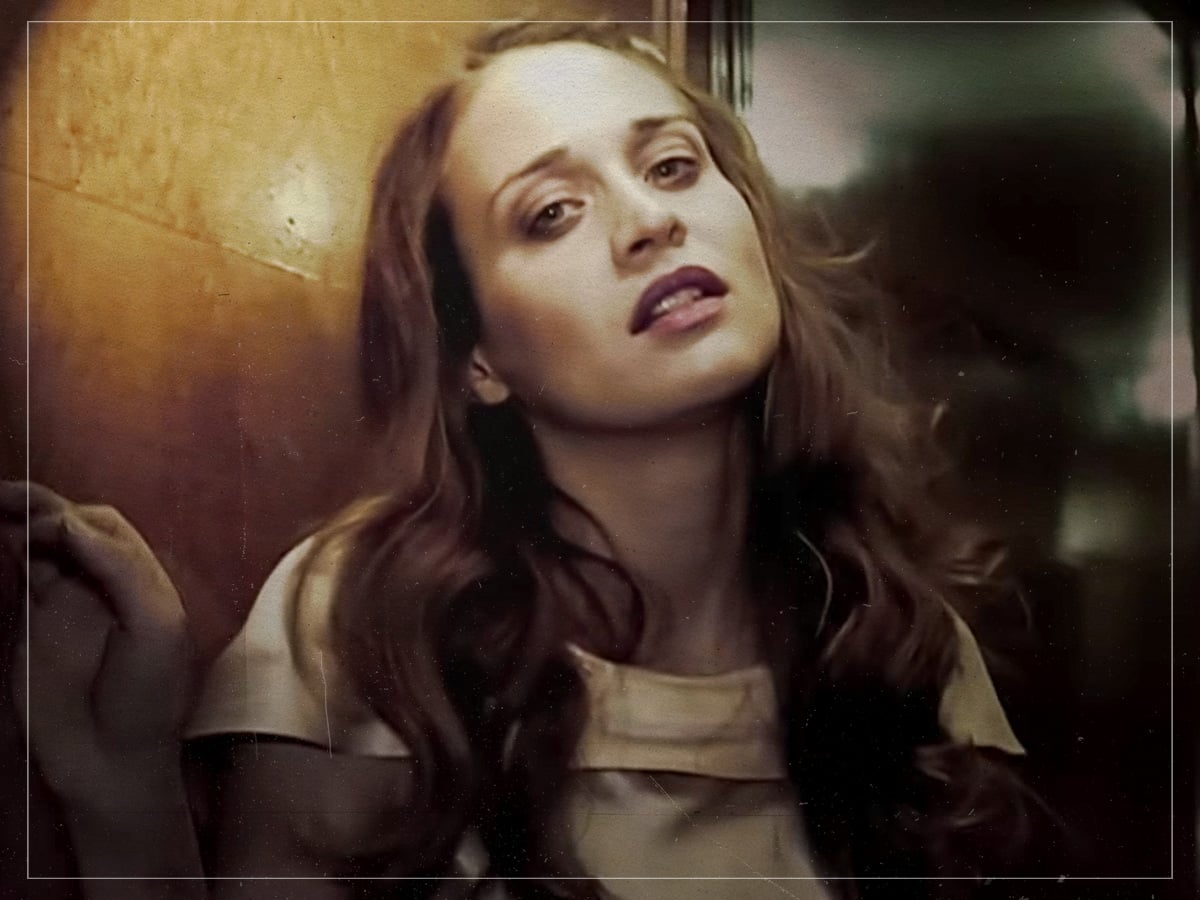
But trusting the process doesn’t stop Apple’s heart from yearning: “And next year, it’ll be clear / This was only leading me to that /And by that time, I hope that / You love me”, she melodically laments, that leads one to ask if she is singing to a lover she hasn’t met yet, trusting in this cosmic timing, or to someone already in her life, desperate for their affection to finally be returned?
As it transpires, it’s both, as she told Vulture in 2020: “This started as a love song to somebody I hadn’t met yet. Then I got back together with Jonathan [Ames] in 2015, and it became about him for a while. Then we broke up about a year later, so it wasn’t about him anymore. Which is how these things go. The songs change who they’re about a lot.”
It’s a song which it built on contradiction: while it’s easy to zoom out and remind yourself you’re just atoms drifting through a vast, indifferent sprawling universe, you still end up feeling what you feel. Nowhere is that duality clearer than in the song’s existential centrepiece, “I move with the trees in the breeze / I know that time is elastic / And I know when I go / All my particles disband and disperse and I’ll be back in the pulse / And I know none of this will matter in the long run / But I know a sound is still a sound around no one / And while I’m in this body / I want somebody to want / And I want what I want, and I want you to love me”.
Of this verse, Apple said: “That was the experience I’d had this one day after six days straight of meditating at Spirit Rock in Woodacre, California, in a group of about 75 women in 2010 […] It came out of the time I’d spent doing a lot of meditation, thinking about the nature of things. That whole thing of, ‘If a tree falls in the forest and no one’s around to hear it, does it make a sound?’ Yes, it does. Because a vibration happens. Whether or not you’re there to hear it. I exist whether or not you see me. These things about me are true whether or not you acknowledge them.”
‘I Want You to Love Me’ is a visceral ballad where she acknowledges the cosmic insignificance of her problems only to crack her heart open regardless, plunging headfirst into the sea of confusion born from this sense of unrequited longing. There are not enough words in the world to fully convey the emotion Apple delivers on this track through her devastating, pleading, half-broken tone, offering up a level of vulnerability that feels almost too private to witness.
Towards the end, her voice splinters and curls into an extended, almost Yoko Ono-esque vocal contortion, a banshee-like wail from a woman finally letting it all out, which brings us back to the song’s central truth: we might feel at one with the universe, we might understand impermanence, and we might know, intellectually, that none of this will matter in the long run, and yet, none of us are above the desperate, human urge to be loved.
