


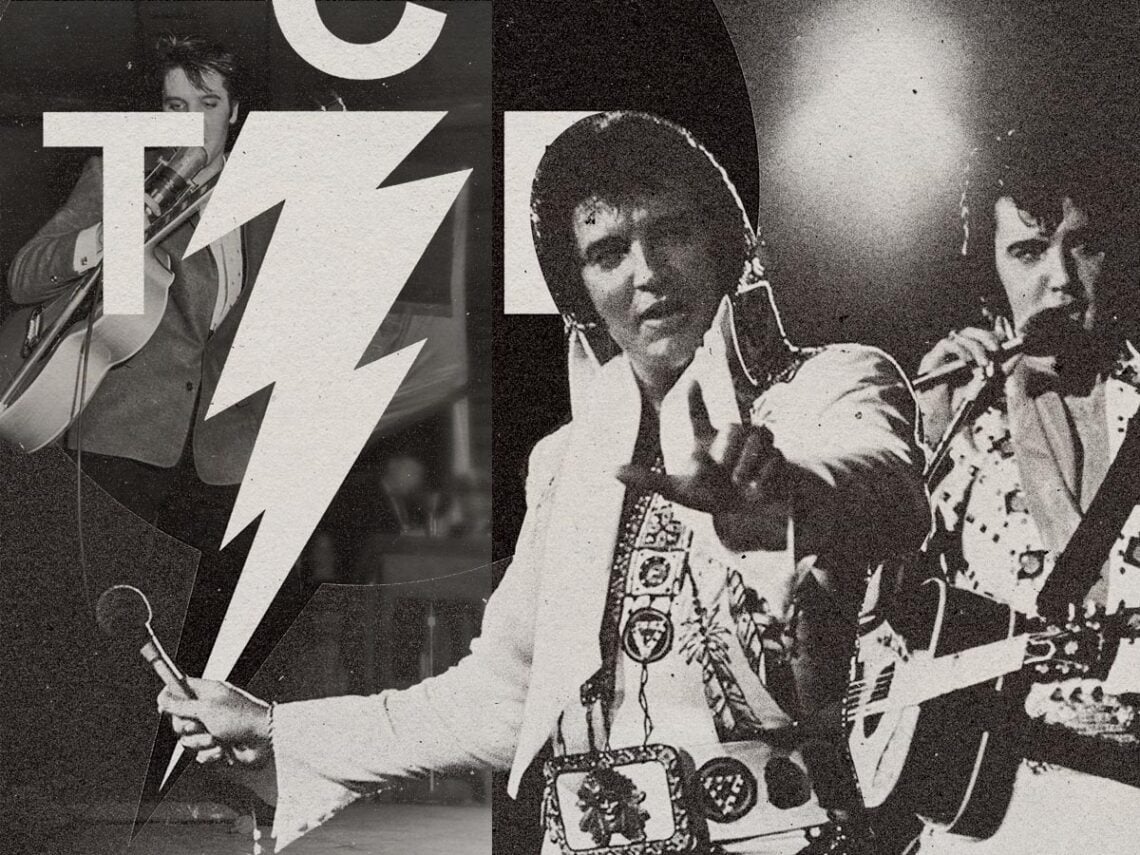
Did Elvis Presley actually reach his peak in the 1960s?

Because of the prolific nature of the average pop star’s recording output in the 1950s and 1960s, there’s a temptation to look at their careers in the same way we would of a professional athlete, as a year-to-year tale of wins and losses, championships and MVP seasons mixed in amongst missteps, injuries and regressions.
Unfortunately, the most obvious and consistently utilised way to look up an artist’s ‘statistics’ is by tracking their performance on the pop charts, and if that system has its flaws in the 2020s, it was all the more messy in the early days of rock and roll, when the tallying up of a record’s popularity was still a highly inexact science.
If you ask Google today, it will tell you that Elvis Presley’s breakthrough year of 1956, when he made his debut on The Ed Sullivan Show and released singles like ‘Heartbreak Hotel’ and ‘Don’t Be Cruel’, was also the most commercially successful of his career, as “he made music history by placing 17 songs on the Billboard Hot 100”.
The problem with that assessment is that the Billboard Hot 100 didn’t exist in 1956; instead, before 1958, Billboard divided up its pop record assessments among several different charts: one for in-store sales, another for radio play, and another for jukebox spins. There was also a fourth list, launched in 1955, called the Top 100, which was a bit more of a catch-all and precursor to the Hot 100.
Based on Elvis’s performance on the Top 100 and Hot 100 alone, he had a grand total of 14 number-one hits in America across his 20-year career. That number grew to 18, however, when pop historians started counting Billboard’s defunct jukebox and disc jockey charts as qualifying categories, and it’s grown even well beyond that for those who choose to open the tent to Billboard’s rival magazine, Cash Box, or to the tracks that topped the charts in other countries without doing so in the States.
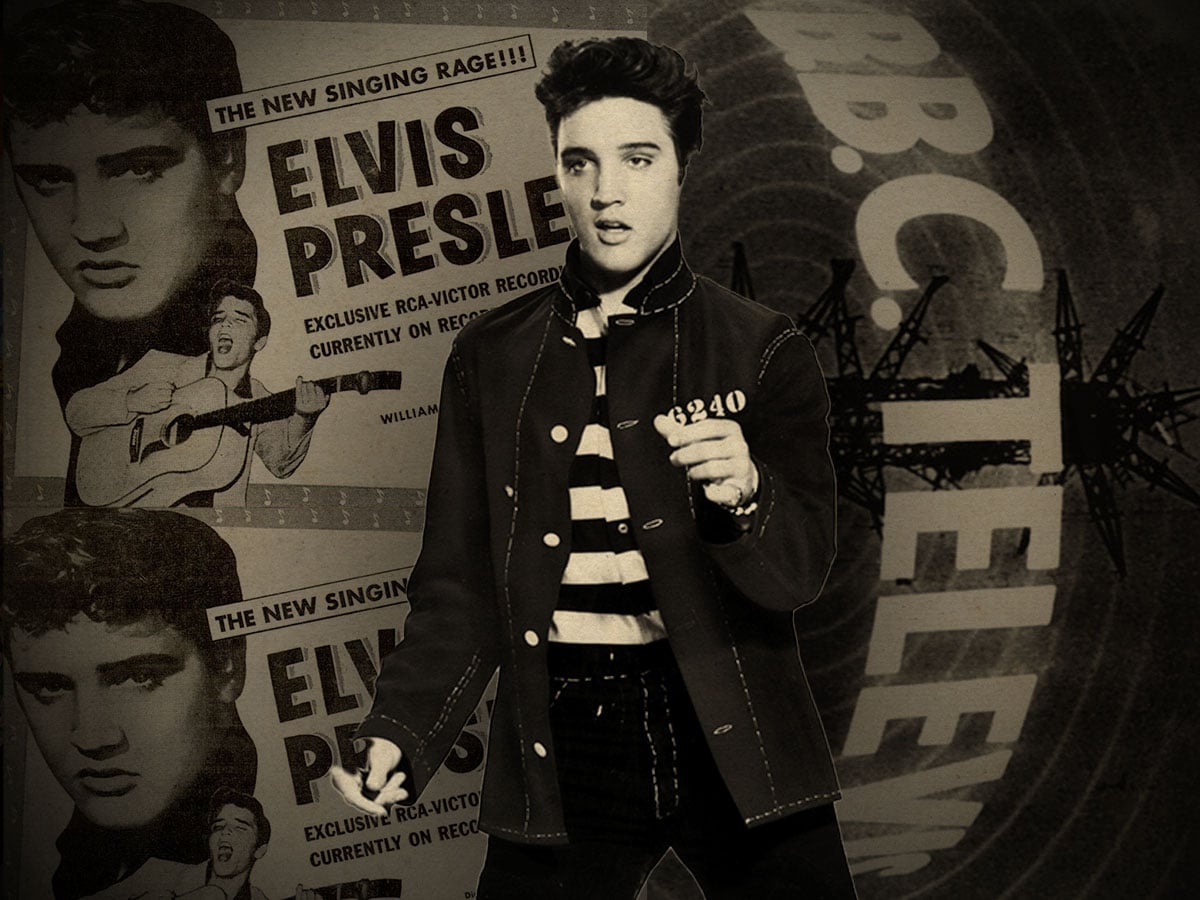
Add in the shady influence of payola in radio play numbers or the role of the mafia in running a lot of the nation’s jukeboxes (it’s a long story), and the situation only gets more complicated.
Obviously, beyond a shadow of a doubt, Elvis Presley was the biggest pop star in the country in the two years before his military hiatus, and no amount of Billboard reassessments would change that. What is up for debate, however, is whether ‘The King’ definitely reached his commercial peak and greatest cultural relevance in those early years, as well. Over time, the general consensus about his career arc is that he lit up the sky like a rocket in 1956 and ‘57, got drafted into the army in ‘58, returned in 1960, and was soon surpassed by his own rock and roll disciples, particularly when The Beatles arrived and bested his record of number one singles in short order.
Because Elvis is celebrated as one of the almost cartoonishly iconic celebrities of 1950s Americana, alongside James Dean, who didn’t survive to the 1960s, and Marilyn Monroe, who only appeared in two films in that decade, we have probably been unconsciously compelled to downgrade his significance as a figure of the ‘60s, with his leather-clad 1968 ‘Comeback Special’ often representing his primary contribution to the era; there was, however, a comeback before ‘the comeback’.
On March 5th, 1960, Presley’s two years of combat-free service to Uncle Sam concluded, and contrary to the notion that his lustre had faded in the meantime, he returned to civilian life with an enormous amount of fanfare. While he had managed to book one recording session shortly after his service time began in the summer of 1958, he’d mostly been cut off from a microphone for a solid 20 months, which is next to nothing by Harry Styles or Taylor Swift standards, but an absolute eternity for Elvis fanatics waiting impatiently during the latter days of the Eisenhower administration.
It’s no surprise, then, that Presley’s original comeback was a gargantuan one. Just two weeks after shedding his army uniform, he was back in RCA Victor’s Nashville studio, cutting the single that would become ‘Stuck On You’, with ‘Fame and Fortune’ as the B-side. The record was laid down on March 20th and released a ridiculous three days later, on the 23rd, a good indication of the army of pressing plants and sleeve printers RCA had at the ready for the occasion.
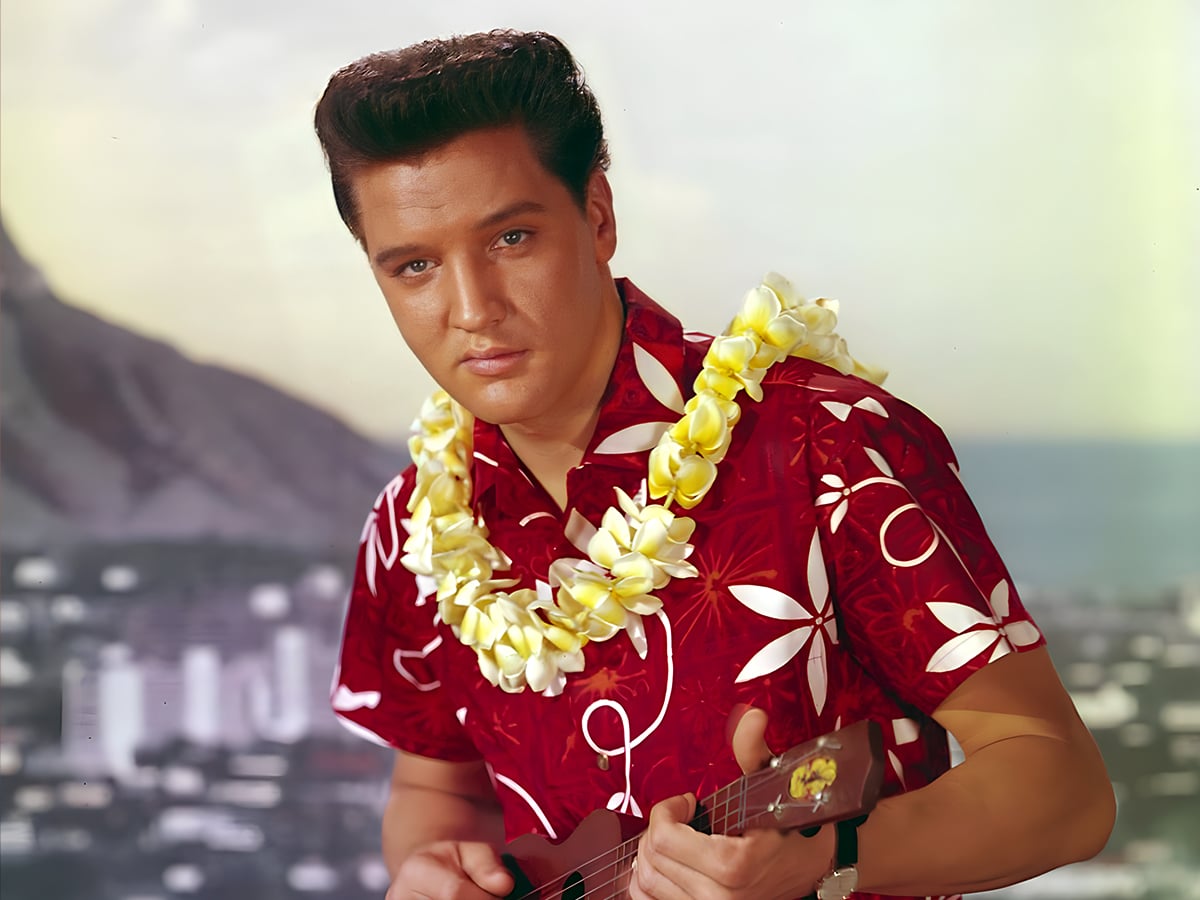
Also ready for the occasion was Elvis’s manager Colonel Tom Parker, the high-octane carnival barker who’d been twiddling his thumbs in desperate anticipation of his bellcow’s return. Shortly after ‘Stuck On You’ was released, Parade magazine caught up with Parker in the lobby of the Beverly Wilshire Hotel in LA, where a gaggle of girls had gathered upon hearing that Elvis was literally in the building.
“Bless your lil’ ol’ heart,” the Colonel said to one of the teen girls, “Be sure an’ buy Elvis’ new record now!” Turning around, he greeted another high schooler by handing her an Elvis 8×10, saying, “Take this photo, darlin’, but remember, you must stay true to Elvis!”
Parker, in a rare moment of reduced bluster, admitted to a Parade reporter that it was hard work keeping the promotional train going. He believed that the record business as a whole “ain’t what it used to be”. “‘Stuck on You’ is doin’ fine,” Parker said, noting that Elvis’s comeback single had raced to number one on the Billboard Hot 100, “but we’re not kiddin’ ourselves. The payola scandal hurt everyone in this business. Then again, rock ‘n’ roll isn’t as popular as before Elvis went into the service.”
Considering the golden age of rock music was actually still on the horizon, it’s easy to forget that many prognosticators at the dawn of the 1960s were foreseeing the demise of the genre as a passing trend, with Elvis leading it and ultimately going down with it. Tom Parker certainly didn’t suggest he had any faith in rock ‘n’ roll; his chips were pushed in solely for Elvis, and he seemed to believe that Hollywood was a more likely path to his client’s continued success in the ’60s.
“My own opinion is that Elvis can be bigger and better than ever,” Parker said, “After he finishes [the film] GI Blues for Hal Wallis, he goes over to 20th Century Fox and makes two pictures in a row right quick… I tell you, a man’d have to be a fool to sell Elvis Presley short.”

Elvis’ two film releases in 1960 were indeed successful, as the musical GI Blues was a box office hit, and the cowboy western Flaming Star earned Presley some of the best reviews of his acting career. It was still the music, though, where Presley dominated the zeitgeist.
On July 5th, 1960, he released the single ‘It’s Now or Never’, which again went to number one, staying there for five weeks in America and a whopping eight weeks in the UK. Another song from the same sessions, ‘Are You Lonesome Tonight’, was a riskier gambit: a cover of an old 1920s ballad that happened to be a favourite of Col Parker’s wife. Elvis breathed fresh life into the wistful tune, though, and it became one of the biggest hits of his entire career, sitting at number one on the Hot 100 from Thanksgiving through New Year’s Day, and topping the charts in at least a dozen other countries, as well.
If two big movies and three number-one singles weren’t enough, Elvis also released three full-length studio albums in 1960. First there was the pop-rock comeback of Elvis is Back!, which went to number one in the UK and number two in America (weirdly beaten by a Bob Newhart comedy album). Next came Presley’s first foray into gospel music with His Hand In Mine, which wasn’t expected to do big numbers, but still reached number 13 on the standard pop charts. And then there was the soundtrack album to GI Blues, which became the top-selling LP in America for the entire year.
Arguably, Presley’s popularity, rather than being diminished by his army service, had strengthened and broadened, as a wider fan base, less concerned about his potentially dangerous hip-swivelling ways, embraced everything he did in 1960, which is perhaps the single biggest year of his career.
“I’ve just got to stay on top,” Elvis told Parade in the summer of 1960, “to grow as an actor and a singer, to win over some of the adult audience. I think my behaviour in the Army has made a lot of people who were down on me change their minds. Since I didn’t goof up in the service, maybe they’re saying, ‘That Elvis can’t be too bad a guy’. At least that’s what I hope they’re saying. In show business, nobody gets to first base unless the public likes him. And the more of the public you can get, then the bigger man you are.”
