


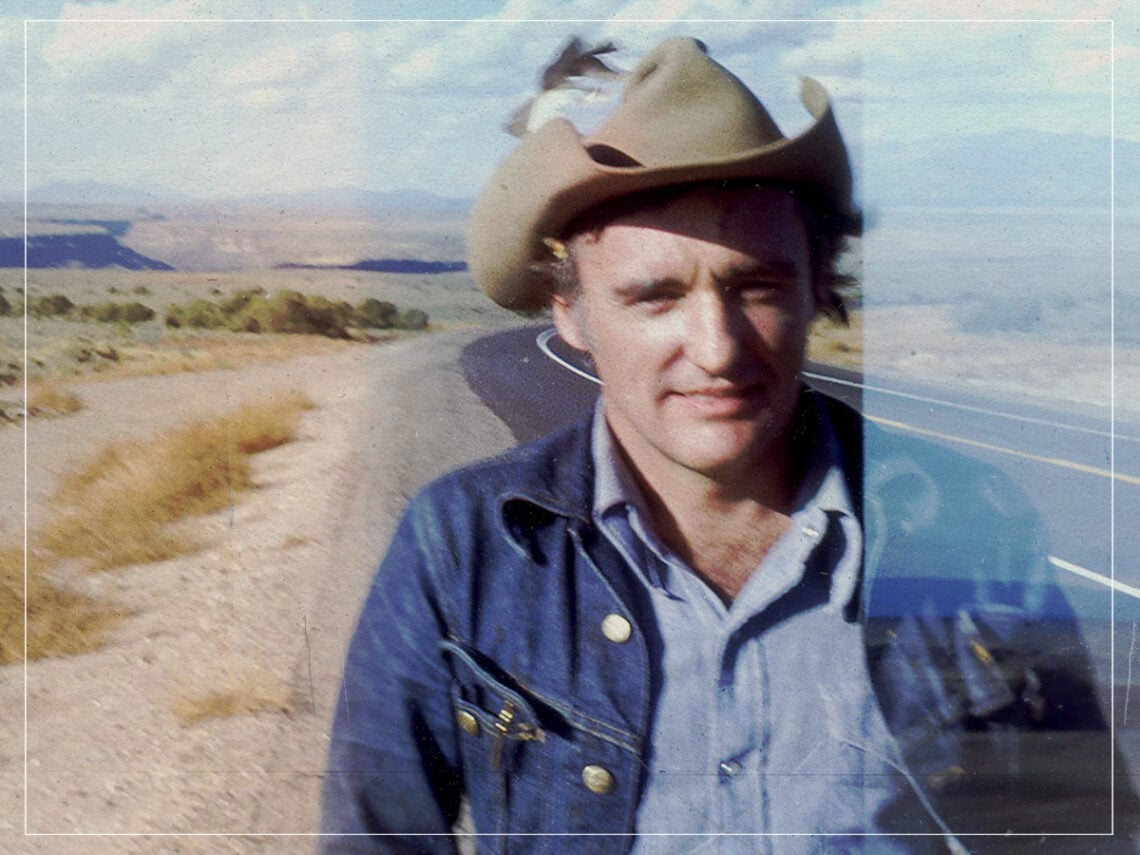
Dennis Hopper’s Peruvian plane ride from hell: “An incredible assortment of freaks”

In Hollywood history, the concept of the “blank cheque” movie has always existed. In essence, if you make a movie that is an unprecedented success for a studio, chances are you will be given carte blanche to do whatever you want with your next picture. What happens, though, when you’re the notorious Dennis Hopper and you make a movie like Easy Rider that changes the entire course of Hollywood history?
Well, you use that blank cheque to pile all your drugged-up buddies into a plane to Peru, of course, where you plan to make an improvisational metafictional drama so baffling that even its own writer won’t understand the final cut.
When Easy Rider made $60million on a reported budget of $375,000, Hopper went from being the wild man of Hollywood to a wild man with a seismic hit under his belt. The movie spoke to a countercultural generation in a way nothing had before, and in later years, it would become apparent that it helped give birth to the New Hollywood era of the 1970s. For his next picture, the world was Hopper’s oyster, and the infamous party animal decided to make something that would challenge capitalism, movie violence, colonialism in Hollywood, and the dark heart of an America that was slowly destroying itself.
Naturally, these big themes required a big story, so Hopper hired Rebel Without a Cause screenwriter Stewart Stern to help him write the script. The process was, shall we say, unorthodox, with Stern admitting to Uncut that Hopper mostly ranted and raved and got the writer high. When Stern said he didn’t want to smoke a joint because it would make him hallucinate, Hopper simply introduced him to the concept of a bong instead.
“I had my snorkel and mask at home, so I put it on while I typed, and every time Dennis had some excess, he’d blow it down my snorkel,” Stern chuckled. “I was nearly as stoned as he was.”
The story they came up with was a parable of a Hollywood stuntman named Kansas who stays in Peru when a movie production being shot there shuts down after the death of the lead actor. Kansas believes he can bring other productions to the village. Instead, he watches in horror as the local population rebuilds the movie set out of bamboo and reenacts what they saw for real, culminating in a blood sacrifice.
Hopper soon negotiated a budget of $850,000 with Universal Pictures for what he titled The Last Movie, and made sure to include in his deal that he had final cut on the movie. He then filled a plane with his cast, friends, and drug-fuelled well-wishers, including Peter Fonda, Kris Kristofferson, Michele Phillips, Dean Stockwell, and filmmaker Henry Jaglom. Perhaps unsurprisingly, that debauched flight was one for the record books.
“The no-smoking sign goes off aboard this APSA Peruvian Airline 707, and the joints are lit,” Jaglom wrote in a journal entry on January 23rd, 1970. “That simple. Ten minutes into the air, and the cabin is a fog of marijuana smoke. Grass air everywhere, guitars and giggles. An incredible assortment of freaks are heading south with me to be in Dennis’ film.”
Amazingly, this wasn’t the only plane ride from hell during The Last Movie’s shoot. While everyone struggled to realise Hopper’s vision when high as a kite and struggling with altitude sickness in a small Peruvian village 11,000 feet above sea level, the premiere of Easy Rider was scheduled in Lima. So, once again, the entire group piled onto a plane, with production manager Paul Lewis confessing, “Dennis and I got a phone call saying they were going to arrest the whole plane because they were giving grass to the stewardesses.”
In the end, this insane production didn’t lend itself to a coherent film, and Hopper’s blank cheque bounced. It was a critical and commercial fiasco, with Universal releasing it in a limited manner under different titles each time. Hopper never wrote a script again, didn’t direct for a decade, and even stopped acting for much of the ’70s.
In 2005, though, Hopper was adamant that he wouldn’t change a thing about the production. “It was one long sex and drugs orgy,” he told Uncut. “Wherever you looked, there were naked people out of their fucking minds. But I wouldn’t say it got in the way. It helped us get the movie done. We might have been drug addicts, but we were drug addicts with a work ethic. The drugs, the drink, the insane sex, they all fuelled our creativity.”
