


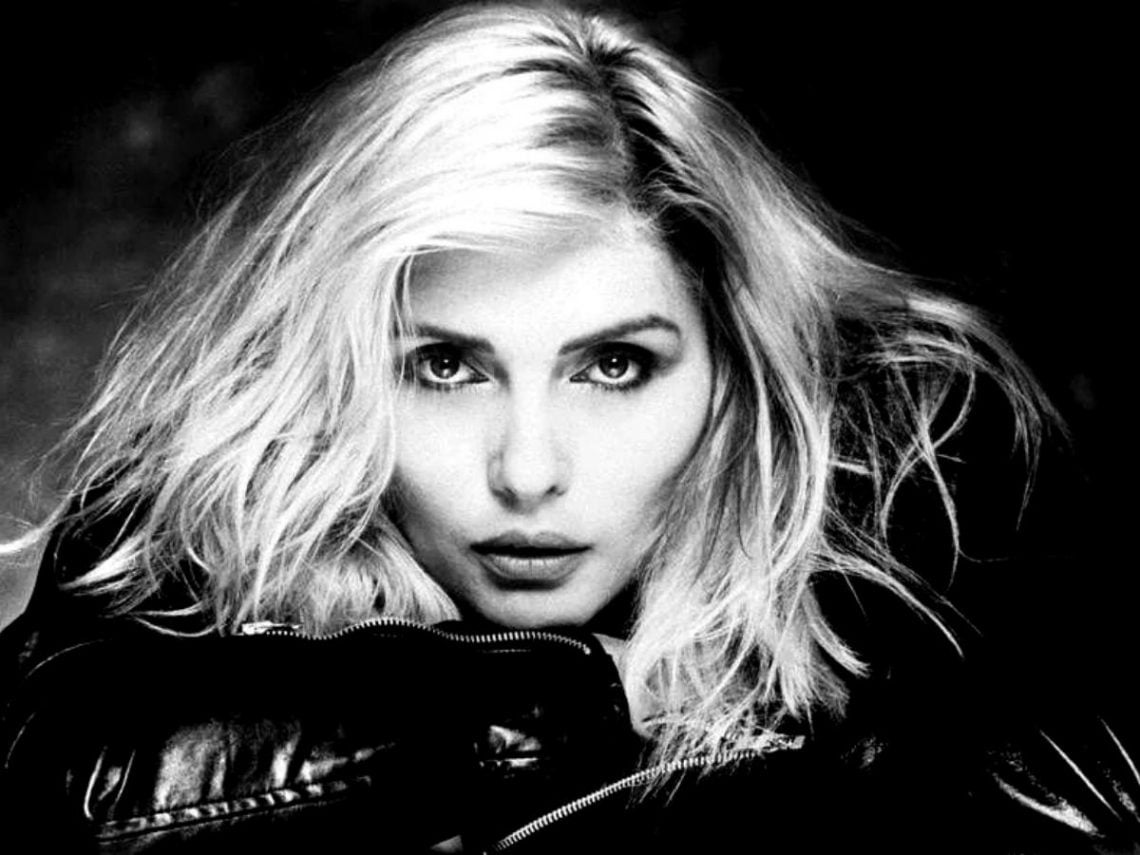
“Pick a character you love and it becomes you”: How Debbie Harry created a persona based on animal instincts

Growing up, Debbie Harry didn’t have many strong female idols. She had an idea of what it felt like to be comfortable in her femininity, but most of what surrounded her were the usual narratives—celebrating the damsel in distress or women and girls who existed to serve others’ stories. It wasn’t until she became more aware of her own strength that she realised she could change this.
Today, Harry is synonymous with Blondie, partly due to her immense presence as a frontwoman and the unwavering magnetism that set her apart from the start. She is a monolith eternally looming over the women who made music, celebrated for her charge in the face of the male gaze. It’s a complicated kind of endearment, one that acknowledges its own limitations yet uses them to get ahead.
However, these nuances have always baffled some while inspiring others, with many suggesting that Harry’s only ploy to surge forward was her ability to go against the grain, as though her artistic intent centred more around breaking the mould than the music itself. Part of that was true, Harry was driven by those who unsuspected her, but mostly, it was all about enjoyment and feeling alive.
Therefore, when creating the Blondie “persona”, Harry fixated on a mixture of the rest of the members of the band and her own experiences, looking to represent something as multifaceted as her own tastes and personality. This was also because, as a child, she hadn’t known anyone to do the same, so doing so felt natural, if a little off-kilter.
“I think we’re all seeing images or performances that we like and absorbing and amalgamating them,” she told The Guardian.
Growing up, Harry recalled, the “beautiful women” on the silver screen were “fairytale versions of what life is for a woman”, mostly because society had yet to embrace the women’s liberation movement with as much fervour as it did.
“A persona gave me freedom, a world of my own,” she admitted, “You pick a character that you love, and then it becomes you.”
The crux of this was Harry’s drive, the one that had been built from day one, beginning when she knew she was different, out of place, perhaps, when it came to being “normal” or coming from a conventional family structure. “It’s animal instincts,” she described, “I can’t define it more than that, but I know that exists for me.” Feeling like an outsider, therefore, became something of a superpower, an energy booster filled with the hues of something greater, more far-reaching than anything tangible.
So, when Harry endured countless interviews with hosts asking her why or how she chose to become such a force in rock, her answers always feel underscored by something knowing, though detached, like her truth is hers and no one else’s. However, this comes from somewhere more creative and innovative than most could ever describe or experience, rooted in a deep appreciation for true artistic identity.
