


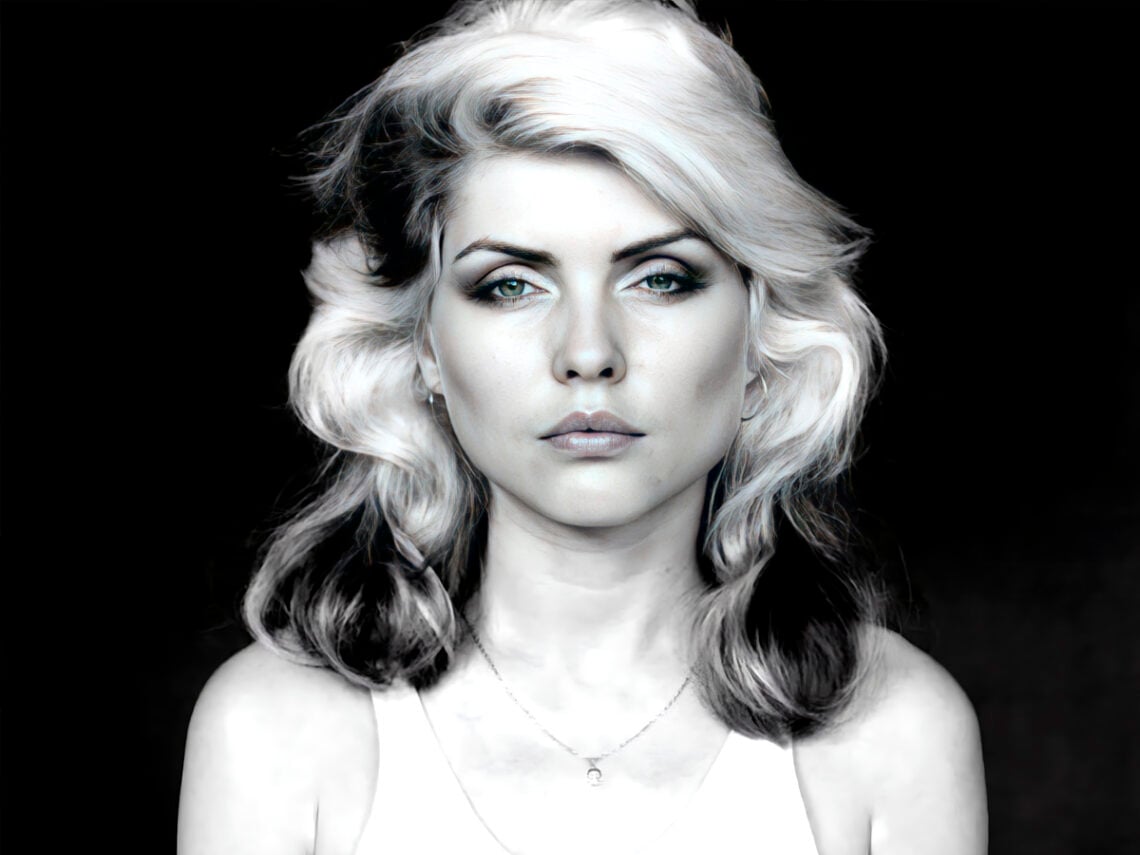
Debbie Harry: The first indie pop star?

What has slightly ruined my day, you ask? The revelation that Debbie Harry was actually born as Angela Trimble, which just sounds far too boring and ordinary a moniker for a life so stratospheric. It was just as well, really, that she was adopted and renamed with something that instantly just seemed so much more befittingly iconic, as it was almost like that change of fate in the earliest moments of her life was what set her on the road to stardom.
In that sense, in every aspect of her life, from her upbringing to her fame, there has always been something against the grain about Harry. That’s in no way meant as an insult – in fact, quite the opposite – but there’s just a quality that’s so strikingly enigmatic in her left-field approach that forever leaves you guessing, and always reels you in for more. Young wannabe pop stars will pine after a thimble of this secret sauce, but in Harry’s case, it oozes from every pore.
It’s an obvious statement that the Blondie frontman effectively bolted out of the blue and instantly became a punk icon, but there was a lot of varied and difficult work to put in first, in order to set her on that path. Beginning her musical tenure in 1966 as a backing singer for the folk rock band The Wind in the Willows, before then joining The Stilettos, and finally forming Blondie, there was clearly a diverse road to travel before she could finally focus on her definitive sound – and thus, only through hard work and crafting, an icon was born.
But even then, Harry and her Blondie cohort intelligently built their rapture through mastering the underground scene before blazing into the mainstream. Becoming staples at clubs like CBGB may have in some ways seemed like a rite of passage to them, but it was this element of anticipation and yearning that ultimately made Blondie’s eventual break into the charts so blinding in its success, as they have inadvertently created a stellar strategy that any PR agent would be jealous of.
As such, when Harry and the band made the leap into mainstream fame, it was only natural for her to continue on the trajectory of the persona she had already built. There was no point in fabricating some kind of more palatable persona just because she was suddenly the biggest pop star in the world – she had made her name by being unapologetically punk, so why wouldn’t she stick with it?
This has manifested itself in a plethora of ways for Harry herself, but it is also worth considering the transcendental effects this has had on female pop stars of the modern day, for whom the blueprint has been laid that makes it acceptable to be simultaneously slightly avant-garde but still maintain mainstream popularity.
Take the likes of Caroline Polachek or Charli XCX as the prime examples – while you can hardly compare the efforts of Blondie to Brat like for like, the space and ability to have agency in your sonic output all while creating an authentic and original self was undeniably carved by figures like Harry. She blazed the way in making women’s weirdness not only recognised, but celebrated as among the most popular exports of modern music. The Polacheks and the Charlis of the modern landscape have a lot to thank her for.
Of course, if you put all these statements to Harry herself, there’s no telling what the response would be. After all, she may be powerful, but she’s not a fortune teller – she couldn’t have envisioned making such a seismic, lasting impact on the industry when she was just starting out herself, and as such branding her as the first indie pop star could be met with some suspicion. But to the rest of the world, appreciating the breadth of sonic ingenuity that has come in her wake, I still think it makes a pretty compelling case.
