


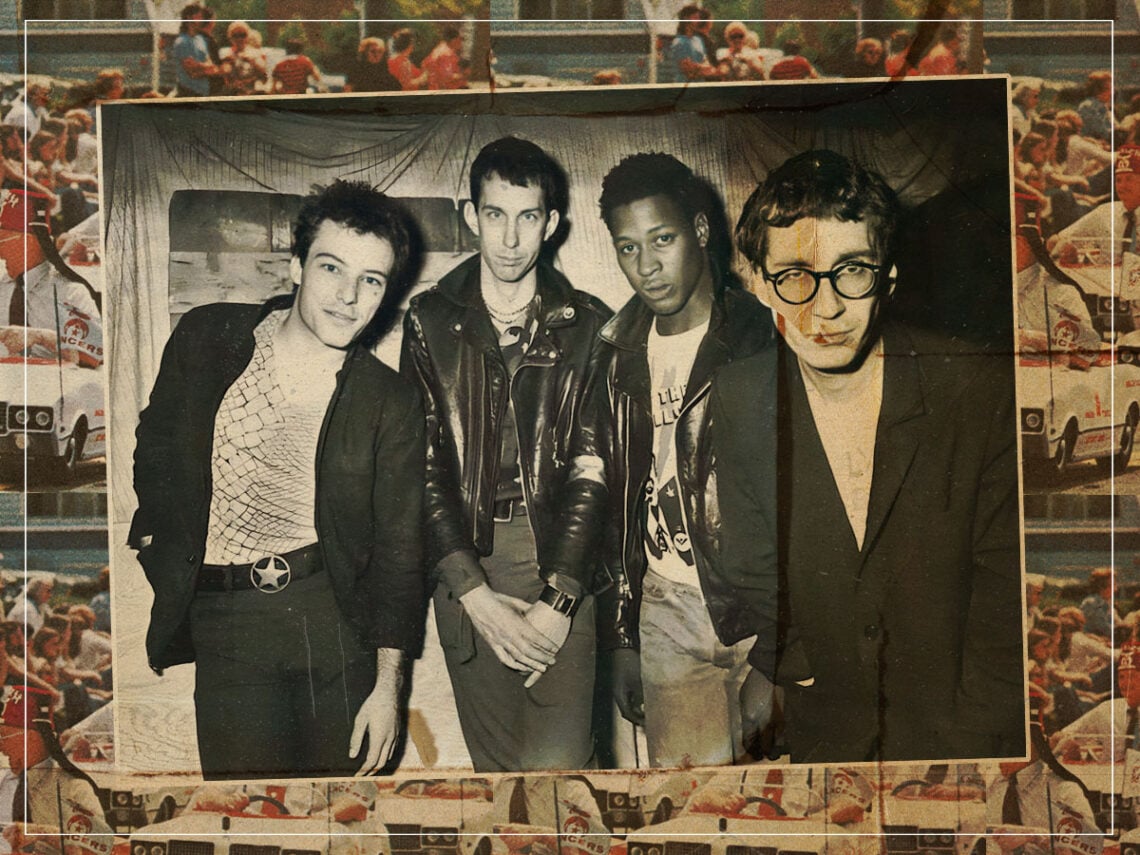
Dead Kennedys’ searing attack on MTV: “The purpose is to provoke, not to soothe”

It was back in 1981 that Music Television, or MTV to you and I, first hit television screens and, depending on who you ask, the channel either revolutionised the world of pop and rock music or turned rock and roll into nothing more than a marketing commodity. San Francisco punk heroes Dead Kennedys fell on the latter side of the argument.
From the very early origins of punk rock, the movement has existed in direct opposition to the musical mainstream. Particularly in the early days, punk aimed to shock mainstream audiences and subvert expectations of generic rock and pop music.
However, very few bands took that inherent manifesto to the same extremes as Dead Kennedys. Even the band’s name, referring to the assassination of John F Kennedy and his brother, Robert, was shocking and appalling to mainstream audiences and authority figures when the band first emerged from the obscurity of San Francisco’s blossoming punk scene.
As opposed to many of their punk peers, though, Dead Kennedys were never in the business of controversy for the sake of it. At the heart of the group was always a defiant, unshakable political motivation, with frontman and songwriter Jello Biafra tackling topics ranging all the way from police brutality to genocide in Cambodia, making them one of the most confrontational, controversial, yet vitally important groups to ever emerge from the punk landscape. Along with those huge political topics, however, the band also took aim at the music industry itself on various occasions.
Like many punk bands of that era, Dead Kennedys published their work through a small, independent label, Alternative Tentacles, which gave them a sense of freedom not often afforded to those with major label contracts. That freedom allowed Biafra and the group to directly challenge aspects of the music industry which they deemed hypocritical, oppressive, or dangerous. Perhaps their most searing take on the industry came in 1985, when the group set their crosshairs on MTV, with the track ‘MTV Get Off The Air’.

By 1985, MTV was not only broadcasting the latest rock and pop videos, but it had become a major influence on the music industry as a whole. All of a sudden, major labels cottoned on to the fact that, if a single was broadcast on MTV, it would sell a lot more. So, marketability and music videos became an integral part of many major labels’ output, in a bid to capitalise on the popularity of the television channel. Inevitably, this didn’t sit right with Jello Biafra or Dead Kennedys.
“It occurred to me early on that the name ‘Dead Kennedys’ was going to be enough that MTV would never play us anyway, so why bother?” Biafra revealed in the book MTV Ruled the World. “Plus, how can you turn a Dead Kennedys song into some sex, drugs, and rock ‘n’ roll thing… well, no, take out the drugs – it’s MTV – with me as the silent film comedian, mouthing the words, trying to look cute,” he continued.
“My stuff was never supposed to be cute, any more than it was supposed to be used in TV commercials or something like that,” the songwriter added. “The purpose is to provoke, not to soothe.”
‘MTV Get Off The Air’ was certainly provoking, seeing the band lay into the channel for turning “rock and roll rebellion into Pat Boone sedation,” among various other credible insults.
At the core of the band’s criticisms was the fact that MTV was diluting the raw, rebellious nature of rock and roll by prioritising soft, safe, and marketable material. This is a trend that wasn’t necessarily started by MTV, but the channel certainly accelerated the process of the industry being driven by “accountants instead of music fans”.
Depressingly, the future of the music industry, as predicted by Biafra in ‘MTV Get Off The Air’, is not all that dissimilar from the reality of the industry today—dominated by safe, marketable, personality-voided acts that make label bosses rich without causing much real controversy. The only key difference is that MTV has switched from showing music videos to being a key proprietor of reality television. The “sugar-coated mindless garbage” that Biafra warned of remains; it just changed form a little.
