


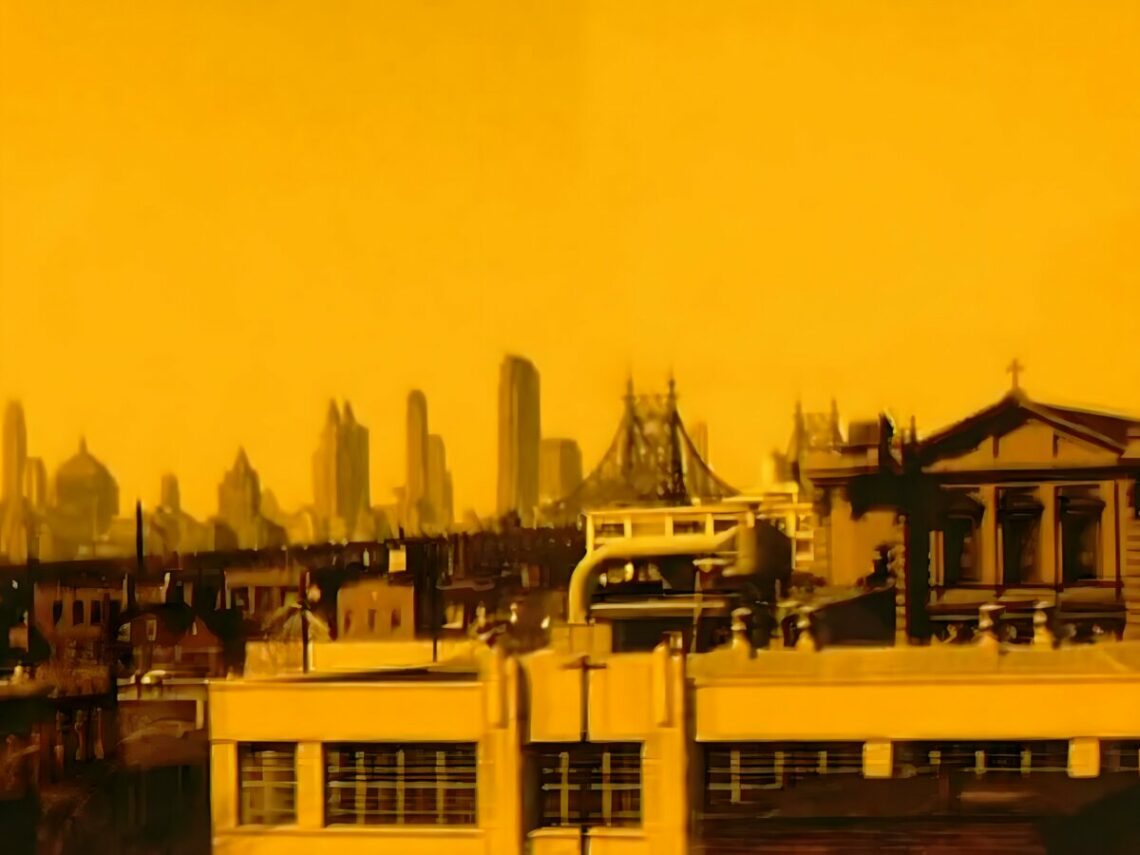
‘Daybreak Express’: D.A. Pennebaker’s New York City

Considered by many to be among the eminent documentarians of his generation, D.A. Pennebaker was a crucial artistic figure at a time when the counterculture movement gathered significant momentum. Primarily known for his major works like the renowned 1967 Bob Dylan documentary Don’t Look Back, Pennebaker’s filmography is full of several gems. However, it all started with a strangely enigmatic tribute to New York City.
Named after Duke Ellington’s famous record ‘Daybreak Express’, which accompanies Pennebaker’s unique portrait, the 1953 work marked his first foray into filmmaking. Deeply influenced by the extraordinary developments that took place within the landscape of American experimental cinema, Pennebaker set out to emulate the rich traditions of city symphonies even though he didn’t have any formal training as a director.
While recalling the project, Pennebaker told Film Comment: “With Daybreak Express, I was thinking my way through without even understanding what I was even doing. I didn’t know enough about filmmaking. I didn’t know anything that you’re supposed to know as a director or a cameraman. I didn’t even know what crossing the line was. But I was all alone, no one was going to tell me anything, and I could shoot what I wanted. And I didn’t know how to make, how to create a scene.”
Despite his lack of experience, or maybe even because of it, Daybreak Express emerges as a refreshingly dynamic vision that is very different from the more acclaimed movies under Pennebaker’s belt. Utilising the incredible sonic motion of Ellington’s music, it paints a vibrant picture of New York City’s Third Avenue Elevated subway. Since the route was eventually phased out and shut down, the images in Daybreak Express have become all the more valuable.
According to Pennebaker, it was Daybreak Express that convinced Bob Dylan of his talents as a documentarian. “I know that Dylan had seen my early film, Daybreak Express,” he added. “Sara Lownds, the woman he married, had actually worked for us at Drew Associates. I gave her a print, I think. He knew about the film. Whether he liked it or didn’t like it, whether he was even involved in the decision to make the film, I didn’t know. I never asked.”
Beautifully shot in 16mm Kodachrome, the rhythmic oscillations of trains zooming past New York’s seemingly infinite fire escapes perfectly merge with Ellington’s radical track. Doused in the omnipresent orange hues of the sun, Pennebaker’s rendition of the great city is simultaneously emotional, familiar and wholly original.
Watch the film below.
