


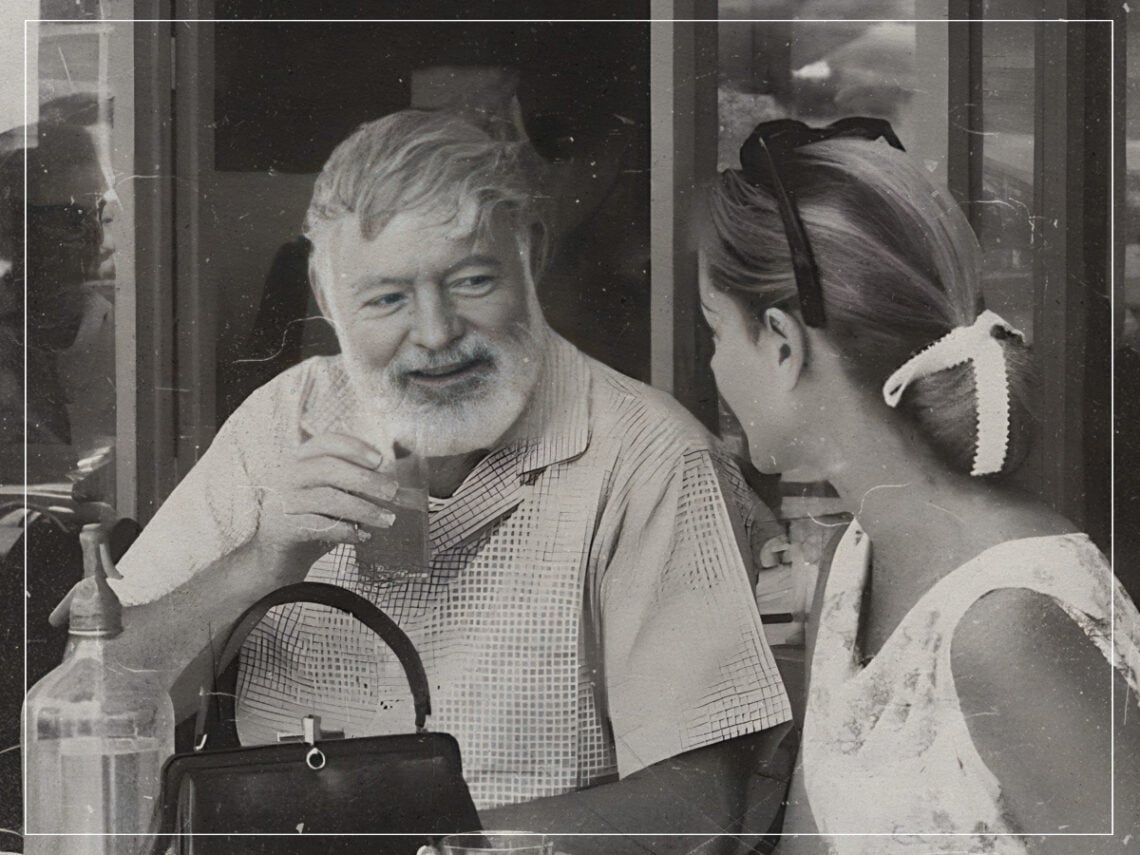
The day Ernest Hemingway decreed that he had “never been happier”

Ernest Hemingway lived a life of extremes.
One wonders whether he would have preferred to live any other way, as, on the one hand, it led to a life of numerous spectacular experiences. As a hedonist, the pursuit of pleasure more or less defined him, and he did find what he was looking for. That wasn’t all that he found, though. In the most private, quiet moments of his life, the ones consumed by the bouts of depression that continued to eat at him, he must have wished for a steadier life. We all do when we’re in that dark place.
Yet, the majority of the time, he probably thought the peaks were worth the troughs. There are enough of his personal writings that support this, though the man was never a prolific diarist. Via the letters he wrote to his friends and family, we can put together a picture of a man who didn’t just live for the chase of experiencing the next high. He genuinely appreciated the moments of elation that his pleasures gave him. Whether that was food, drink, music, women or great writing, these were all individual experiences that mattered to him, rather than a checklist of things to get through.
Not only that, but he was also a man of achievement. Unlike the likes of Edgar Allan Poe and even contemporaries like F Scott Fitzgerald, Hemingway was a goddamn sensation in his heyday. Critically acclaimed and a bestseller to boot, he won a Pulitzer Prize for his novel The Old Man and the Sea in 1953. A month later, though, he set out for a safari in East Africa. Despite containing a plane crash that he’d never fully recover from, the trip also contained a day that, in his own words, was the happiest he’d ever experienced in his life.
What happened on the happiest day of Ernest Hemingway’s life?
Ironically enough for a man who was never a diarist, this comes from a diary entry that he himself wrote. However, this wasn’t in any of his own journals, but rather that of his fourth wife, Mary Welsh. Hemingway himself wrote an entry in her diary on December 20th, 1953. One genuinely heart-warming in content and in the almost glowing way that Hemingway wrote about them. For a man who made his name with some of his era’s most bleak works of American fiction, the man could make these moments sound as life-affirming as they felt at the time.
It is also a deeply telling find. One that speaks to the subtle queer readings that many have found within the life and works of Ernest Hemingway. The man liked his woman boyish, and Welsh was no exception, and as he talks of his relationship with Welsh, some sentiments are written that raise an eyebrow even today. Of Welsh, Hemingway says, “She has always wanted to be a boy and thinks as a boy without ever losing any femininity. She loves me to be her girl, which I love to be… In return, she makes me awards, and at night we do every sort of thing which pleases her and which pleases me.”
Almost sensing what he’s writing down, Hemingway writes, “Mary has never had one lesbian impulse but has always wanted to be a boy. Since I have never cared for any man and dislike any tactile contact with men…I loved feeling the embrace of Mary, which came to me as something quite new and outside all tribal law.”
The specifics of what is going on between these two lovers (who had an infamously complicated relationship) will be lost to time. However, it’s clear to see that this icon of American masculinity had depths within his gender identity that to this day, many men are unwilling to explore.
Yet, the moment he did, Ernest Hemingway signed off the diary entry he wrote about that moment by saying, “I have never been happier.” Something all men can learn from, hopefully.
