


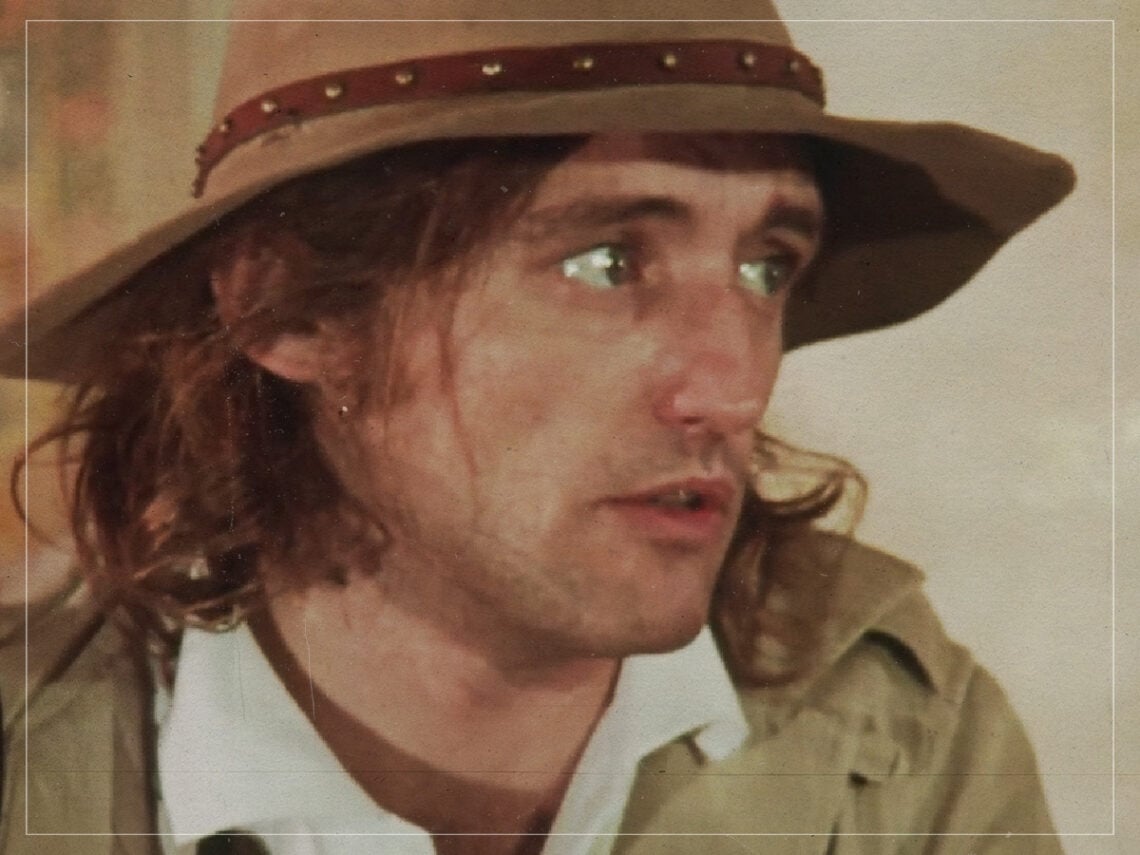
The day Dennis Hopper found out his father faked his death to spy on the enemy during World War II

Dennis Hopper was a true hellraiser who was always up to something, whether it was playing Russian roulette, shooting trees in the jungle while walking around naked on acid, or ingesting every substance he could get his hands on.
Hopper lived such an extraordinary life, and how he was able to write and direct movies like Easy Rider in the midst of such chaos is quite remarkable. It seemed like this innate wildness and daredevilry that he possessed only aided his artistic process; he took risks without fear, the best example of this being his phenomenal, yet terrifying, performance as Frank Booth in David Lynch’s Blue Velvet.
But how does one become so wild? It appears that a certain moment in Hopper’s childhood might have flicked a switch in his brain, traumatising him enough to completely alter his perception of authority figures and life itself. Here’s the thing: during World War II, Hopper was told that his dad had died.
His mother sat the nine-year-old down and said that his father had been killed in a munitions explosion, a crushing blow for any child to hear. Hopper seemed to take the news pretty well, though. “I ate raw onion sandwiches in the Victory Garden,” he once explained.
Hopper spent his days playing, adjusting to a life without a father in it. “I drove a combine and one wayed. I was William Tell and Paul Revere. I dug foxholes in the field and played war. I was Errol Flynn and Abbott and Costello. I racked balls in the pool ball, smoked cigarettes, drank beer, and ate more onions,” he wrote.
So, Hopper got on with his life without his father, but then one day, Jay Hopper mysteriously returned home. He wasn’t dead at all; rather, he had been working in a unit of the Office of Strategic Services (OSS) in Japan. While the family decided to fake his death for the sake of spying on the enemy, it’s odd that Hopper’s mother would go as far as to convince her son of the traumatic lie, too. Perhaps the young child wasn’t very good at keeping secrets.
The lie didn’t sink Hopper into a period of mourning as you might expect, which is something, at least. Clearly, he wasn’t as bothered as some, getting on with his onion-eating and Hollywood day-dreaming. Yet, such a massive lie made him incredibly distrustful. Who can you trust if not your own parents?
 The 1955 movie Katharine Hepburn considered her best performance: “It would have to be that film”
 Anthony Bourdain’s forgotten 2008 movie with the worst director of all time: “He was never disturbing the work”
 The cold day in 1997 when a grizzly bear nearly mauled Jim Carrey to death: “What a way to go”
Hopper was evidently already heading towards destruction by smoking and drinking before he’d even reached double digits, but it seems like this giant fabrication tipped him over the edge. “Now wouldn’t that make you a paranoiac?” he said.
Hopper is not exactly who comes to mind when you think of someone who grew up to be well-adjusted, and it seems like his father’s fake death had something to do with it. That suspicion and distrust for authority led Hopper down a rebellious path, and he never strayed from it, even when Hollywood opportunities started to dry up and rehab came calling. Nothing seemed capable of stopping Hopper from being cinema’s ultimate rebel.
