


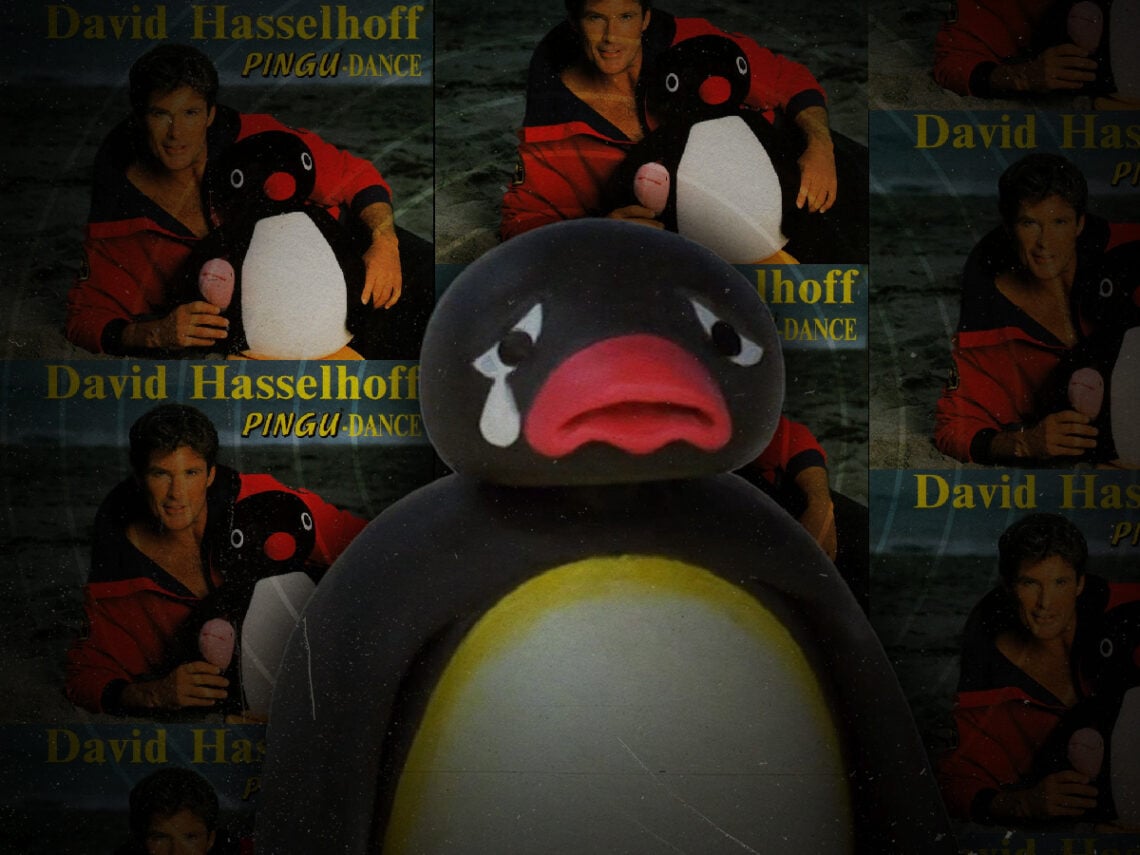
How a David Hasselhoff rap led to the death of the ‘Pingu’ theme tune

The 1990s truly were a golden age for children’s television in the UK, with many characters gracing our screens that youngsters were able to form a connection with and be influenced by the lives of and the actions of.
There were stalwarts like Thomas the Tank Engine and Postman Pat still going strong from the decade before, while new blood in the shape of the Teletubbies was also providing a brightly-coloured alternative to their captivating, if somewhat mundane, predecessors whose jobs were the main focal point of their popularity. However, one show, with its titular character, was perhaps the most beloved of all, for how relatable his brand of mischief-making was despite his non-verbal communication and anthropomorphic presentation.
Pingu was, and still is, a gem of a show, and the adventures of the boisterous yet adorable plasticine penguin at the centre of the show are something that many ‘90s kids still get pangs of nostalgia for. I have distinct memories of endlessly watching VHS tapes of the early episodes at my grandparents’ house, and one of the core elements of this that will forever be burned into my memory is its iconic theme tune. At the head of the show was a cheeky, cartoonish and frankly lovable ten-second soundbite, all things that represent everything Pingu himself stood for.
And then suddenly, it wasn’t there. It had been replaced with something more contemporary and reflective of modern styles – a consciously hip fusion of Eurodance and new jack swing that now feels painfully of its time, unlike the timeless melody that had introduced the show before.
But why did they change it? It may come as a surprise to learn that the second incarnation of the Pingu theme tune is actually only an extract of a full-length song from 1993 called ‘Pingu-Dance’, and it would be an even bigger surprise to learn that the full-length version is simply the backing track for a Pingu-themed rap song performed by David Hasselhoff.
One of the reasons it’s a barely-known fact is that the single was only ever released in Switzerland, the country responsible for creating Pingu, and was created solely with the intention of promoting the show with a high-profile celebrity. However, the much larger problem is that the Hoff was known for Baywatch and Knight Rider, two shows with a contrasting target audience from that of Pingu, and there was little to no explanation for why he, of all people, was recruited to spit clunky bars in character as the beloved semi-aquatic seabird.
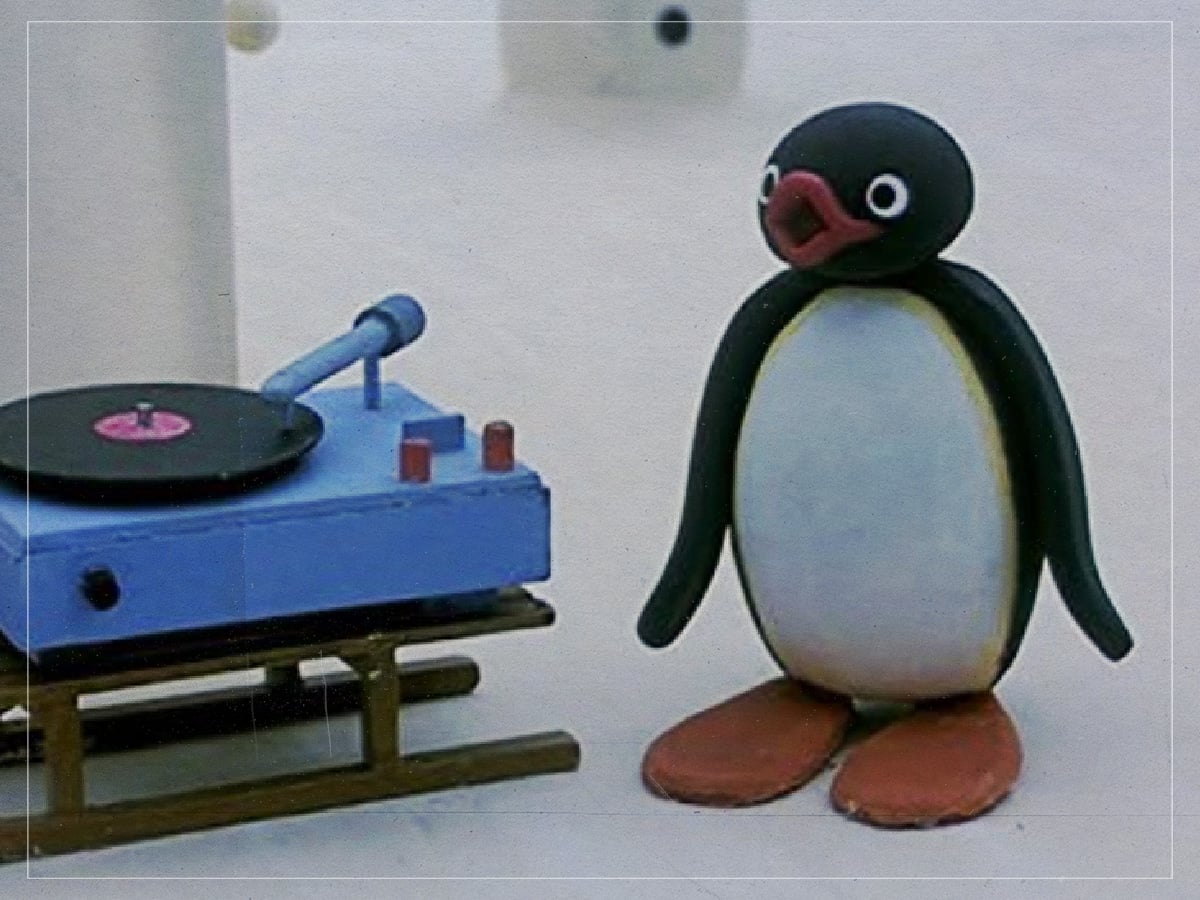
Kids weren’t going to get excited about ‘Pingu-Dance’, and the fact that Hasselhoff’s career was beginning to decline around 1993, with his acting roles decreasing and his musical endeavours limited almost exclusively to repackaged greatest hits compilations, meant that parents who would know who he was also wouldn’t bat an eyelid at it.
All it ends up being is an embarrassment on all fronts, with Hasselhoff having released one of the worst songs of his already tepid musical career to date, and the iconic theme tune for Pingu receiving the axe after just two series to make way for an ill-fitting replacement that simply lacked all of the charm.
His flow is awkward, and that’s an understatement – the lyrics are as contrived as they can get, meaning you’ll either wince or piss yourself laughing depending on how high your threshold for tolerating cringe is. There are no mentions of the activities that Pingu likes to do, such as frequenting his local fishing hole or building igloos with his best friend, Robby the Seal, but instead, Hoff goes for lines such as: “We all have mommys, and we all have dads, sometimes we’re happy, sometimes we’re sad.” I’ll be honest with you; I’m not sad, I’m fucking devastated.
A children’s theme ought to be nailed on for success in the charts as a result of its ubiquity. For example, Teletubbies and Bob the Builder had chart hits in the UK with extended versions of their pre-existing theme tunes, and they’re not even as good as the original Pingu theme. What they did have was a sense of familiarity, and children who adored the show were bound to lap up an officially released single version of a song they were used to hearing at the start of every show. The Pingu theme wouldn’t be changed until two years after ‘Pingu-Dance’, providing it with another reason to fall flat.
What was ostensibly a cash-grab from Hasselhoff thankfully ended up backfiring and failing to have any impact, but the damage was already done; the world had been exposed to the horrors of ‘Pingu-Dance’, and the stellar work of original composer Antonio Conde has been binned just to stroke the ego of a star who had already begun to burn out.
