


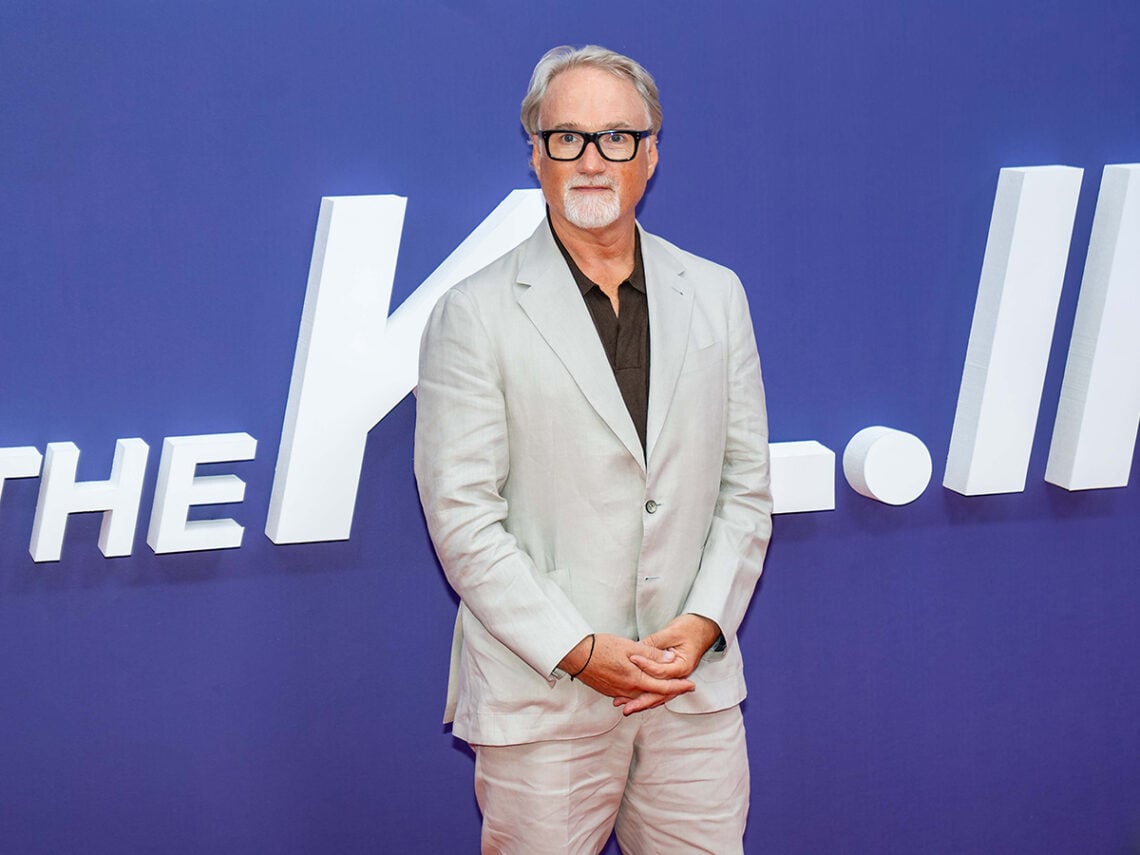
David Fincher names his biggest directorial inspirations

David Fincher is the master of the psychological thriller. Through movies like Panic Room, Zodiac, and Se7en, he has created some of the tensest, most heart-racing cinema ever committed to film. When it comes to edge-of-your-seat emotions, few are better, but there’s more to his catalogue than shady serial killers and pulsing scores. He’s also directed The Social Network, Mank, and The Curious Case of Benjamin Button, proving he is far more than a one-trick pony.
To have produced such a variety of work, Fincher must surely have an equally wide range of influences. According to Empire, who interviewed the Fight Club boss in 2019, this is exactly right, as he gave a list of other directors he admired. “George Roy Hill, Alfred Hitchcock, Roman Polanski, Steven Spielberg, Alan Pakula and Bob Fosse. All the normal greats,” Fincher rattled off in a deadpan fashion. He then added Hal Ashby before calling his selections “all the people that you would guess.”
Of these names, the most obvious is Hitchcock. Both men deal in intricately crafted stories full of twists, turns, and seat-gripping moments. Fincher’s movie Gone Girl borrows several elements from Hitchcock’s Strangers on a Train, and rumours recently emerged about the filmmaker working on a remake of Rope. There’s also a connection between Fincher and the disgraced Polanski, as it was announced in 2019 that the former was working on a prequel series for Netflix based on the latter’s movie Chinatown. As for Steven Spielberg, well, he’s Steven Spielberg. He inspires everyone.
He might not be as famous these days as other names in Fincher’s list, but Bob Fosse is equally important to the history of cinema. He won the Academy Award for ‘Best Director’ for his work on 1972’s Cabaret and was nominated for the same award and ‘Best Original Screenplay’ for All That Jazz. This betrays Fosse’s time as a dancer and choreographer, where he revolutionised the art of jazz dancing. Alan J Pakula is perhaps best known for his so-called ‘paranoia trilogy’ – Klute, The Parallax View, and All the President’s Men – a collection of films all involving subterfuge and political intrigue. As for Hal Ashby, Fincher named his 1979 work Being There among his favourite films of all time.
As for George Roy Hill, he’s the whole reason Fincher got into filmmaking in the first place. “The eureka moment was when I saw a behind-the-scenes making-of about Butch Cassidy and the Sundance Kid,” he told The Guardian about the moment he decided to become a director. “It was the first time I’d ever conceived that films didn’t happen in real time. I was about seven years old, and I thought, ‘What a cool job’. You get to go on location, have trained horses and blow up trains and hang out with Katharine Ross. That seemed like a pretty good gig.”
Butch Cassidy and the Sundance Kid is easily Hill’s most famous work, but he also made the likes of Thoroughly Modern Millie, the Kurt Vonnegut adaptation Slaughterhouse-Five, and The Sting. Fincher has often discussed his work during interviews, including one with Letterboxd where he mentioned how impressive its title sequence is. Given that this is the man who brought the Se7en titles to life, that’s high praise.
Fincher’s vast array of inspirations is testament to the importance of never being narrow-minded. You wouldn’t expect a guy like him to be a fan of Westerns, musicals, and sci-fi, but that is precisely why his work is so solid, because it draws on so many different sources and seamlessly weaves them together.
