


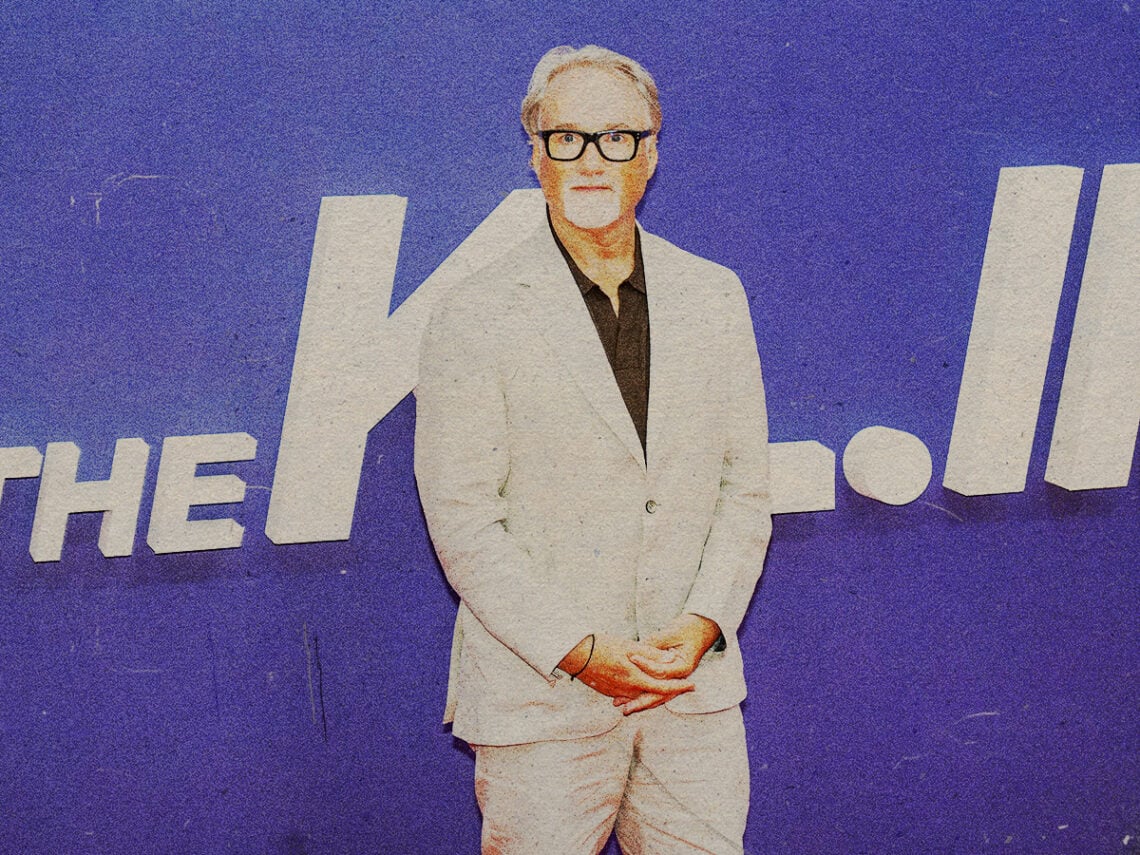
David Fincher names the greatest credit sequences in cinema history

Every single major movie ever released has credits. At the beginning, at the end, or both, the credit sequence is as much a part of cinema as the close-up, the soundtrack, or the overpriced popcorn. Whilst you can just flash words up on the screen and be done with it, directors and editors have found increasingly creative ways to complete this contractual obligation, and this ingenuity does not go unrecognised. One man who knows a thing or two about credits is David Fincher.
Movies, TV shows, music videos, Fincher’s name has appeared in credits for all sorts of things, forever tying him to some of the most important pieces of art from across the past four decades.
When asked about the greatest opening credits in history in an interview with Empire, Fincher gave a series of answers that, brilliantly, included one of his films. “Well, Seven’s one of them.” he humbly proclaimed. “Alien, probably. The early [Richard] Greenberg stuff… all the Hitchcock stuff is pretty amazing.” He saved his biggest praise for the opening of George Roy Hill’s Butch Cassidy and the Sundance Kid, which he claimed was never intended to be a title sequence. “To start something with the silent-movie version and then to go into the reclaiming of the American western, but also kind of the first buddy movie, I gotta say that’s a pretty great one.”
To cut David some slack, Seven was mentioned in the question and much like with Butch Cassidy, these iconic titles weren’t originally meant to be. After the movie’s first opening scene was scrapped, the movie’s legendary titles were constructed by veteran designer Kyle Cooper, who had previously worked on the likes of Home Alone, Last Action Hero, True Lies, and Braveheart.
Composer Howard Shore had written an original piece of music called ‘The Last Seven Days’ to accompany the credits, but it was deemed too upbeat. Instead, it was replaced by a remix of the Nine Inch Nails song ‘Closer’, which turned out to be a perfect fit. The music perfectly matched killer John Doe’s (Kevin Spacey) quiet intensity as he prepared for his various murders. Connecting the credits to the movie’s narrative in this way had never been done before, and Cooper’s work became a sensation overnight.
Elsewhere in the interview, Fincher was asked about his thoughts on mid-budget films. These are where the director cut his teeth during the 1990s, but have fallen out of favour with studios in recent years. Although, not according to David. “They have never been easy to get made,” he claimed. He then cited streaming services like Netflix as big backers of movies “in the $30-$50 million range” and praised them for not splitting the world “between a $200-million or $14-million movie.” He concluded by saying, “I like enough money to get into trouble and not enough money that you get hurt if it doesn’t do $60million its opening weekend.” Ironically, Fincher’s latest movie, The Killer, was made for Netflix and reportedly cost around $175million.
There are plenty of other highlights from this interview, which consists entirely of questions from fans. These include Fincher’s brilliantly pithy response to what happened to a planned adaptation of Arthur C. Clarke’s Rendezvous with Rama – “It was a gigantic, expensive movie that didn’t have any toys. There were no amusement park rides that could be gleaned from it.” Another question posed was, “Can we please get a David Fincher Star Wars or MCU movie?”, to which he simply responded, “Yeah, can we?”
Opening credits may seem like a seemingly inconsequential part of the movie, but when next in the cinema, look around, and you’ll see just about every single set of eyes locked onto the screen as soon as those opening shots begin to roll. Check any other time, and you’ll only be able to guarantee a fraction of that number. Maybe Fincher was on to something.
