


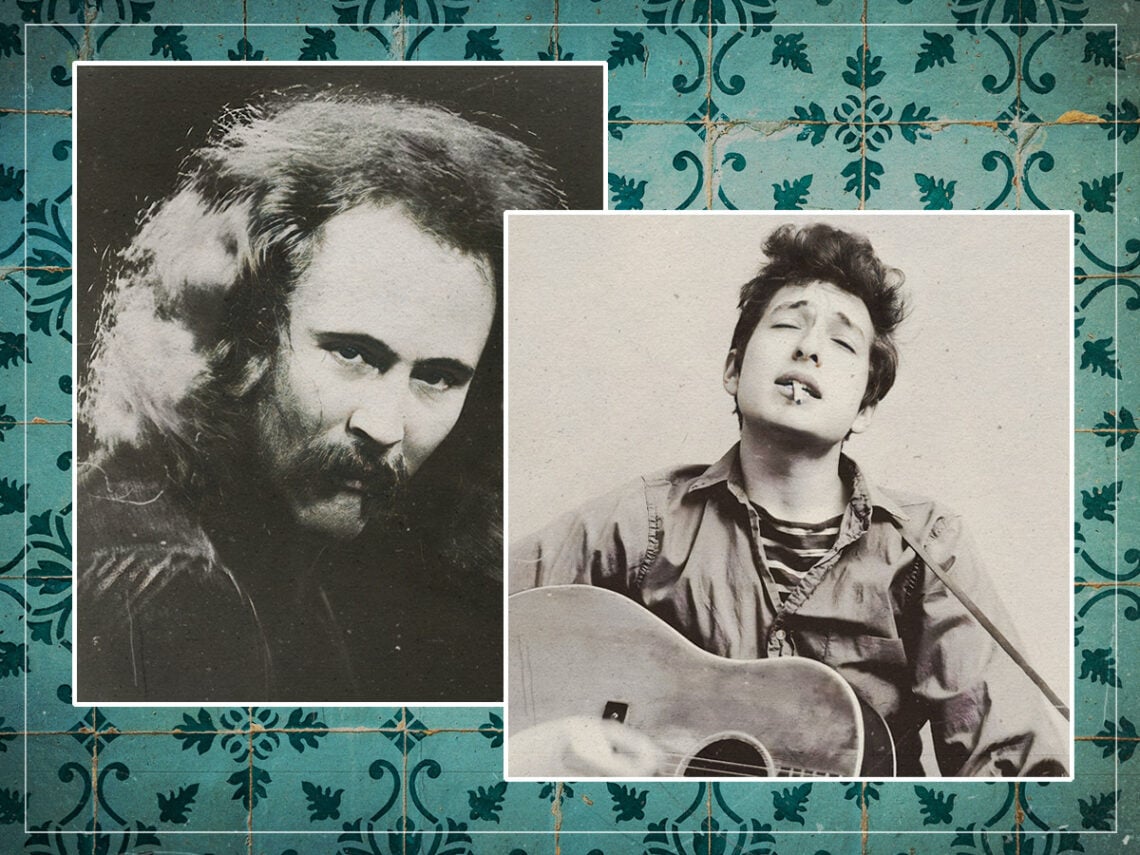
David Crosby initially thought Bob Dylan sounded “really bad”

When he first freewheeled onto the scene, Bob Dylan was so revolutionary that people could hardly contend with the scope of it. Aside from the acerbic wit and bold politics, he also just didn’t seem all that fussed about commercialism—a very novel front when pop culture had only just gotten started. The lacquer and polish of being a presentable pop star was not something that came into his thinking. He was more interested in the spit and sawdust of the real people.
Naturally, this hindered his launch somewhat. Even John Hammond, the man who uncovered his greatness in some dingy bar, recalled, “he’s not a great harmonica player, and he’s not a great guitar player, and he’s not a great singer.” So, when he first recorded him, his fellow execs at Columbia Records were quick to label Dylan and his dogeared demos “Hammond’s folly”.
And for a time, David Crosby thought the same. “Appropriately enough,” Crosby said, “my favourite is ‘Mr. Tambourine Man’. Our manager knew Bob’s manager [when I was in the Byrds] and got an early tape of Bob singing this thing with another folk singer. It was really terrible. It was a really bad demo. They were out of tune, and they were all screwed up. It was absolutely nonsense.”
In truth, they probably were screwed up in the hippy sense too; high on something or other, barely caring about the fidelity or fine-tuning of the recording, but like punks 15 years before the fact, just laying down some truth and poetry in one unfurling cascade of honesty and emotion, they could clean up the rest later.
And that’s what slowly shone through the murk to Crosby. Amid duff notes, bad singing, and interference, he “heard these words: ‘To dance beneath the diamond sky with one hand waving free.’ We were entranced,” he told Stereogum.
Therein lies the essence of what made Dylan such a revolutionary star in the 1960s: he turned his back on commercial expectations. Even by folk standards, he was an outlier, but as Hammond has identified, “He just happens to be an original.” And Dylan knew it too—nobody was even writing their own songs in Greenwich Village at the time, but he was weaving the timelessness of folk into the renaissance-like zeitgeist.
So, those “really bad” demos that saw him flogged from pillar to post initially actually forecast his true genius. As the late Hammond would conclude: “Dylan was a born rebel, and I figured that, you know, Dylan could capture an audience of kids that Columbia had lost years before.”

Never Miss A Tale
The Far Out Bob Dylan Newsletter
All the latest stories about Bob Dylan from the independent voice of culture.
Straight to your inbox.