


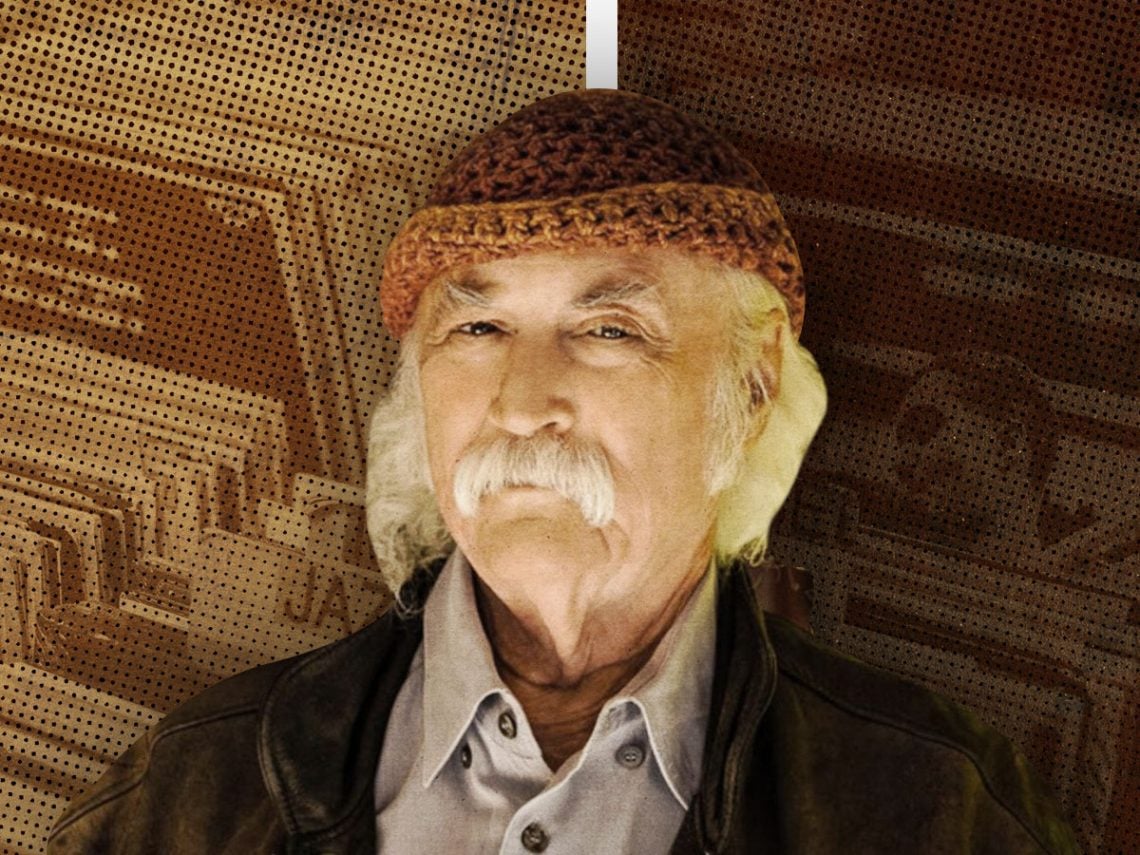
When David Crosby covered the Grateful Dead for a cause

Throughout most of the 1960s, David Crosby resided in Los Angeles. As a key player in the Laurel Canyon folk scene, Crosby formed both The Byrds and Crosby, Stills, and Nash in the area of Los Angeles. But by the end of the decade, Crosby needed to escape. The death of his partner, Christine Hinton, caused the musician to find refuge in a new area of California: San Francisco.
Crosby found a potent friendship with a new group of musicians, the Grateful Dead. As San Francisco’s most notorious 1960s exports, the Dead were beginning to transition out of the highly-psychedelic freakouts that they had pioneered throughout the end of the decade. With the assistance of lyricist Robert Hunter, the Dead now had short, compact songs that required them to harmonise. Since they weren’t the most confident group of singers, they turned to Crosby for help.
One common misconception was that the Dead traded Crosby for some vocal lessons: he would teach them to sing, and in turn, the Dead would appear on his solo debut, If I Could Only Remember My Name. That’s not really the truth, since both Crosby and the Dead were in Wally Heider Studio during that period and would have likely played with each other anyway. Crosby had briefly played with Jerry Garcia, Phil Lesh, and Mickey Hart in the ad-hoc group David and the Dorks (occasionally “Jerry and the Jerks”) at the beginning of 1970, just before the Dead entered the studio to begin recording Workingman’s Dead.
“You know, people started this whole thing about how the Grateful Dead learned how to sing harmony from Crosby, Stills and Nash. Bullshit,” Crosby told Variety in 2020. “We didn’t teach them how to sing harmony. They knew already. What happened was, we listened to their music and it affected us. We realised that we could get a lot looser than we were. They listened to our music and they realized they could get a lot more organized than they were, vocally. They knew they could do the same stuff we were doing — just not quite as well, but they could do it. They’re not as good of singers as we are. But they’re just as inventive as we are, and just as good of musicians. So we affected each other.”
Even if Crosby didn’t have a direct hand in teaching the Dead how to harmonise, his influence could clearly be heard in the band’s two 1970 albums, Workingman’s Dead and American Beauty. Songs like ‘Cumberland Blues’, ‘Uncle John’s Band’, ‘Attics of My Life’ and ‘Candyman’ were heavily indebted to the vocal style of CSN.
In that way, the overlapping influence came full circle when Crosby joined a group of musicians from around the world to perform the American Beauty cut ‘Ripple’. The project was a joint venture between the charity Playing For Change and JamBase’s ‘Songs of Their Own’ series. Along with Dead drummer Bill Kruetzmann and Jerry Garcia’s daughter Keelin, Crosby revisited his past for a good cause.
Watch the Playing for Change version of ‘Ripple’ down below.
