


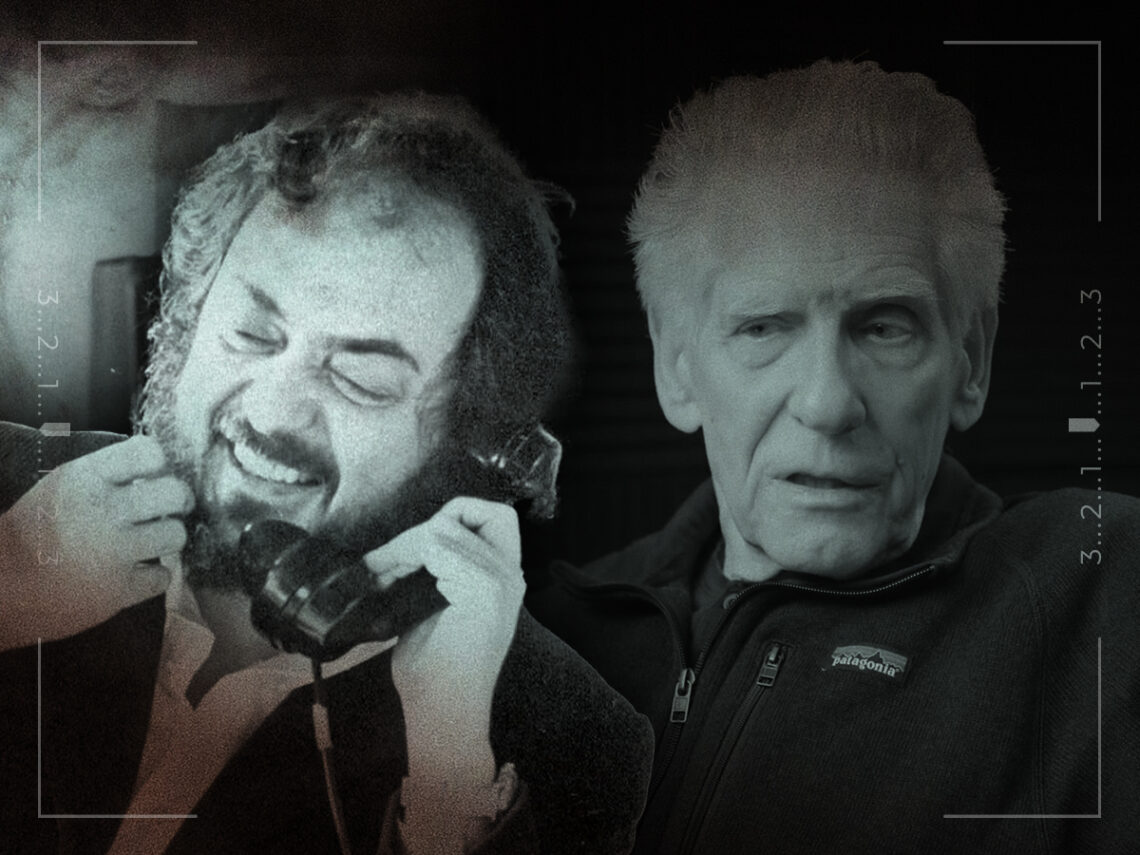
David Cronenberg’s big problem with Stanley Kubrick: “I don’t think he understood what he was doing”

There are certain figures in cinema so towering that it feels almost assumed every other filmmaker must admire them. Stanley Kubrick is one of those names, so when someone speaks ill of him, it ends up feeling like a slight on god himself.
Trying to explain just how famous Kubrick was, and still is, feels almost impossible. When conspiracy theories quickly claimed the moon landing was a hoax, his name was immediately dragged into it. The tin-foil hat brigade assumed that if the government were going to fake such a monumental event, they would hire the very best director available. In their minds, that could only have been Kubrick.
The director’s fame was, and, again, still is, so looming that it seemed to transgress everything; there isn’t a single way I can see in which anyone at all could be convinced that his work was of divine or religiously moral nature, yet when the pope put together a list of 45 essential titles as a to-watch list of film recommendations, 2001: A Space Odyssey appeared there for some reason.
Beyond your Coppolas, or your Scorseses, or your Spielbergs, Kubrick’s name remains the ultimate cinematic star. It’s a brand and a legacy all in itself, as even people who haven’t seen his films not only know the name, but can likely visualise at least one of the many, many iconic scenes or sets.
But for David Cronenberg, that’s part of the problem, for he found that he can never truly and thoroughly love Kubrick, all because the latter was too busy trying to be loved by the masses.
“In a weird way, although he’s revered as a high-level cinematic artist, I think he was much more commercial-minded and was looking for stuff that would click and that he could get financed,” Cronenberg said, daring to deliver the critique that very few others would dare to dream of. Few others would dare to claim that Kubrick was a sellout, but for Cronenberg, whose entire career has been built on truly divisive shocks, the legend was tame.
When your more iconic movie is about something as wild as people being sexually attracted to car crashes, it makes sense that you’d look at something like A Clockwork Orange even and think, ‘hmm, not quite crazy enough’. Yet Cronenberg’s issue isn’t even so much about Kubrick not being out there enough; instead, it’s that he thought even in moments where he was, it didn’t feel genuine.
“That’s why I find The Shining not to be a great film. I don’t think he understood the [horror] genre. I don’t think he understood what he was doing,” he said, essentially accusing him of not being a true freak, adding, “There were some striking images in the book, and he got that, but I don’t think he really felt it.”
It all comes down to this bottom line: Cronenberg is utterly dedicated to his freakiness and the freakiness of his cinema, but he didn’t feel that same devotion or buy-in from Kubrick’s work, stating, “I think I’m a more intimate and personal filmmaker than Kubrick ever was”.
