


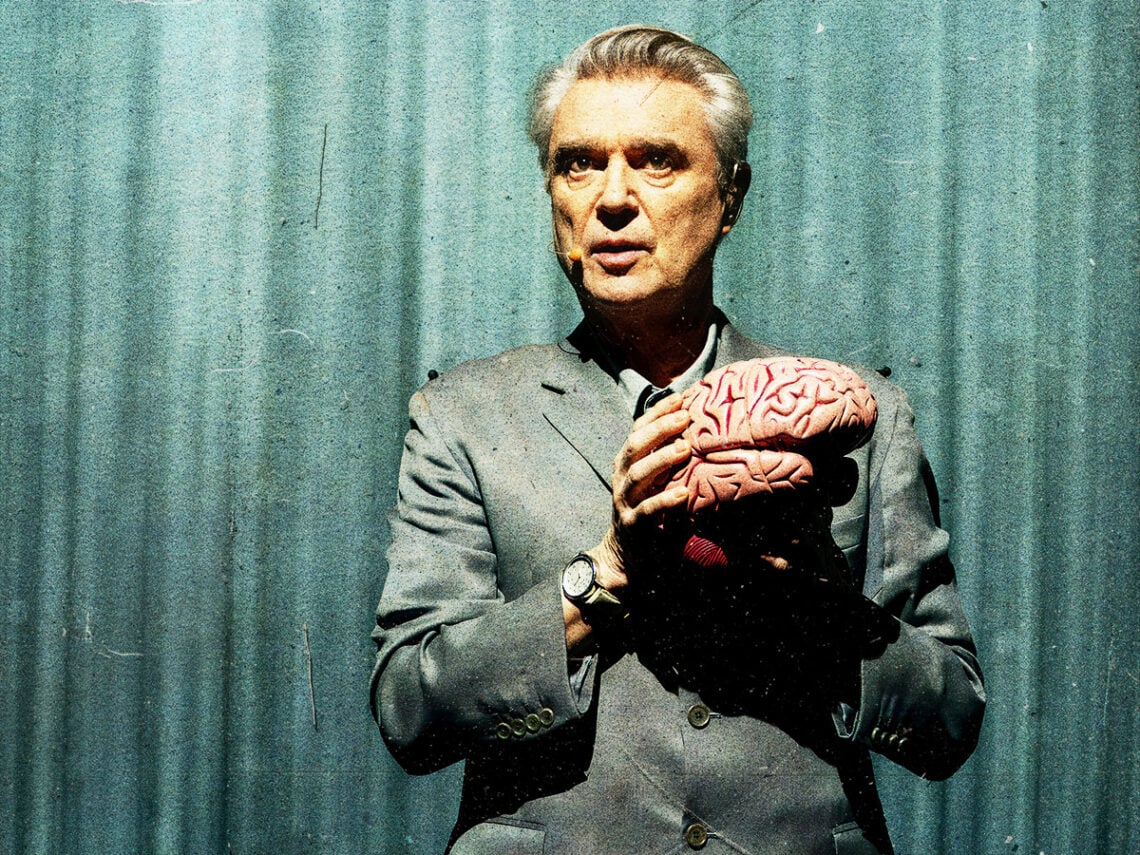
Why David Byrne believes libraries are vital for thriving arts

David Byrne’s advocacy for libraries is notable as it underscores the importance of cultural institutions in our communities. While discussions often revolve around the preservation of music venues, cinemas, and other artistic spaces, Byrne emphasises the crucial role that libraries play in fostering creativity, knowledge, and community engagement. Libraries serve as hubs for learning, exploration, and cultural exchange, making them essential assets that deserve support and protection.
“I love a library,” the musician said in an essay for The Guardian. While admitting that he’s not someone who conflates music and the written word, stating, “I am one of those who feels that poetry and song lyrics are very different beasts, and I find a lot (not all) of poetry hard to understand,” he is passionate about protecting the need for public book collections.
While Byrne draws a line between poetry and lyricism, I personally don’t. Some of the greatest songwriters to ever exist have considered themselves writers on a grander scale rather than simply musicians. Leonard Cohen, Patti Smith and Nick Cave, to name only a few, consider their lyricism as an extension of their broader writing careers, while many other artists regularly publish books of their lyrics to be read like a sonnet. The line between those two words is so hazy it is pretty much nonexistent, relying solely on how the artist themselves wants to label their work. So if Byrne wants to insist his work is only music and never poetry, who am I to argue?
But the musician’s passion for keeping libraries open makes the vital point that all art forms, whether it be music, film or writing, can all be traced back to the necessary inspiration that comes from reading. Reading is a powerful way to connect with new thought processes, styles and phrases, with libraries being a public arena of ideas just like music venues, theatres or cinema screens. Byrne himself chalks up his creativity to childhood trips to his local library.
“I grew up in suburban Baltimore and the suburbs were not a particularly cosmopolitan place. We were desperate to know what was going on in the cool places, and, given some suggestions and direction, the library was one place where that wider exciting world became available,” he recalled.
Like many other libraries, his local one also had music available. Helping a young boy who would go on to become a musical legend get to grips with sounds beyond his local radio station, the world might have this library to thank for the Talking Heads’ expansive and pioneering sound. “In my little town, the library also had vinyl that one could check out, and I discovered avant-garde composers such as Xenakis and Messiaen, folk music from various parts of the world and even some pop records that weren’t getting much radio play in Baltimore,” he said, before summing up its importance in a simple phrase; “It was truly a formative place.”
To pay the favour forward and keep the power of libraries going, Byrne opened his own pop-up library during his 2015 Meltdown Festival at London’s Southbank festival. To inspire a new generation, he allowed over 200 of his personal books to be borrowed, including biographies on artists like Miles Davis and The Beatles, photo books by names like Mick Rock, and his own book Bicycle Diaries.
“Some of my books may have highlighted bits or notes scrawled in the margins. I hope nothing embarrassing,” he said of the project as he passed down books that inspired him to new readers. So dust off that library card and head out to browse the shelves and expand your horizons at David Byrne’s instruction.
