


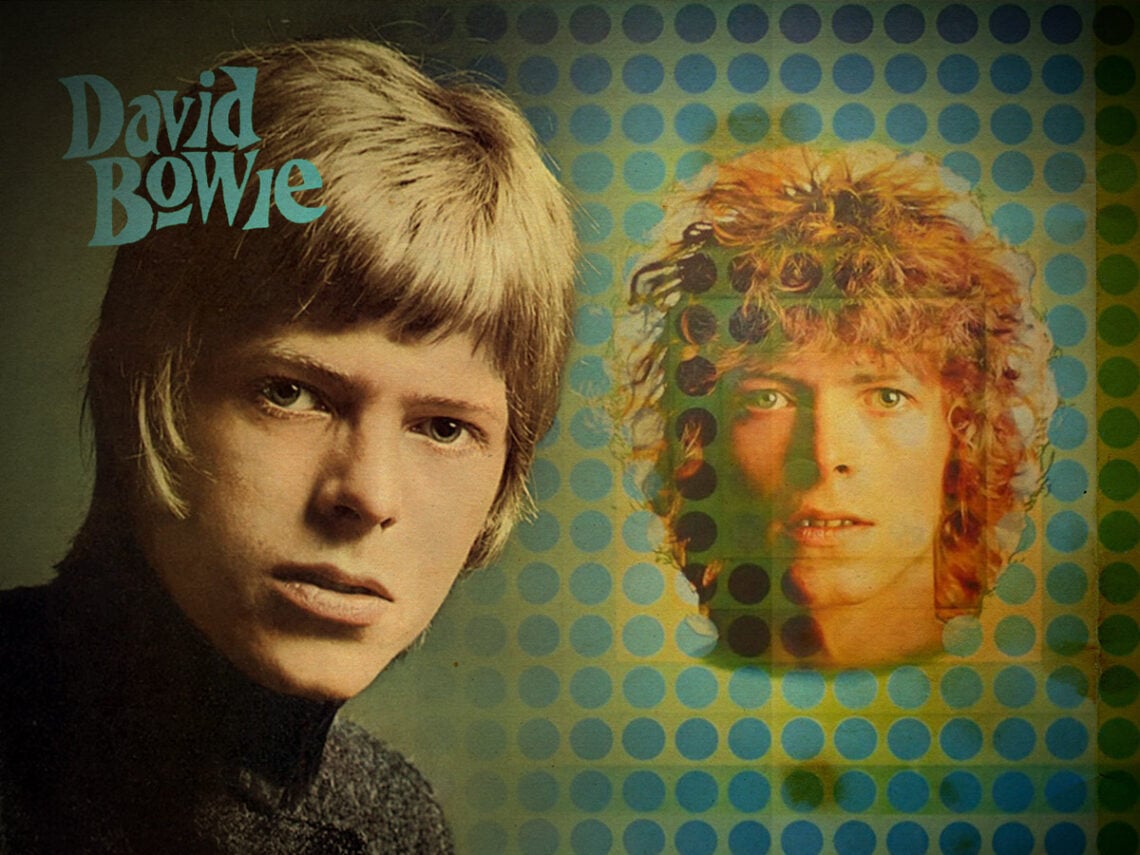
‘David Bowie’ vs ‘David Bowie’: Same title, new world

David Bowie releasing two albums back to back, both called David Bowie, would give Christopher Nolan a run for his money in terms of the levels of inception.
Yet there were reasons for this that branched far deeper than just the notion of something being so good they named it twice. Bowie’s debut, released in 1967, followed by his sophomore album in 1969, essentially represented a false start in the first instance, being chased up by a fresh beginning.
For any other artist in the early days of their career, that may well have justifiably had the warning lights flashing in danger of ominous and less-than-successful times to come. The fact that Bowie had to start over, having seemingly only just started out in the first place, theoretically shouldn’t have boded well for either him or the record label that had taken a chance on him.
Of course, the obvious and immediate point to make in all of this is that many people will know the second David Bowie by the name of its most quintessential track, ‘Space Oddity’. Yet using its real and technical title, it truly does paint a picture of the chips being fairly down for Bowie back in that late ‘60s period, and a time in which his stratospheric career was less than certain sights.
In the context of everything else we would come to know about Bowie, the concept of him creating a baroque pop, music hall style album, as twee and somewhat insular as that sounds, just seems foreign to the effervescent, genre-bending and never predictable persona he would go on to inhabit in later years.
For that part, it does paint a rather strong picture as to why the debut David Bowie wasn’t much of a success, despite admittedly receiving a fairly favourable reception from critics. The main flaw that let it down was the lack of promotion from the record label, Deram. They clearly didn’t see the vision, and would come to rue the day when their blue-eyed starlet would become the rock and roll alien of the world.
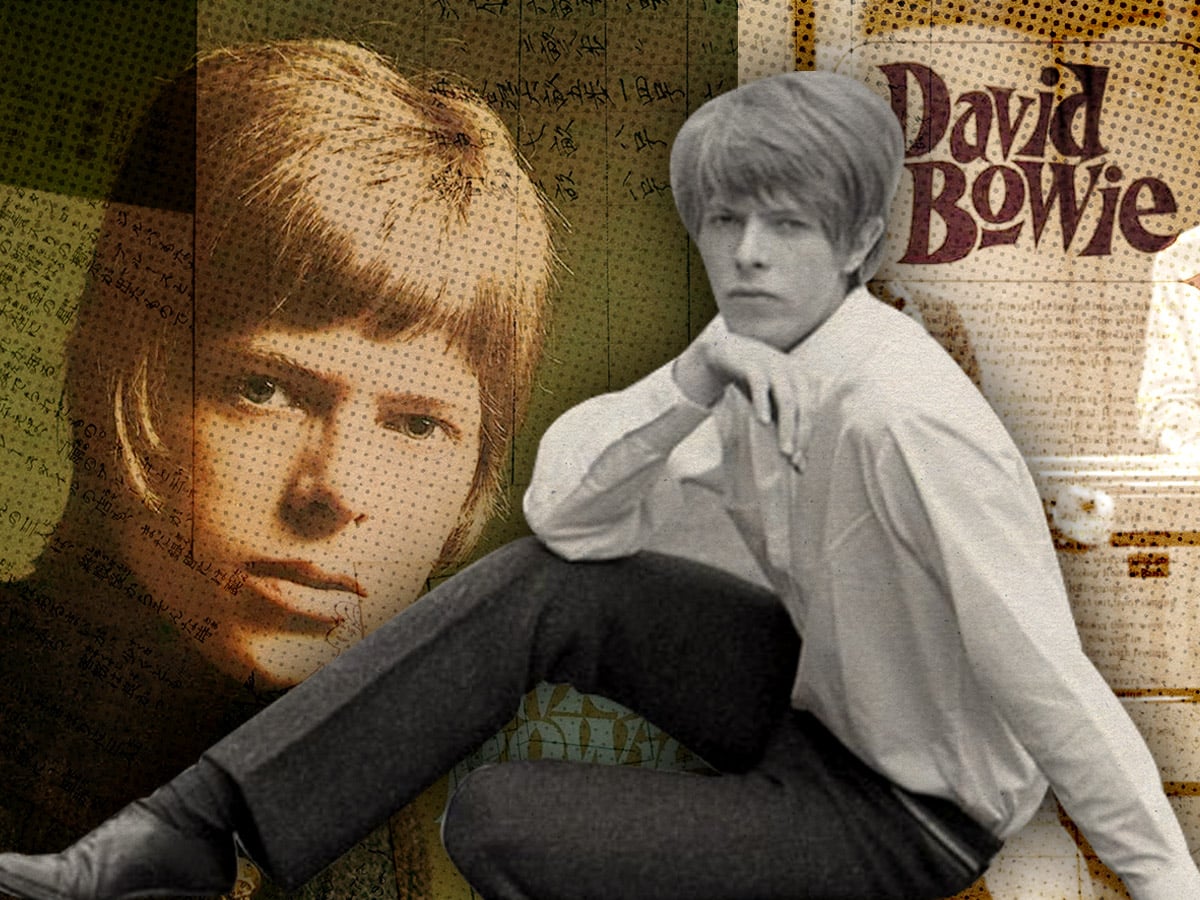
It was evident that it was a case of wrong place and wrong time for David Bowie mark one, bizarrely enough, being classed as “too weird” amid a landscape of swirling psychedelia. What changed so much in the span of just two years, then, when Bowie returned with a halo of curls replacing his mod haircut, to suddenly make him the world’s most beguiling rock dream?
Well, the space age, that’s what. It was evident from the first second that, no matter how much he may have come to regret it later down the line, ‘Space Oddity’ and its inspirations from 2001: A Space Odyssey were stratospherically powerful against the landscape of new galactic horizons and giant leaps for mankind.
But that aside, it was clear that those interim years were truly powerful and pivotal for Bowie in the sense of him being able to reinvent himself and put his finger on the electrifying, enigmatic presence that would sustain his being for the rest of the decades to come. The moon may have been the inspiration, but he was the real catalyst for his own springboarding.
1967’s David Bowie, compared to 1969’s David Bowie, showed a world of development in the liminal space between just ten tracks each time – but the crucial thing was that the latter unlocked the key to the rest of the Starman’s songbook, rather than pigeon-holing him into a squat of a place where he would only be degraded as the weird sonic outcast.
Yet it also represents something that many would be far too proud, or ashamed, to admit in the music business. The reuse of the same plain title exhibited in the strongest possible terms that Bowie was not afraid of starting again, but doing so with the same heart and skin that he had always worn.
More than anything, that painted the original David Bowie not as something to be cast in the shadows, just because it didn’t quite fit the image of who he later became, but as something to be celebrated as an odd gem that showed the warts-and-all reality of the business, even for those who eventually transformed into global icons.
David Bowie and David Bowie were both true versions of the real David Bowie. It just so happened that the latter one was the brand that opened him up to the world, but at the same time, it’s true that it would never exist without its first-ever friend.
