


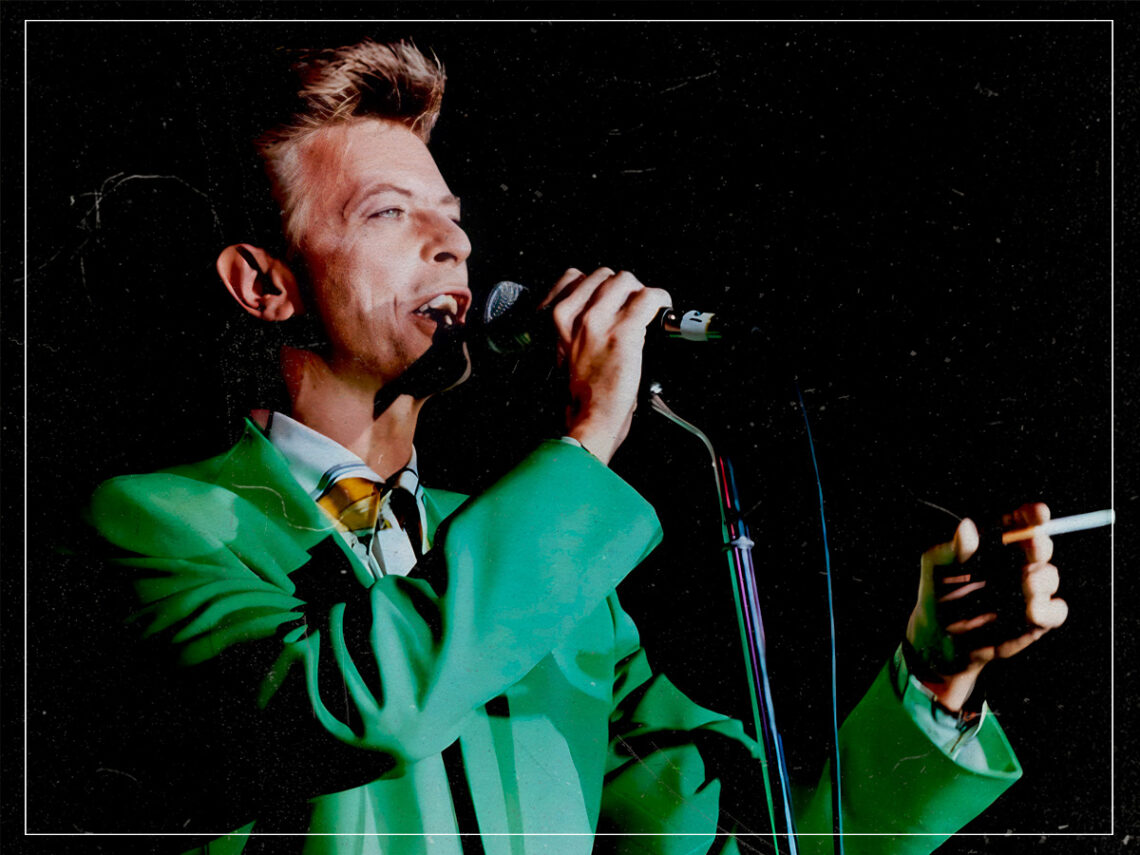
The song that saw David Bowie try to “break down a particular type of sexist attitude about women”

When David Bowie made his first discographic dent on the bedpost of rock ‘n’ roll in 1967, his debut solo album didn’t cause a great stir. The music could be compared to Syd Barrett’s early psychedelic poetry with Pink Floyd, but it failed to make as much of an impact. From this moment on, Bowie displayed admirable tenacity and, more importantly, stuck to his inherent thirst for artistic nuance, flourishing colourfully throughout the 1970s.
Bowie famously embodied several characters during his most prominent years, from the otherworldly Ziggy Stardust to the formidable Thin White Duke. These alter egos reflected Bowie’s penchant for theatre but also betrayed a degree of apprehension regarding fame and live performance.
Like an astute method actor, Bowie became exceedingly invested in his characters, to the point that fans and friends seldom knew who the real Bowie was. In the late 1970s, The Thin White Duke presided over some of Bowie’s most critically applauded material, yet some fans began to pick up on the character’s eyebrow-raising fascist inclinations.
This chapter reached its cocaine-fuelled climax at Victoria Station in 1976, where Bowie allegedly gave his fans the Nazi salute from his car. However, it is worth noting that, even if it was Adolf Hitler he embodied at that moment, it was likely a satirical stunt disconnected from his true sociopolitical outlook.
Another aspect of Bowie’s personality that few could make much sense of throughout the 1970s was his sexual orientation. In January 1972, early in the Ziggy Stardust era, he famously came out during an interview with Mick Watts. “[I’m] gay and always have been,” he said candidly. This surprised some, given that he had been married to his first wife, Angie, for several years at the time.
As time wore on, specifically after the retirement of Ziggy Stardust in July 1973, Bowie backtracked somewhat, abandoning Ziggy’s androgyny as he approached mid-decade releases like Young Americans and Station to Station. In a September 1976 interview with Playboy, he declared: “It’s true—I am a bisexual. But I can’t deny that I’ve used that fact very well. I suppose it’s the best thing that ever happened to me.”
While some things seemed liable to change with Bowie’s creative personas, he remained consistent in many of his sociopolitical views. As an openly bisexual man in a time of deplorably traditional values in many parts of the Western world, he was fully aware of the struggle other marginalised people faced at the time. Thus, Bowie was often outspoken on the topics of racial and gender inequality.
In his 1980 album, Scary Monsters (And Super Creeps), Bowie explored several ideas, including ‘Fashion’, a punchy exploration of fascism through the lens of the fashion industry. Bowie also bookended the album with ‘It’s No Game (No. 1)’ and ‘It’s No Game (No. 2)’. The first part featured Michi Hirota, a Japanese singer who worked in London at the time as a member of Japan’s Red Buddha Theatre.
Bowie sought a raucous female vocal to suit the song’s feminist outlook. “I wanted to break down a particular type of sexist attitude about women,” Bowie once said of the piece. “I thought the ‘Japanese girl’ [concept] typifies it, where everyone pictures them as a geisha girl, very sweet, demure and non-thinking, when in fact that’s the absolute opposite of what women are like. They think an awful lot, with quite as much strength as any man. I wanted to caricature that attitude by having a very forceful Japanese voice on it. So I had [Hirota] come out with a very samurai kind of thing.”
