


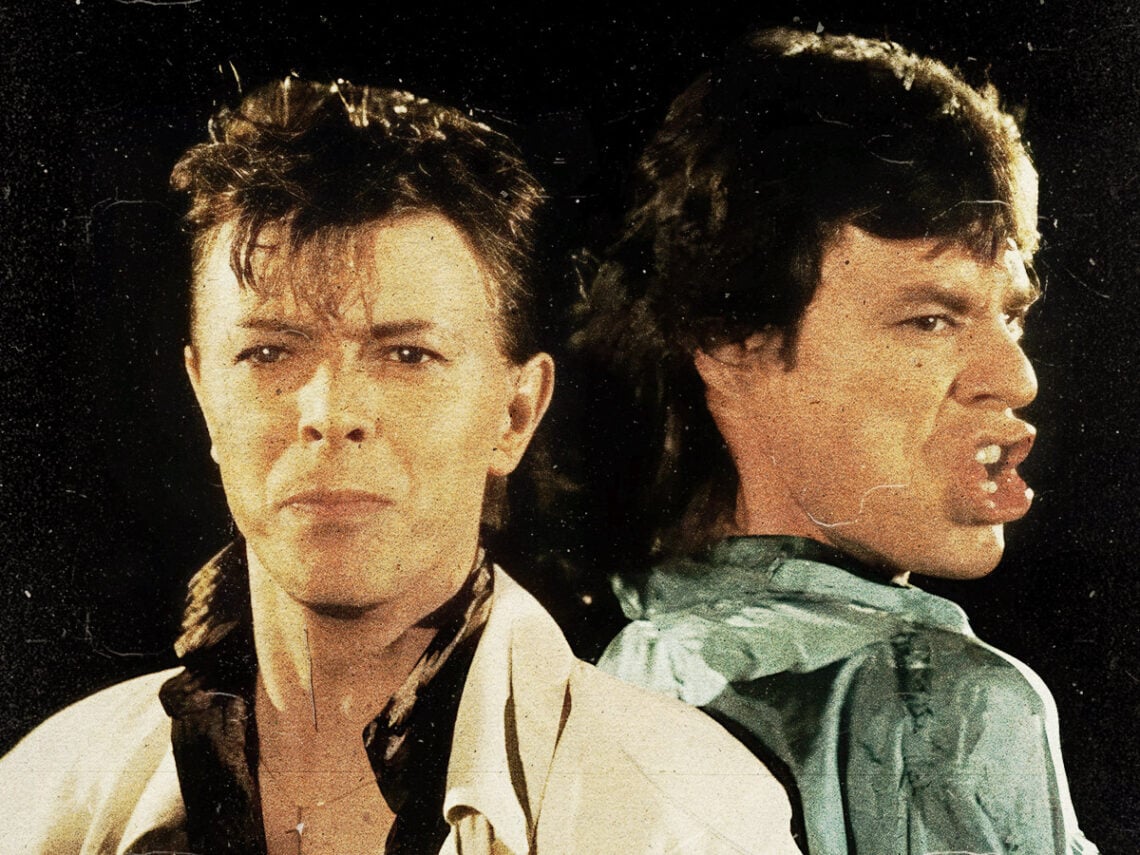
David Bowie on the “most rebellious” nature of Mick Jagger

Rock and roll has always been about rebellion. Going back to its earliest roots in American blues music, the genre has been used to criticise, reflect, or rebel against popular society. You only need to look at the reception given to early rock stars like Elvis Presley or Little Richard to see the rebellion they represented for the younger generation. When the British invasion came along during the 1960s, The Rolling Stones took that rebellion to entirely new levels.
Throughout the 1960s, Mick Jagger and The Rolling Stones were the poster boys of youthful rebellion, typifying the defiant attitude of Britain’s post-war youth. While, in hindsight, the band’s attitude and behaviour were often fairly tame, at least in comparison to modern attitudes, their long, messy hair and penchant for sleazy rock and roll anthems made them the peril of parents everywhere.
It was this rebellious attitude that earned The Stones such a colossal following in their early years on both sides of the Atlantic. One such fan of the group was none other than David Bowie, who was himself attempting to make it a musician during the 1960s. Although, during this period, Bowie’s material never achieved much notoriety and paled in comparison to the genius he would become a few years later, the songwriter still seemed to move through life, soaking up musical inspiration at every turn.
As a young man in London during the mid-1960s, it was inevitable that Bowie would end up seeing The Rolling Stones perform at one point or another; the band seemed to dedicate their entire lives to playing gigs and learning to play old blues tracks. In 1963, when one of Bowie’s ultimate heroes, Little Richard, came to town, the future ‘Space Oddity’ singer went to see him but instead found himself entranced by Richard’s support act, The Rolling Stones.
Recounting this tale on Parkinson in 2002, Bowie shared: “I saw [Little Richard] first in 1963, I think it was, and I think it might have been at the Brixton Odeon. The Rolling Stones were opening up for him, it was the first time I ever saw them, and they weren’t really very well-known; there were about six kids rushed to the front, that was their fanbase.”
In fact, this tour, which saw The Stones opening up for Little Richard, Bo Diddley, and The Everly Brothers, was the band’s very first tour. At the time, the group did not have any original songs to their name, so their sets were composed entirely of cover songs, usually by old-school American blues, R&B, and Motown artists like Chuck Berry or Barrett Strong.
“It was priceless,” Bowie said of The Stones’ performance, “I’d never seen anything so rebellious in my life.”
While their musical material at the time might not have been very rebellious in its content, especially in comparison to some of their later compositions, Jagger and the band seemed to exist almost entirely on attitude, as all good rock and roll bands should.
This rebellion that so enticed Bowie was quickly demonstrated at the gig. “Some guy yells out ‘Get your hair cut!’” the songwriter recalled, “And Mick says – I’ll never forget these words – ‘What, and look like you?”
That short exchange seemed to perfectly sum up the trailblazing rebellion at the heart of The Rolling Stones and the entire British rock scene of the 1960s, too. Groups like Jagger’s existed entirely in opposition to conventional ideas of British society at the time, and, over the years, the band would come to alter that society and culture indefinitely.
