


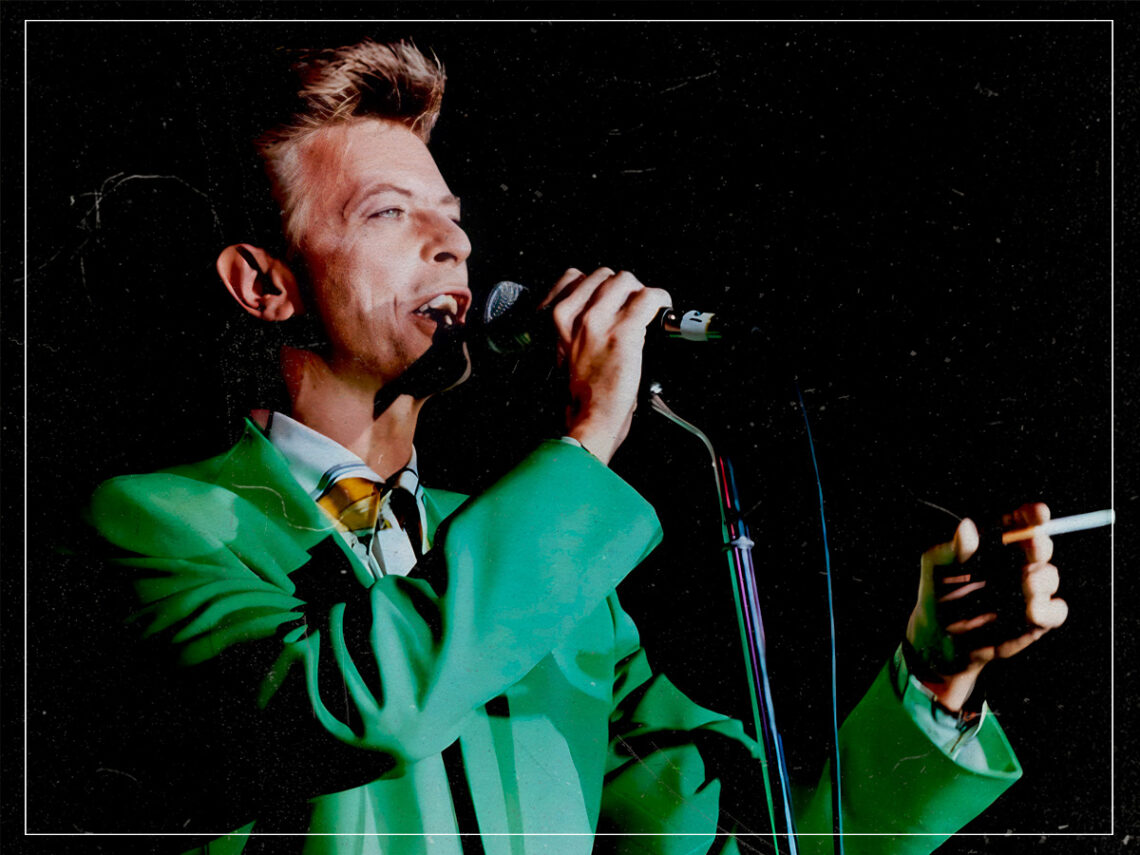
“If I’d been an original thinker”: David Bowie’s big problem with rock ‘n’ roll

For many, David Bowie was rock ‘n’ roll. The crux of such a term yields anti-establishment, boundary-pushing connotations, and that’s precisely what the ‘Starman’ represented. Whether it was manifested in his various characterisations or the musings within his music, rock ‘n’ roll was almost Bowie’s most enjoyed plaything, mainly because he could mould it as he pleased.
Unlike most rock legends, Bowie didn’t try too hard to conform to a specific genre. Perhaps that’s why much of his earlier material didn’t land as well as his breakthrough effort, but in everything he did, he did it with pride and authenticity. Most of the time, following his own instincts held him back, but not in the way many might expect.
As Spiders From Mars’ drummer Woody Woodmansey once recalled, Bowie had the ability to achieve anything, he just needed to want it. “I always thought Bowie had that ability, that any time he felt like it, he could write a hit single,” Woodmansey said. “He just had that feeling about him. I think he chose not to right through his career. If he felt like it, he would write one, and if he didn’t, he wouldn’t.”
As a result of his sheer honesty, many regarded Bowie as the ultimate embodiment of authenticity. There was a lot of pretence in rock despite the raw foundations it often extracted as a source of influence. Bowie, on the other hand, brought flavour and colour to a space that threatened to go stale. Unfortunately, however, the singer didn’t exactly see himself this way.
“I always had a repulsive sort of need to be something more than human,” Bowie once told Cameron Crowe for Rolling Stone in an effort to better explain the impulse he felt to completely reinvent his entire personality, fearing that his real one wasn’t good enough. “When I saw a quality in someone that I liked. I took it. I still do that. All the time.”
At the same time, this line of thinking made him feel like something of a fraud, particularly when it came to music. In fact, on the topic of rock ‘n’ roll, Bowie described it as an inauthentic genre that borrows facets of various other elements to construct its organised chaos-looking world. “If I’d been an original thinker, I’d never have been in rock and roll,” he said before cynically adding: “There’s no new way of saying anything.”
Although Bowie was known to deliver more pessimistic streams of consciousness during this time, his perception of himself was rather scathing. In the same interview, he claimed to not have anything of import to say while considering himself “responsible for a whole new school of pretension”. While a lot of Bowie’s music and images played on various elements of 1970s kitsch, the reality of his impact cannot be understated, even if he never believed it himself.
