


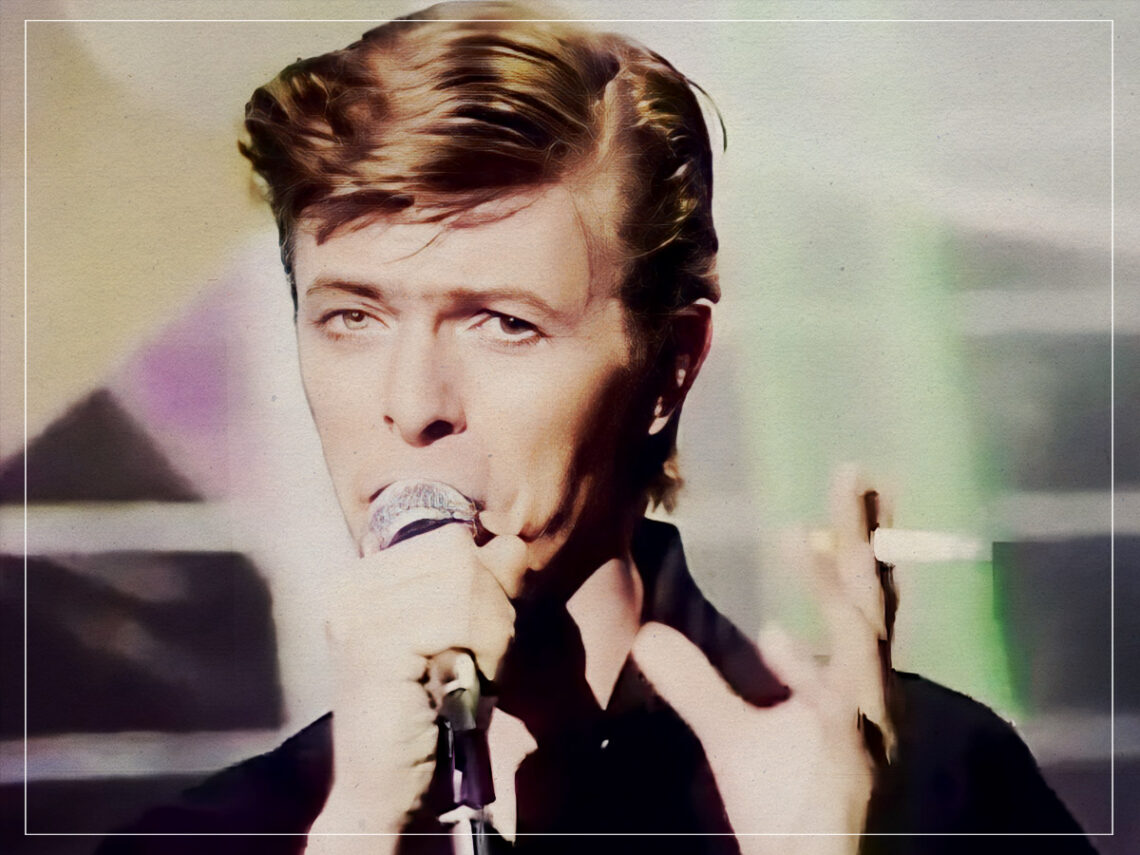
‘Word on a Wing’: David Bowie’s overlooked Nietzschean masterpiece on the vapid modern age

Ghosts, ghouls, and apparitions can appear out of David Bowie‘s songs years after their time has been and gone. Even his final album cover held secrets that only revealed themselves when our hero was, as he put it himself, “in heaven“. He told us to “look up“. He always did, whether he was talking about Starmen or fellows falling from afar. But spirituality was always fraught and stark in his songs.
Few tracks illuminated his dense philosophy quite like the Station to Station effort, ‘Word on a Wing’. It’s an ominous track on an ominous album, and in the years that have followed, it has only grown in significance. In typical Bowie fashion, he would lay out the thesis that fit the track years after it was written, as though the song came before his total understanding of his own creation.
He sings of soullessness in “this age of grand illusion“. Our weary yet oddly defiant protagonist walks through the wreck of the song, batting away connections and self-imposing solipsism in the process. Eerily, it is as prescient as his predictions about the internet. But that’s little surprise, he knew the direct route of the modern age’s dank malaise better than most. He even explained it plainly.
As he explained on a Belgian chat show (another typifying move), it all stems from Einstein to the atomic bomb. “All of these things culminated in the idea that everything we’ve known before was wrong,“ the world’s wisest pop star explained. “Everything. So, we start the 20th century with this clean slate.“
He philosophically continued, “We are now the Gods… And I think that in itself…the repercussions of what we had done by standing in for this idea of morality, creating it all ourselves, so destroyed our fix on what we should be doing in life that we’re still living through that chaos right now. We have no spiritual lives to speak of…there is no direct sense of what our purpose is anymore.”
So, in ‘Word on a Wing’, we find a figure who is positively barraged by what would’ve been ‘good’ in the age of romanticism, but these are rebuked, “I still care for myself,“ he sings. Yet, there is also a sense of acceptance from the staggering character. He lets the lord, love, or whatever else it is, in, but only in a manner where he is still the centre, “Does my prayer fit in with your scheme of things?“ It is a self-centred sort of service to a grander designer that is part of his own “grand illusion“.
He was in a similar spot himself at the time. Beset by fame and addiction, he was so hedonistic and godless that it was pretty he had become a fallen god himself. So, he tried to get away from it all and headed to Berlin, penning songs that reconciled his condition.
As guitarist Carlos Alomar states: “David went to Berlin with Iggy for isolation. It was to humanise his condition, to say, ‘I’d like to forget my world, go to a café, have a coffee and read the newspaper’. They couldn’t do that in America. Sometimes, you just need to be by yourself with your problems. Sometimes you just wanna shut up.” Away from the bombardment of drugs, daemons and paparazzi that he faced in Los Angeles, he tried to reconnect with the world and put his finger on the strange disposition of today.
