


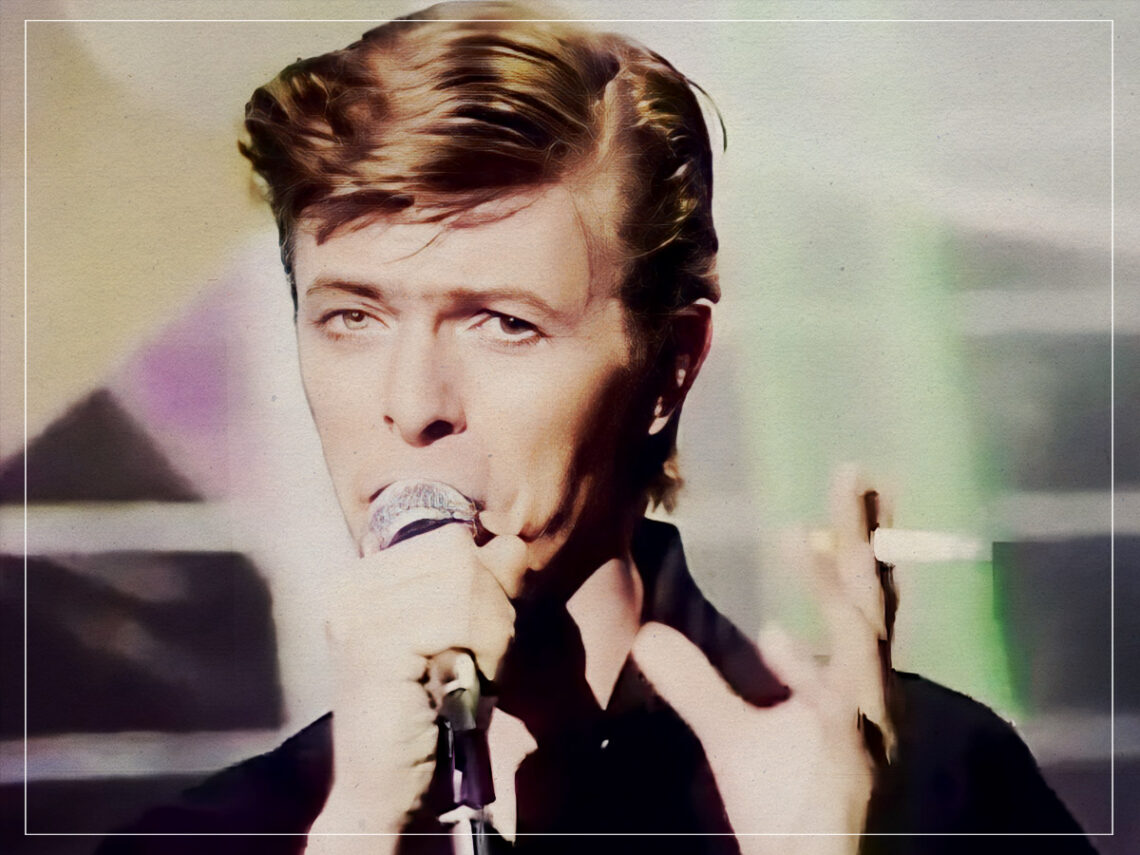
“Egoless”: How David Bowie channelled Miles Davis

David Bowie and Miles Davis were both history-shaping innovators, but the similarities stop there. They played in different worlds. Bowie considered every possible corner of rock, from more pop-learning hits to art-fuelled experimentation. Davis did the same vast exploration, only in his own realm of jazz, as he took the form and made it into something else entirely. However, according to one of Bowie’s bandmates, there was one key quality they shared.
“Bowie? Isn’t this the guy who dresses like a woman?” That was Miles Davis’ take on the English artist. Famously aloof as the King of Cool, Davis seemed to pay little to no attention to Bowie. While both were at the absolute top of their respective careers, dominating in their respective careers, there was no bridge between them.
Bowie was definitely inspired by jazz, though. Before he even got into rock and roll, he was into jazz, as his half-brother Terry Burns had a profound influence on him, introducing him to the sounds of Coltrane and Dolphy. In his own loose compositions that threw out the popular song rule book, there is undeniably a strain of jazz there, borrowing from the genre’s free-flowing and spontaneous heart.
However, it’s not like Bowie was vocal about loving Davis or busting down his door to collaborate. They stayed in their lanes, and both worked with their heads down, tirelessly passionate about their music and getting the best out of themselves and their bands.
But according to Mike Garson, Bowie’s longest-serving and most frequently appearing band member who played piano for the musician for decades of his career, that’s exactly where their similarly lies. Garson has a jazz background, and as he watched Bowie mature into his career, he saw elements of Davis.
It wasn’t so much in the music but in the process of making it. He explained, “He always had a vision, but he never micromanaged.” Garson told Quartz, “In that sense he was like Miles Davis: He knew who to pick to work with, and he knew if he got out of the way and let them do their thing, he’d get the most out of them.”
Both Bowie and Davis were trusting and dedicated collaborators. For Davis, coming up in the jazz scene and in various bands was the foundation of his musicality. He had to trust his fellow musicians, letting them take their turn soloing and all riffing off one another, working as one unit but also allowing each other freedom to improvise. So when it came to making his own music, he called upon the best of the best and let them do their thing, inviting legends like John Coltrane and Herbie Hancock to play on his albums, knowing they would deliver.
Bowie was the same. Even though his musical world was his own, he chose people he could trust and then trusted them to serve it. He trusted that his Spiders From Mars knew what he wanted, even as that evolved and changed, so he didn’t have to be so prescriptive or strict about what he wanted. Take Tony Visconti for one example; the artist and producer trusted each other so deeply that Bowie knew he could trust is vision in his hands. From the 1970 track ‘Let Me Sleep Beside You’, and so on, Bowie came back time and time again, even entrusting the producer to deliver his final album, Blackstar.
While the musicians had little in common musically, their musical minds were the same, and they knew that trust is an essential part of creation.
