


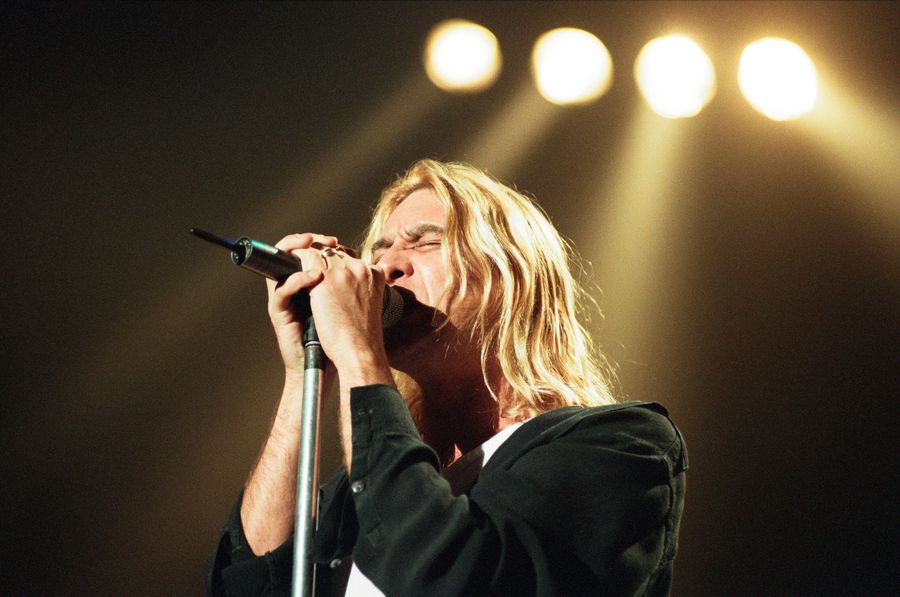
The David Bowie album that changed Joe Elliott’s life: “Absolutely mind-blowing”

The beginnings of the glam rock movement are often pinned down to one perfect moment, specifically, when Marc Bolan appeared on Top of the Pops in 1971, ready to deliver a rendition of ‘Hot Love’ in shiny satin clothes and glittery make-up. While those who revolutionised the concept later included Mott the Hoople, Roxy Music, Mud, and others, Def Leppard leader Joe Elliot regards only one person as the ultimate glam rock trigger: David Bowie.
By definition, the glam rock movement involved rock artists who shunned normalcy for a more effervescent approach. When Bolan showed up adorned in bright colours and glittery attire, for instance, it challenged rock’s more conventional qualities, which typically relied on darker fashion with an edge. This type of outlandish attire showed that rock could also be dazzling without lessening its quality.
Although Bolan is said to have majorly sparked the movement, many suggest that it was Bowie’s refinement of it that solidified its power. The moment he debuted his Ziggy Stardust persona, for instance, with a striking costume, makeup, and bright orange hair, music was suddenly artistic again, and the power of aesthetics and image became more widely recognised as an integral part of a musician’s reputation.
Many contend that Bowie’s contributions were merely that—contributions—but others, like Elliot, regard the ‘Starman’ as the ultimate trailblazer in space. Not only that, but he also holds one of the singer’s albums close to his chest, citing how it changed his entire outlook. “1972. Top of the Pops. ‘Starman’,” the musician told Louder, setting the scene.
“So I went off and bought Ziggy Stardust,” he continued. After listening, there was “no doubt” it was “a life-changing record,” he said. Discussing the ways the singer planted the seeds for the wider glam rock explosion, he added: “As much as Bowie would hate this, it was the embryonic beginnings of glam rock as we know it, even more so than Bolan,” continuing, “Bolan had it, but Bowie took it to another level because by the time we got to 1973, Bolan had kind of shot his boat.”
Although he recognises the ways Bowie borrowed from others, or, as he put it, “Bowie really only did his glam rock thing by magpieing off other people,” he added that the music was completely unparalleled, particularly on The Rise And Fall Of Ziggy Stardust And The Spiders From Mars. All of the arrangements, Elliot explained, contribute to its overwhelming demeanour, like “the solo on ‘Moonage Daydream'”.
In Elliot’s view, the entire record is “brilliant”, “stunning,” and “absolutely mind-blowing”. The many that came after, including Queen, Mott the Hoople, Alice Cooper, Iggy Pop, and many, many more, undoubtedly used Bowie as the blueprint, following suit to craft an image that drew from his fearlessness as an innovative artist. Bowie may not have invented extravagant rock pretence, but there’s no denying the fact that he supercharged its popularity.
