


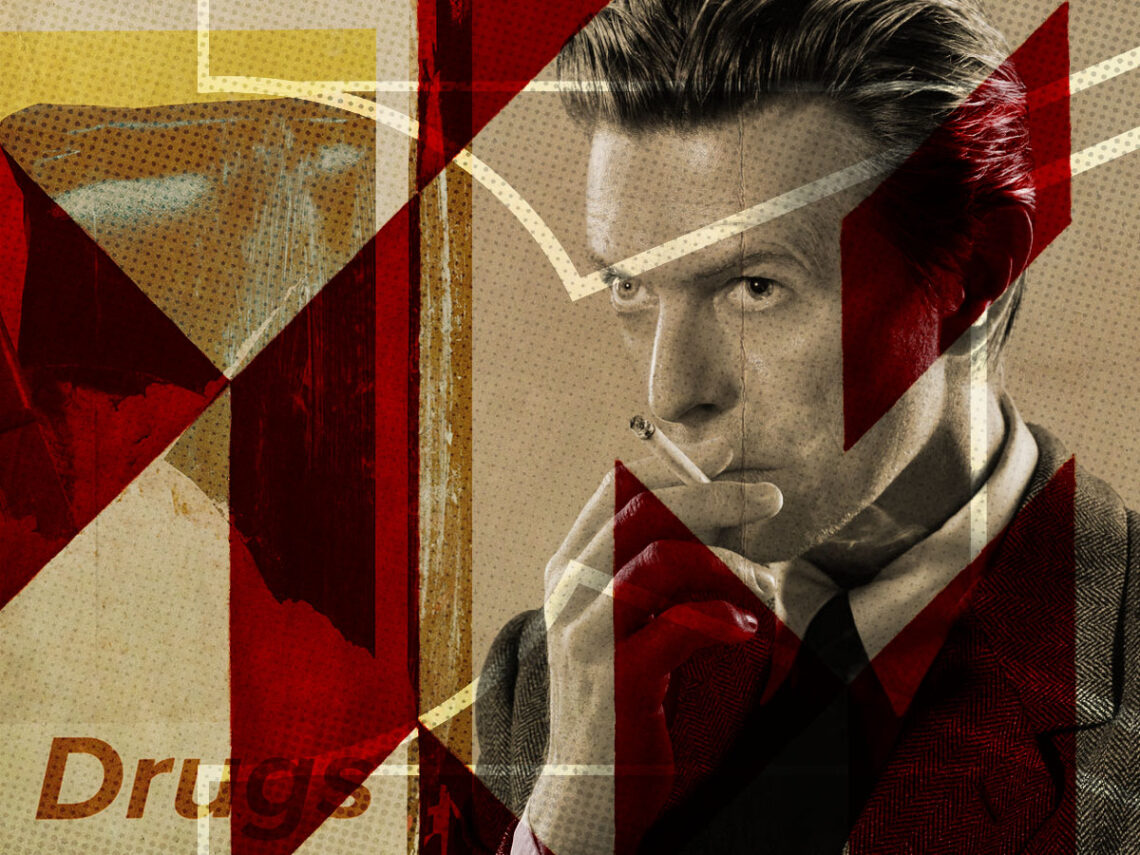
Exploring David Bowie’s drug addiction, fascist obsessions and bizarre diet

By 1971, no other artist could touch what David Bowie was doing. After a shaky start to his career, ‘The Starman’ never looked back when ‘Space Oddity’ took off. He crafted off-the-wall character portraits like Ziggy Stardust and Aladdin Sane to deliver glam rock to the masses. The 1970s were also the years of excess, and Bowie started to develop a nasty relationship with cocaine.
In the beginning, cocaine became one of the heights of excess for Bowie. Since Bowie was all about showmanship at the time, cocaine gave him the necessary energy to keep himself moving forward. Throughout albums like Aladdin Sane, Bowie practically used that nervy energy as a tool, turning his original ‘Ziggy’ persona inside out for the American market, with odes to the debaucherous lifestyle on ‘Watch That Man’.
Though Bowie had been able to sustain himself with his white line fever, he started to go into different sonic directions. In the wake of his infamous performance marking the death of the Spiders from Mars, Bowie went down a musical rabbit hole. He delivered an ode to Philly soul on Young Americans as well as the covers album Pin Ups, featuring a host of songs that the American market would not have originally been familiar with.
After starring in the movie The Man Who Fell to Earth, Bowie was going for a different aesthetic when Station to Station came out. With his glam rock style wiped clean, The Thin White Duke was introduced to the world, which brought a new outlook to Bowie’s cast of characters. Outside of the fun energy that Ziggy Stardust brought to the table, The Thin White Duke was much more calculated. Decked out in monochrome colours, every one of the songs on Station to Station reflected an alternate side of Bowie.
The music followed suit as well. Being influenced by the sounds of krautrock, each song on the record took inspiration from acts like Kraftwerk. Though it was very strategic in presentation, Bowie’s persona turned dark when he incorporated fascist habits into his onstage persona. When describing the persona for the first time, Bowie cast the Thin White Duke as “a very Aryan, fascist type; a would-be romantic with absolutely no emotion at all but who spouted a lot of neo-romance”.
Though Bowie always had a tongue-in-cheek relationship with his personas, he started to dance too close to reality in the public eye. In press photos, Bowie would appear to be giving Nazi salutes and even once praised the work of Adolf Hitler, telling Playboy: “A liberal wastes time saying, ‘Well, now, what ideas have you got?’ Show them what to do, for God’s sake. If you don’t, nothing will get done. I can’t stand people just hanging about. Television is the most successful fascist, needless to say. Rock stars are fascists, too. Adolf Hitler was one of the first rock stars”.
While Bowie would later redact his statements, his mental and physical well-being crumbled below the surface. As he started to get more into cocaine in Los Angeles, Bowie adhered to a strict diet, consuming nothing but milk and peppers for most of the time he was in the studio.
Looking back on those days, Bowie didn’t even remember making the album because of how out of his mind he was. When doing a retrospective for the book Strange Fascination, Bowie described that era of his career as a complete blur. He said: “I have only flashes of making [‘Station to Station’]. I remember guitarist Earl Slick in the studio and asking him to play a Chuck Berry riff”.
Though Bowie may have wanted to evoke pieces of rock ‘n’ roll’s past, the ten-minute epic that came out became one of his most outlandish songs to date. Talking about the next revolution, it marked the emergence of his new persona, who was “throwing darts into lovers’ eyes”.
While Bowie was still pumping out quality material, the film Cracked Actor left a sorry impression of his mental state. Though most of the record tackles what happened during his drug phase, Bowie’s stick-like appearance and frail state of mind led to him cleaning up shortly afterwards. While he stayed in the krautrock direction for what would become his Berlin trilogy of albums, he knew that he had to move out of Los Angeles to survive. When looking back on this era of his life, though, Bowie doesn’t take fondly to the fascist behaviour that he promoted at the time. He would later describe this period as one of the darkest times of his life and the need to break away from his persona. He admitted to Uncut: “It was a dangerous period for me. I was at the end of my tether physically and emotionally and had serious doubts about my sanity”.
When he landed in Berlin, Bowie kicked the habit and went on to release a string of albums with a far different look than before. Despite the common traits of krautrock, most of the songs gave way to instrumentals on albums like Low and Heroes, both of which set the standard for what would become post-rock in the years to come.
Although Bowie shed his skin more than a few times throughout his career, he chalked up the Duke’s presence as just another musical costume to wear, telling The Daily Express, “I’m Everyman. What I’m doing is theatre, and only theatre … What you see on stage isn’t sinister. It’s pure clown. I’m using myself as a canvas and trying to paint the truth of our time on it. The white face, the baggy pants – they’re Pierrot, the eternal clown putting over the great sadness”.
Bowie’s personas may have looked like musical superheroes, but the Thin White Duke was one of the first rock ‘n’ roll villains fuelled by his need for excess.
