


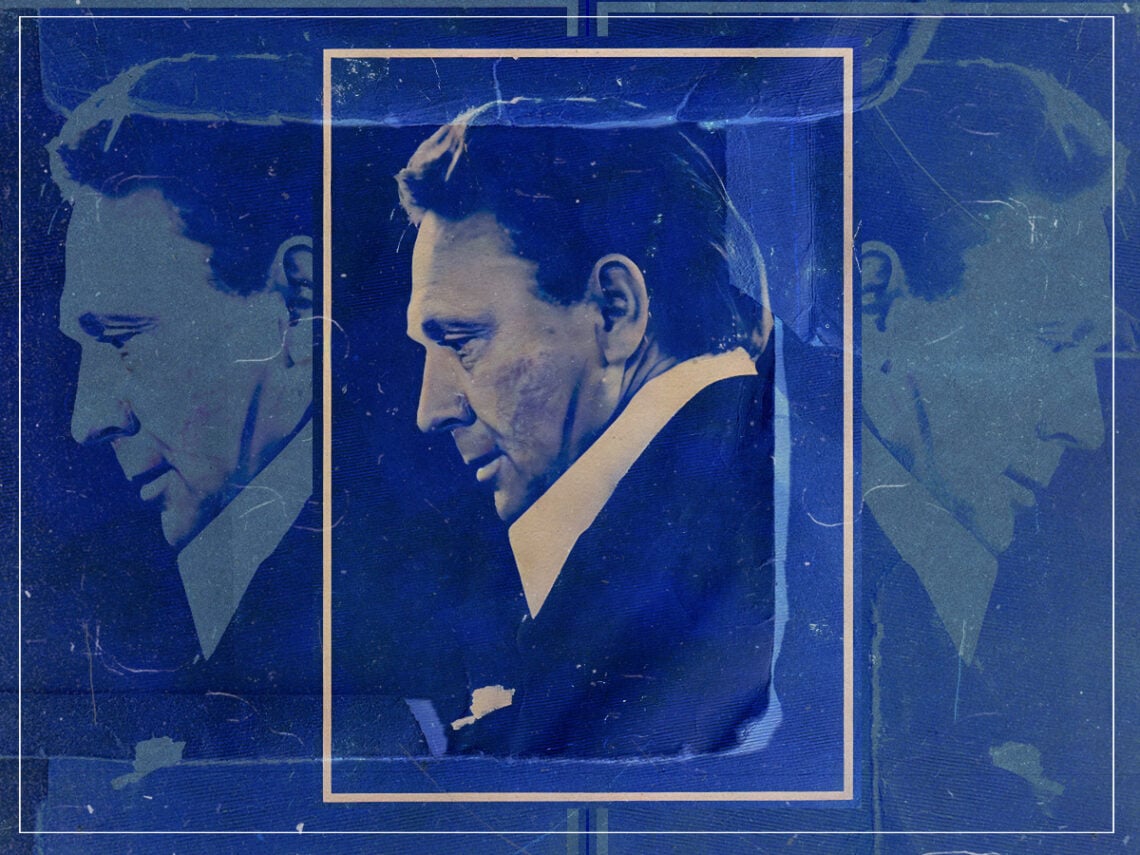
Darwin Gross: the spiritual Eck Master who didn’t understand music

Eckankar is a religious organisation initially started by Paul Twitchell in the mid-1960s. Twitchell started the organisation after being kicked out of the Swami Premananda’s church but wanted to continue his teachings. He was married to Gail Atkinson and was the Spiritual Eck Master of his organisation until he passed away in 1971.
Music is often described as a spiritual experience. People will often hear a sound and won’t be able to explain how it makes them feel, but they will be able to revel in that feeling regardless. This is why so much religion is built around music, such as in hymns and prayer. In that sense, it is hardly a surprise that many religious people are also musical, as a connection with God can’t be put into words, so instead, it is put into sound.
When Paul Twitchell died, he didn’t leave any information about who, out of his followers, should succeed him. His wife had a dream that Twitchell named Darwin Gross as the next leader, and as such, during a ceremony in Las Vegas, she handed him a blue carnation, signifying he now had the ‘Rod of Power’. The two would marry some months later.
Gross was an American Army veteran and a vibraphone musician. His appointment as the Eck Master ruffled a few feathers as he was relatively new to the religion, so many people didn’t think he was worthy of the position. On top of that, his subsequent marriage to Gail Atkinson was enough to force members to leave the religion.
He would go on to cause a lot of controversy as an Eck Master as he eventually stepped down from the role in order to become the President of Eckankar, a position he created which conveniently paid a yearly salary of $65,000. Harold Klemp filled his position of Eck Master and fired Gross for negativity, spiritual decay and embezzlement.
However, an area of his life where Gross didn’t have much controversy was in the music he made. He loved to play light jazz and had such a knack for it that people labelled him the pied-piper of happy blues. The parallels between religion and music are evident in his description of the sound, in that he cannot explain or understand music; he interprets it and plays it in the same way that someone practices religion. Also, similarly to his religion, it’s unlikely Gross will get a $65,000 pay cheque from playing music, either.
“I have found that music is very important to the life of the individual,” said Gross, “the type of music to which one listens can have a great effect upon his physical, emotional and mental states. This is why every note I play, sing, write, or chord structure, I try to make it a note of love. This is music that can heal.”
He continued, “Music speaks straight to our heart and reaches the very core and root of soul. Music soothes us, stirs us up. It puts noble feelings in us. It melts us to tears at times. Yet we know not how it works. It is the language that, by itself, is divine.”
When Gross describes the power of music, it is clear why it appeals to the religious so much, as the impact of the two overlap. The two can also corrupt, as those high up in music tend to get a contorted view of themselves, similar to how Gross did in his position in the Eckankar. Pied-piper of happy blues, or the actual pied-piper, somewhere, there will still be rats.
