


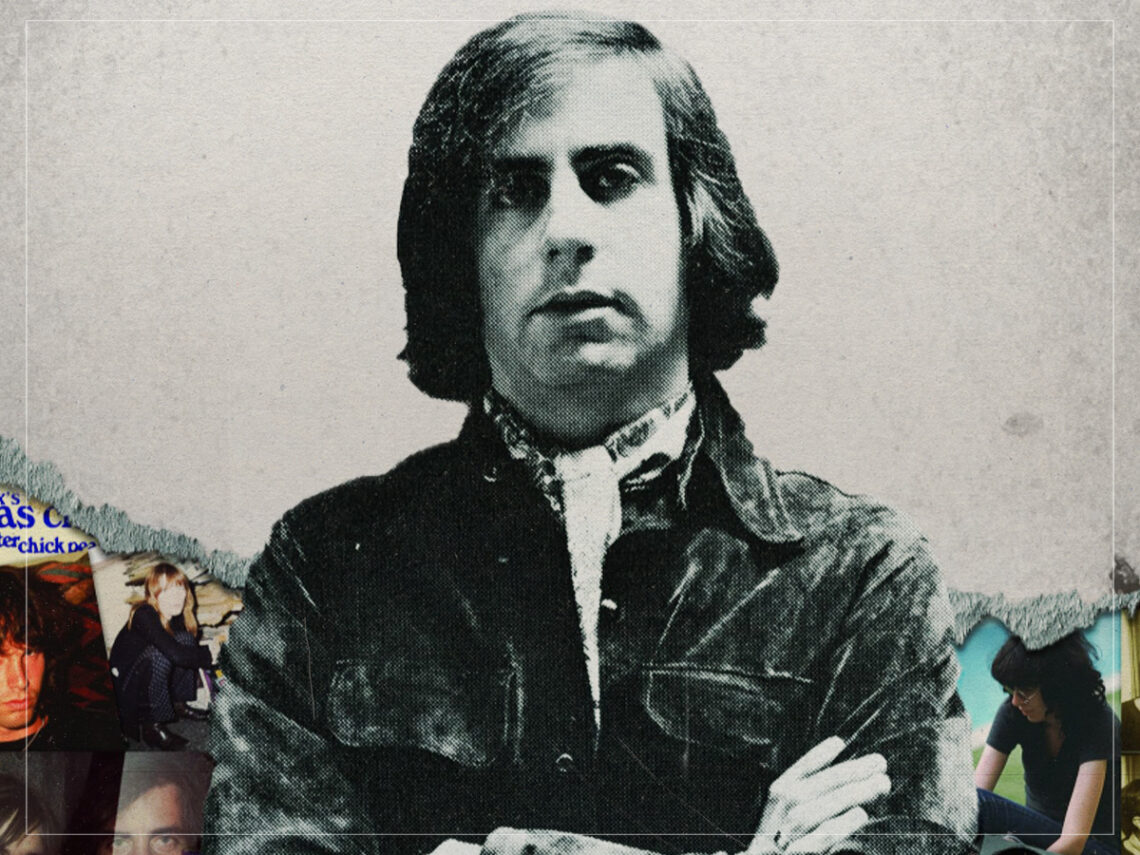
Danny Fields: The man who made punk happen

In 1939, the same year Judy Garland first donned her ruby slippers, Daniel Feinberg was born in Richmond Hill, Queens. After graduating from the University of Pennsylvania in 1959, he briefly attended Harvard Law School, left during his first year, and moved to Manhattan’s Greenwich Village in 1960, enrolling briefly at NYU, where he became involved with the burgeoning downtown arts and music scene.
Fields, as he became known, started out at a magazine called Datebook, and can be credited with the furore over John Lennon’s remark that The Beatles were bigger than Jesus, the quote he came across in 1966, which had attracted little notice when it appeared in London’s Evening Standard a few months before. Fields thought it an eye-catching comment and put it on the cover of Datebook, and the ensuing controversy figured in The Beatles’ decision never to tour again.
He then moved to work at 16 magazine, a fan-led title angled towards preteen female music fans, and when its longtime editor-in-chief and former model Glora Stavers stepped down in 1975, as her assistant, Field replaced her, co-editing 16 with Randi Reisfeld for the next five years.
We all have one band that we have bragging rights about, the band we called were going to be big before they were; for me, it’s the Last Dinner Party, who I caught in a dingy room at some point in the early 2020s and I loudly declared to my friend, à la Louis Walsh, were going to be ‘the next big thing’, and for Fields’ hunch, that was the Bay City Rollers.
“They were adorable. Five cute guys at once. That’s the story of rock n roll,” Fields told the BBC.
As the editor of 16, Fields was part of a press junket to Scotland in the summer of 1975 to witness the phenomenon that was driving teenage girls in the UK wild, and he recalled of watching the scenes on the streets of Glasgow as akin to witnessing the triumphant return of conquering heroes in an epic movie. He had a feeling the Edinburgh group would be the first UK boyband to break into the US since the ’60s and featured them on 13 successive covers. Channelling his inner Richard Gere in Chicago, his efforts eventually saw millions of American girls step in line and fall in love with the band.
In the late ’60s, Fields was also hired by Elektra Records as a publicist; originally a folk label, Elektra was enjoying huge success in the rock market with The Doors, and Fields was brought in to publicise the band, despite his overwhelming dislike of lead singer Jim Morrison, and he additionally recommended Elektra sign MC5, The Stooges, and David Peel.

While scouting for Elektra and spinning half of America into a frenzy over the Bay City Rollers, Fields was also managing the Ramones, whom he first saw at CBGB in 1975, at a time when he was both co-editing 16 and writing a weekly column in the Soho Weekly News, the emerging theme being, he was a very busy man. He went to see the band after fellow writer Lisa Robinson assured him he would be a fan, writing to him, “You’ll love this band. They’re cute and loud, and their songs are short”.
Fields was head over heels. “I loved the first lyric, the first song, the first sound. That first song was ‘I Don’t Wanna Go Down to the Basement’. Afterwards, I met them outside CBGB, and Tommy said, ‘Will you write something about us?’ I said, ‘I want to manage you’,” he told The Guardian in 2016.
Fields persuaded Seymour Stein of Sire Records to sign them, taking on Stein’s wife Linda as co-manager, and he stayed with the Ramones until 1980, parting ways after frustration that the band never had a hit single, immortalised in their song ‘Danny Says’, which lent its name to the 2015 documentary about his life.
He was also a peripheral member of Warhol’s Factory crowd, becoming close friends with Nico and Lou Reed, wherein there’s an audio recording of him playing a Ramones demo to Reed, who responded with, “That is without doubt the most fantastic thing you’ve ever played for me, bar none”.
Iggy Pop emphasised about Fields in Danny Says, noting, “This was a guy who would look at something that nobody else was really ready to see and say, ‘People could enjoy this, this should be everywhere’”.
Fields came of age when music was undergoing seismic changes, living in the city where much of the countercultural groundwork was being laid, and being out and proud from a young age, he once said he chose Harvard expecting to find “cute boys”, but instead dropped out and chose to immerse himself in the alternative scene of New York, where he still lives to this day; regardless of his motivation, punk fans across the globe can be very thankful he found his way to ‘The Big Apple’.

Never Miss A Beat
The Far Out Punk Newsletter
All the latest Punk content from the independent voice of culture.
Straight to your inbox.