


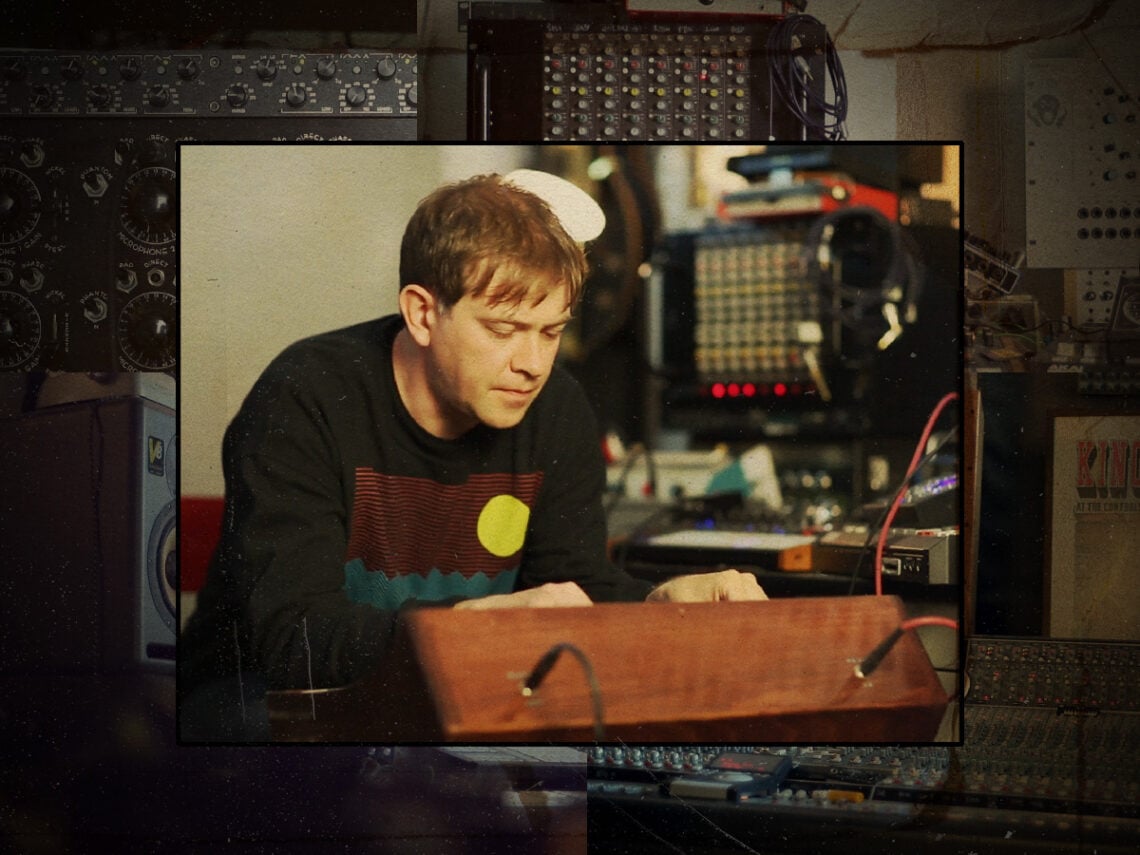
Dan Carey: the man behind modern indie

Across the bustling and eclectic contemporary indie boom, a chapter in the fraught and much-maligned genre tag that towers over anything from the 2000s, chances are, if you investigate the production credits, one name will routinely pop up: Dan Carey.
He appears to be everywhere. From Dublin’s Fontaines DC’s anthemic punk stir, Squid’s gelatinous art stylings, and the postmodern crumple of Black Midi’s hectic whirlwind, Carey seems to be able to wield whatever alternative force that’s hurtled his way. Founding the Speedy Wunderground label, recent names like Heartworms, Royel Otis, and even Factory veterans A Certain Ratio have passed through its South London studios eager for Carey’s focused regimen.
Finding some minor fame playing guitar in low-key bands across the 1990s, the crucial tutelage under reggae DJ and producer Nick Manassa’s wing soon saw Carey cut his teeth playing on dub sessions by the likes of Mikey Mystic and Danny Red while learning the ropes in the studio.
Before long, he and Manassa set up a studio together, and forming one half of the electronic duo Danmass would provide the all-important musical rolodex, crossing paths with many other budding artists that would prove fruitful for his developing production chops.
Early collaborations with Emiliana Torrini and now megastar Sia would land a massive gig with Kylie Minogue, co-writing and co-producing her 2003 UK number one ‘Slow’. A future in pop looked assured. Yet, Carey’s heart was in the alternative world, helping out with a fledgling Joe Lean & The Jing Jang Jong and its psychedelic offshoot Toy, then jumping into the producer’s chair for Franz Ferdinand’s Third LP. Alongside a long-running creative partnership with rap-poet Kae Tempest, Carey would launch his famed Speedy Wunderground in 2013, a label supported by its strict but artistically juice-inducing ethos.
Completely DIY with its studio set-up in Carey’s Streatham home, artists are overwhelmingly invited by Carey to record, with a single cut in one day with minimal overdubs and no lunch, and swiftly mastered and sent off for pressing before any band member can say otherwise. Reportedly, such an approach usually results in a good time had by all.
“On the whole, I reckon that eight times out of ten people say it’s the most fun recording they’ve ever had,” Carey tells Speedy Wunderground’s official website. “It’s a much better introduction to a band than sitting with them and telling them what I’d do if I recorded them. It’s 24 hours to show them what it’s like.”
Such a raw method has informed his production technique. Demanding that all bands rehearse their material to the point where they’re able to play an entire record in two halves, minus vocals, on analogue tape before digital transfer, each group knows that one mistake will result in a total erasure of the take. Such intimidating measures haven’t stopped Goat Girl or Wet Leg from soldiering through Carey’s unique programme, yielding Grammy-nominated albums that teem with a live and urgent sonic pop.
Is it perhaps the kick up the arse indie sorely needed? Whatever the case, you know that any record with a Carey credit or Speedy Wunderground logo is a conjuring well worth any intrepid music fan’s time.
