


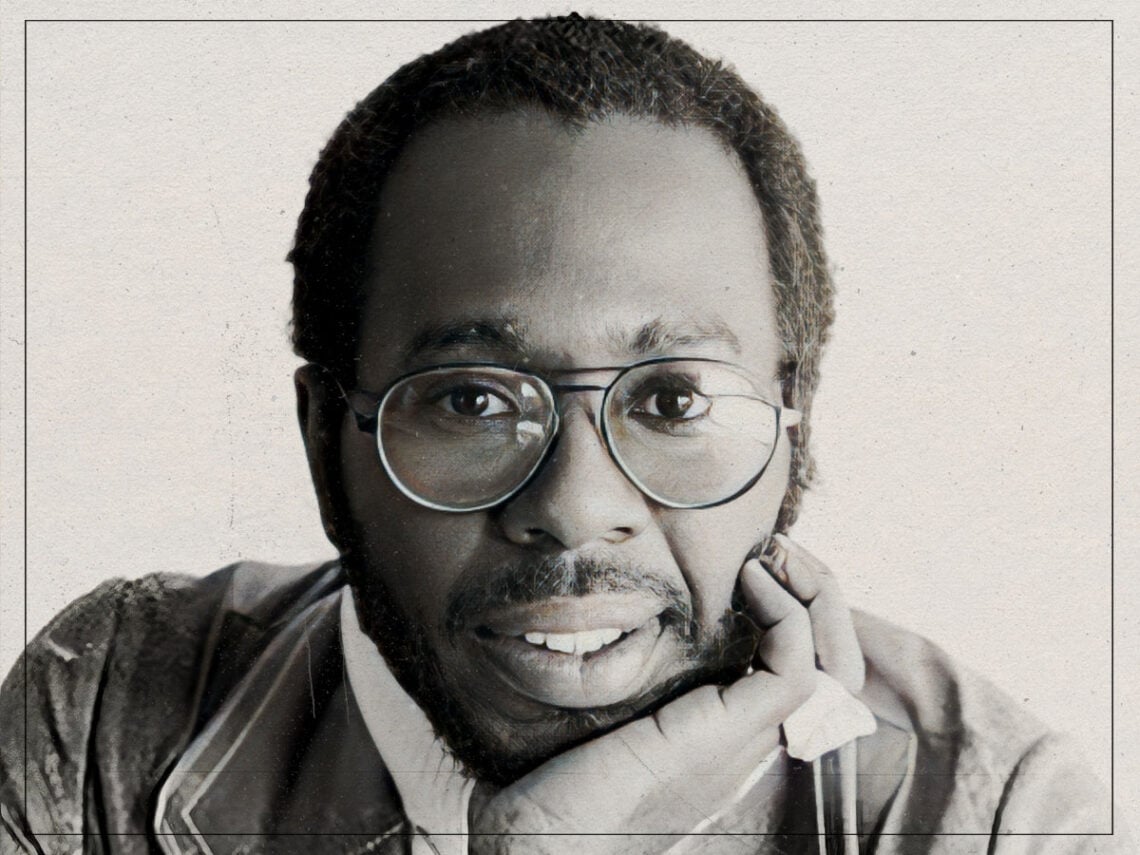
“That’s my boy”: the song Curtis Mayfield wrote in tribute to The Staple Singers

Curtis Mayfield was a giant of socially conscious soul music, uniquely gifted not just with the ability to cast a light on major issues impacting his community in the 1960s and ‘70s but also to leave the listener with an optimistic view of a better future. This is why many politicians, including Barack Obama and Kamala Harris, have turned to Mayfield’s pieces as the perfect galvanising anthems to play at the end of a stump speech. The 1970 song ‘Move On Up’, in particular, is the ultimate feel-good call to action. It’s a tune that’s remained relevant for 50 years in sports stadiums, TV commercials, and hip-hop samples, but its original inspiration came from humbler roots in Mayfield’s native Chicago.
Growing up in the city’s Cabrini Green housing projects, Mayfield found his own sense of hope and worth by singing in a gospel choir as a boy. By the age of 14, he’d joined with friend Jerry Butler to start his own vocal group, The Impressions, which went on to score a series of hits in the 1960s, most of them written and produced by Mayfield himself. Songs like 1964’s ‘Keep on Pushing’ and 1965’s ‘People Get Ready’ soon revealed Mayfield’s evolving talents as a lyricist, particularly his willingness to explore deeper themes. Energised by the civil rights movement, Mayfield was also emulating some of the Chicago artists that had already helped bring the social commentary of folk music into a more gospel-toned soul sound, including Sam Cooke and, above all others, The Staple Singers.
“Curtis lived around the corner from us,” Mavis Staples once told Mojo. “He was like my baby brother. He’d drop by, and we’d eat together, and he’d talk politics with Pops [Staple Singers patriarch Roebuck Staples]. One day, he came to Pops and said. ‘I want to write songs like The Staple Singers do, and Pops said. ‘Curtis, man, you’re a writer, a poet! Write some of those songs!’ The first one Curtis wrote was ‘Move On Up’, and he came round and played it to us, and Pops said, ‘That’s my boy!'”
‘Move on Up’ was released on Mayfield’s 1970 debut solo album Curtis, as the first track on side two. It was an instant classic, but at eight minutes and 49 seconds, it wasn’t yet fit for radio. A year later, a shortened single version of the song was released, and though it disappointingly failed to chart in America, it proved to be a breakout hit in the UK, spending ten weeks in the top 50.
While Mayfield was honouring his friends in the Staple Singers and directing his message primarily to his fellow Black Americans struggling for equal rights, ‘Move On Up’ has a universal message that transcends race, age, geography, or generations: “Just move on up / For peace you’ll find / Into the steeple of beautiful people / Where there’s only one kind”.
Even if there’s a language barrier that undercuts the lyrics, the phenomenal horns and percussion that propel ‘Move On Up’ still generate the same desired effect in the listener. As no coincidence, the song has found new audiences time and again since its original release, whether in the form of cover versions (Paul Weller performed interpretations with both the Jam and Style Council in the 1980s), football anthems (Arsenal fans often sing the song after matches), or film soundtracks (Bend It Like Beckham being one memorable example).
For better or worse, the horn part from ‘Move On Up’ was also sampled in one of Kanye West’s first major hits, 2005’s ‘Touch the Sky’; a song with similar themes of self-actualisation. West, a Chicago native himself, released the song six years after Mayfield’s death, and today, ‘Touch the Sky’ has about twice as many Spotify streams as ‘Move On Up’. Such is life.
Meanwhile, Curtis’ childhood pal, Mavis Staples, is still going strong at 85. As the last surviving member of The Staple Singers, she has remained a vital force, releasing seven studio albums and three live albums since signing to ANTI Records in 2004.
