



Curt Boettcher: the man who could have been Brian Wilson

While we remember legends, celebrate their work and mourn their loss, the sad reality is that for every one idol remembered, there are countless left in the shadows. It’s true that no one’s impact is ever truly forgotten as they’re remembered by friends and loved ones, or have word of their art passed down through their own lineage, no matter how small.
However, some people deserve more spotlight, and Curt Boettcher is one of them – a man who inspired Brian Wilson.
You’d be forgiven if you’d never heard the name before, but you’ll have heard Boettcher’s work. Or, at least, you’ll have heard his impact. As a multi-hyphenate talent working as a singer, songwriter, composer and producer, Boettcher spanned the whole music-making world, working tirelessly and being booked and busy during the 1960s and ‘70s.
At first, he started out as part of The GoldeBriars, a folk unit. It was a very classic opening to a career, as he began as a singer and slowly grew his skill set, step by step, getting to grips with the recording studio setup, learning how to write and compose songs, and coming to understand how to record and produce them, too.
It was also in that band that he started to craft his sound. It was folk at first, but it quickly morphed into something broader, bringing in elements of rock, a hefty dose of pop, but also more left-field elements, even being inspired by his childhood as the son of a navy man and the army songs he’d heard then. His scope was massive, and it was making him well-known, so when that band stopped, he was called on quickly.
From there, he started applying all those skills to the work of others. Most notably, he produced for Lee Mallory and became the first person to use the reserve echo, although Jimmy Page likes to take credit for that, claiming he was the originator of ‘Whole Lotta Love’ in 1969. But as Boettcher produced ‘That’s the Way It’s Gonna Be’, the earlier sound of it there gives the medal to him as proof of just how much the producer was ahead of the game.
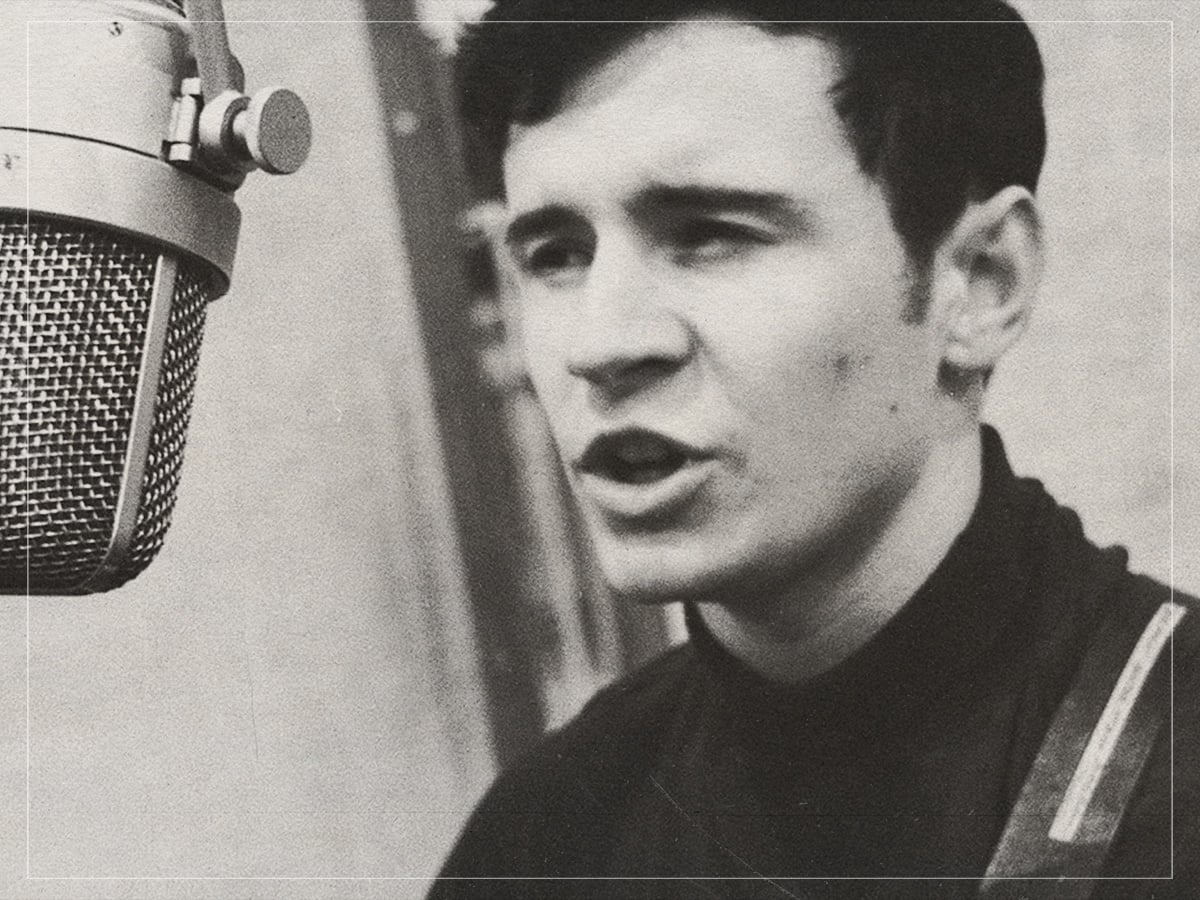
That’s truly the pattern in his career; Boettcher was always a step ahead. In his production work, he inspired bravery in others, pushing the boundaries of genre and studio capabilities, and getting experimental with the kit in a way no one else was. In The GoldeBriars, as early as 1964, he was starting to merge sounds and inspirations in a way that The Beatles wouldn’t dare until Rubber Soul, or The Beach Boys wouldn’t really start to do until 1966 with Pet Sounds—after Brian Wilson had met Boettcher.
Boettcher and Wilson met in early 1966, and Gary Usher, who was there at the time, claimed that Wilson was openly inspired by him, playing a significant role in pushing his production further on Pet Sounds after hearing what Boettcher was doing.
That certainly seems true, given that later, he’d help out Dennis Wilson with backing vocals on Pacific Ocean Blue and then was called in to help The Beach Boys with LA (Light Album), producing and rearranging a ten-minute-long remake of their track ‘Here Comes the Night’.
It seems that at every turn, here we have the originator, yet his name is forgotten. It’s hard to really put a finger on why without landing on a sad and disappointing reality. Little was ever really known about Boettcher’s personal life, but after his death, it was asserted that he was gay, living in the closet at a time when his love was illegal and then struggling in silence through the AIDS epidemic.
In 1987, when he died, it was reported that he was HIV positive and that during a biopsy, when the doctors accidentally clipped his lung, they were too afraid of the infection to help him, instead letting him bleed out on the table in a staggering act of medical neglect.
It was an act that stole an incredible talent from the world and made the question of what he might have become a huge one. “If his life had gone just a bit differently, [he] might have been another Brian Wilson,” the New York Times theorised.
Clearly with the same musical intuitions, Boettcher seemed just as deserving of the genius status Wilson was awarded, but instead, he was forgotten, eulogised perfectly by the politician as they wrote, “As it stands, Boettcher — a pop-music producer whose heyday was the late ’60s — now survives in rock history mostly as a liner-note credit. He could have been, but never was. Yet he enjoys a godlike status among a select group of music fans, for whom obscurity is more enticing than fame.”
