


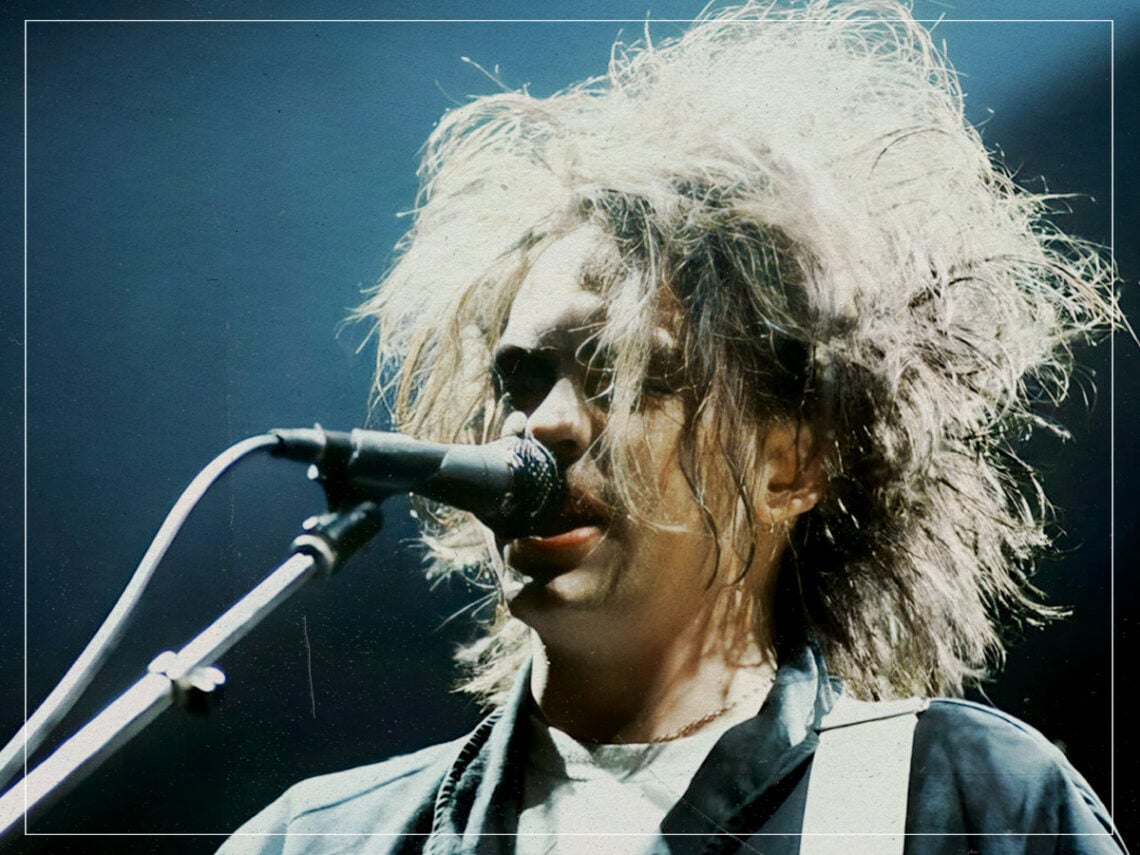
“I was very difficult”: The Cure album that Robert Smith doesn’t remember writing

Over four decades have passed since The Cure introduced themselves to the world with their debut album, Three Imaginary Boys, yet they still remain one of the most influential bands in British guitar music. Their impact still finds its way into the work of post-punk revivalists, and just last month, the band earned their second number one album with Songs Of A Lost World, proving their continued relevance in modern-day music.
As the lead songwriter for the band, Robert Smith has driven much of its success. With help from his bandmates and trusted collaborators, the messy-haired, eyeliner-loving frontman provided the band with some of their biggest hits, from the gloomy ‘A Forest’ to the more pop-driven ‘The Lovecats’. However, there is one album that Smith doesn’t really remember writing.
The Cure frontman’s drug use seems to have interfered with his memory of writing for the band, particularly when it comes to their 1982 album, Pornography. The record featured dark, swirling tracks like ‘One Hundred Years’ and ‘The Hanging Garden’, each of which Smith contributed to in the writer’s room, working alongside his bandmates Simon Gallup and Lol Tolhurst.
However, Smith doesn’t remember very much of the writing process for Pornography. During a conversation with Creem, he shared, “I don’t remember writing a lot of it, particularly Pornography. I don’t remember writing much of it at all.” This has left the frontman attempting to dissect his lyricism, looking for meaning in words that came from his mind and his pen.
With Pornography, this could be quite a difficult task. Smith’s lyrics are full of beautiful but elusive imagery, hiding dark emotions and thoughts beneath descriptions of flowers and flesh. “A hand in my mouth, a life spills into the flowers,” he sings in the opening to the title track, “We all look so perfect as we fall down.” The record seems to delve into dark topics and themes, into discussions of death and even drug abuse.
Although it seems quite a difficult task to extract meaning from lost memories via his own bleak lyrics, it is one that Smith has slowly achieved, diving into the references and images that he once created. “I understand it,” he acknowledged, “I know most of the references that are in the songs, but they’re so disjointed, it took me a long time to figure out.”
Smith went on to acknowledge that much of the album when he wasn’t “sitting down and writing,” but rather “going to the studio and having this big sheaf of words.” Although this process did lead to a full album, it wasn’t the most productive or pleasant environment for Smith or for his bandmates. “I was so possessive around that time, of the record,” the frontman admitted, “I was very difficult to work with. Simon and Laurence didn’t enjoy it at all.”
Unfortunately for The Cure, the poor environment behind the scenes was somewhat reflected in the response to the record. When Pornography hit record store shelves in 1982, reviews didn’t necessarily laud the record. Still, just as Smith has rebuilt his memory of recording Pornography, perspectives on the gloomy, gothic record have changed in recent years.
Pornography might not be the most acclaimed or commercially successful record in The Cure’s catalogue, but it does provide a glimpse into the band’s darker sonic leanings, as well as an important chapter in their story.
