


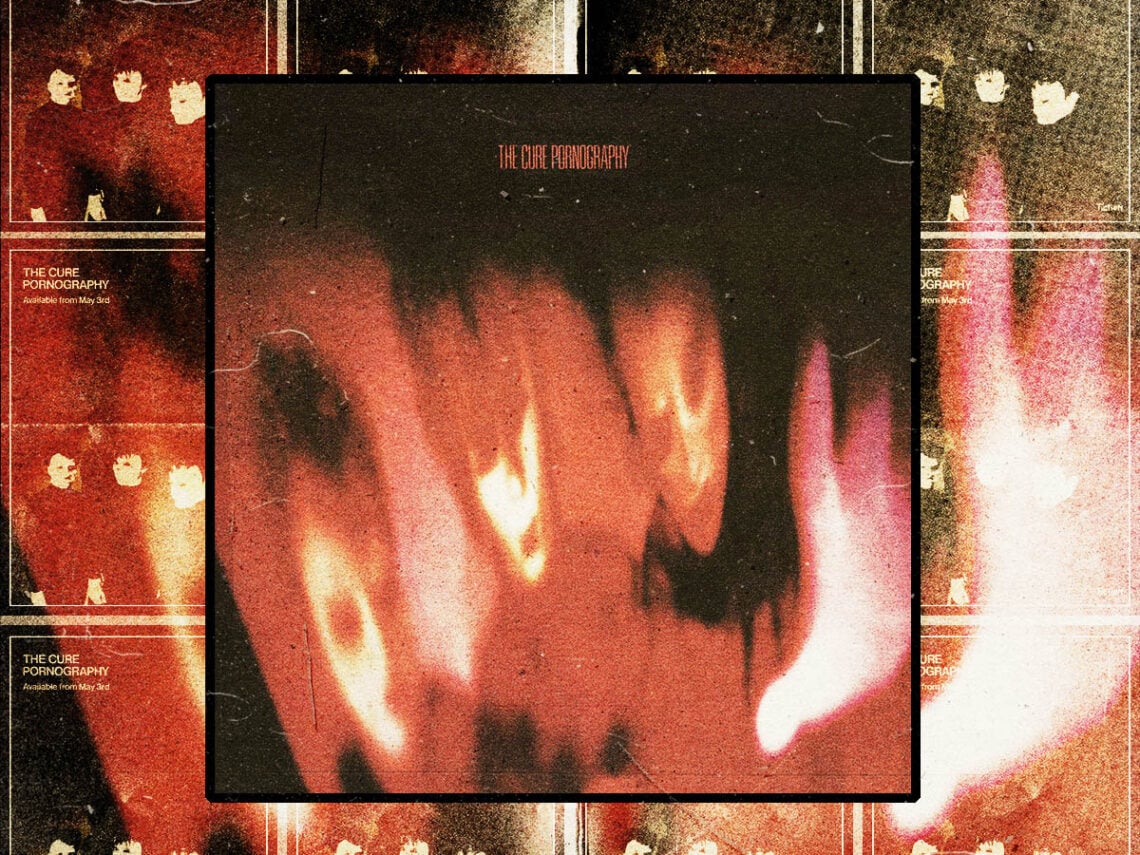
The Cure – ‘Pornography’

Shortyl after The Cure entered the post-punk scene in the late-1970s, the band succumbed to drug and alcohol abuse, harnessing an intensely nihilistic sensibility that inevitably bled into their work. The result was 1982’s Pornography, the band’s darkest hour, yet one of their most enduring, thanks to the immediacy and ever-present relevancy of Robert Smith’s bleak lyrics.
Pornography is defined by images of death, war, drug abuse, prostitution and apocalypse, yet Smith never allows his lyrics to become cliched or dated. The album begins with the pessimistic declaration, “It doesn’t matter if we all die,” which appears on ‘One Hundred Years’, which could teeter into trite territory. However, paired with the haunting whir of guitars and Smith’s defiant delivery, this line weighs heavy on the listener. The moody soundscape perfectly accompanies Smith’s rich storytelling as he goes on to detail the malaise of working under the capitalist regime and seeing images of war on television, longing for childhood innocence.
As an opener, ‘One Hundred Years’ couldn’t be more fitting, introducing us to the album’s core themes of existentialism, suffering and life’s futility. On the following track, ‘A Short Term Effect’, Lol Tolhurst pounds at his drums as dissonant noises fill the instrumentation, evoking a feeling of disorientation. Smith’s fading vocals, preoccupied with time, melt through the song as though he’s attempting to grasp onto stability, only to find himself slipping away. There is a nightmarish aspect to this effect, aided by dismal imagery of a dead bird, “cold as it hits the bleeding ground”.
While the previous tracks establish key themes of suffering and drug abuse, ‘The Hanging Garden’ introduces listeners to the album’s other core topic: sex. Although the lyrics are deliberately vague, Smith alludes to sex through lines such as “In the heat of the night, the animals scream” and “In the hanging garden, no one sleeps”. The track, the most accessible on the album, builds around militaristic drums that drive an intensity suggestive of unease. This is just one of several tracks on Pornography where sex is portrayed with negative connotations – with the animals eventually dying.
However, Smith explores this theme tenfold in ‘Simamese Twins’, which depicts a traumatic encounter between the speaker and a prostitute. Despite the magical twinkling sound that opens the song, it couldn’t be less of a fairytale, with Smith comparing the event to a moment of perdition through biblical imagery, asking, “is it always like this?” The slow pace of the song speaks to the hopelessness of Smith’s words, with Tolhurst’s drums becoming the main musical component to accompany Smith’s devastating tale.
Darkness emits from every song on Pornography, even in its most upbeat moments. The band ensure that the listener is never comfortable, whether that be through a pounding beat, a sadly nostalgic guitar riff or a confronting lyric jolting us out of complacency.
Somehow, the record manages to get even darker as it progresses, with Smith channelling his inner Lady Macbeth on ‘The Figurehead’ as he sings: “I will never be clean again”. A deep bassline makes way for Smith’s confessions of guilt, with his voice echoing in and out of the sonic landscape. One of the album’s most evocative cuts comes in the form of ‘A Strange Day’, where Smith contemplates the end of the world, allowing a depressingly sentimental riff to wash over the listener.
The last two songs on Pornography are arguably two of the band’s gloomiest, gothic moments. ‘Cold’, which laments the early deaths of drug users with lyrics like “a shallow grave, a monument to the ruined age” is particularly pertinent when considered in the context of Smith’s own substance abuse. The dramatic nature of the track is harnessed by funeral-esque synths. ‘Cold’ is desolate, devastating and utterly beautiful – undoubtedly one of the album’s standout moments.
Pornography winds to a close with its title track, which sounds like audio taken from a gloomy ’70s horror B-movie. Warped audio, taken from a television debate, welcomes the song before ominous synths and blistering drums begin to play, creating a terrifying atmosphere as each component layers on top of the other. Smith’s lyrics become deranged, as if he has been possessed by a psychopathic entity, singing, “one more day like today and I’ll kill you/ A desire for flesh/ And real blood/ And I’ll watch you drown in the shower”.
After every harrowing lyric and discordant melody, Smith ends Pornography with a bizarre and contradictory bout of optimism by asserting that he “must fight this sickness”. These closing lines sum up the album’s foray into the darkest corners of existence, grappling with the misery associated with drug dependence, isolation and depression. In all of its bleakness, Pornography’s final lines suggest that not all hope is lost. By creating the record, Smith and his bandmates were faced with their most nightmarish thoughts, allowing them to slowly find a way to crawl out of their despair.
