


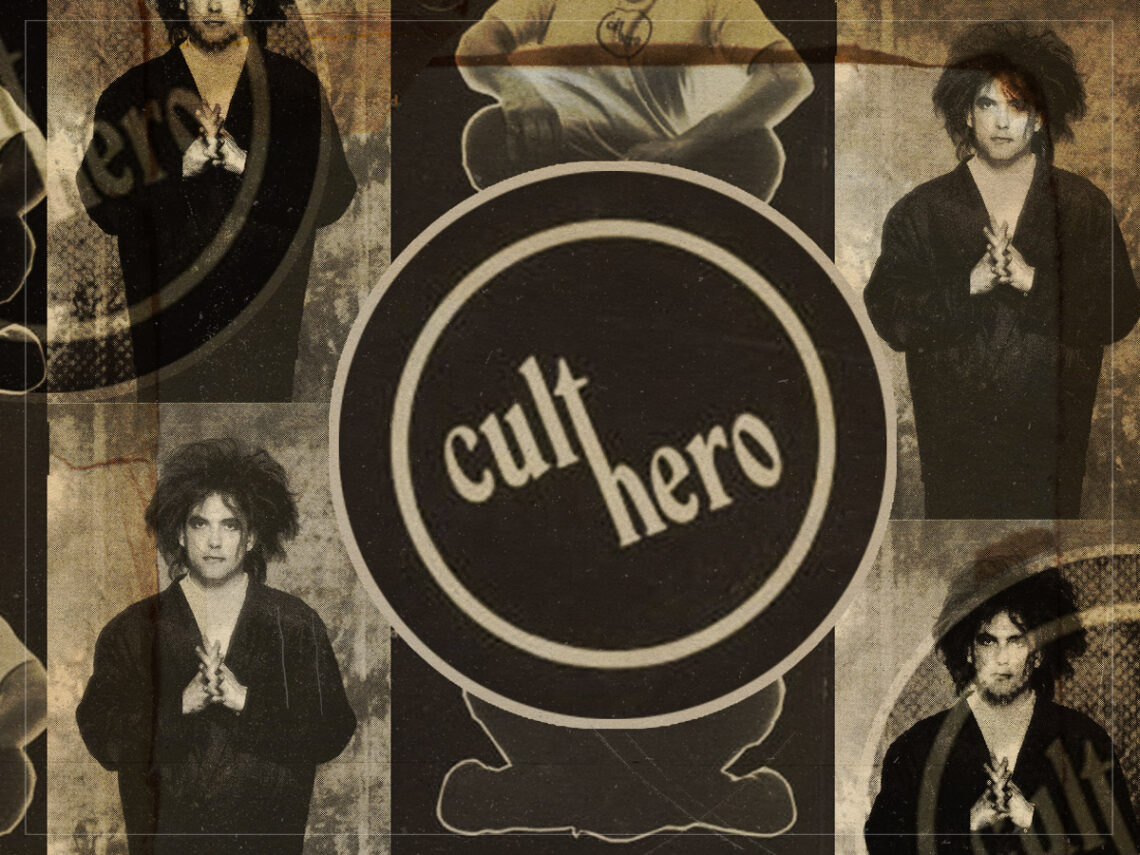
Cult Hero: The Cure’s early side project

For over 45 years, alternative rock and kaleidoscopic pop behemoth The Cure have cycled through 13 official members on top of a myriad of substitute players, permanently fronted by creative captain and songwriter Robert Smith. While founding drummer and later keyboardist Lol Tolhurst holds a special place for many hardcore fans, The Cure’s second mainstay surely lies with their bassist, Simon Gallup.
Joining the band in 1980 and playing ever since, except for a tumultuous exit for the Japanese Whispers collection of singles and The Top, Gallup’s aggressive and dramatic playing style has served as a crucial sonic anchor across the band’s windingly eclectic oeuvre.
Knowing each other as teens in West Sussex’s Crawley music community, Smith and Gallup shared local bills and associated with each other in early bands Easy Cure and The Magazine Spies, which was later renamed The Mag/Spys. Losing the ‘Easy’ in their name, The Cure would sign to the fledgling Fiction Records and drop 1979’s Three Imaginary Boys debut LP, cutting a unique mark among the new wave crowd with its dreamy hooks and effervescent pop spike. Yet, dissatisfied with the record’s lightweight approach, Smith turned to the concurrent post-punk for a new creative path.
Enamoured with the austere minimalism conjured by Manchester’s Joy Division, coupled with his love for Nick Drake’s enigmatic songwriting, Smith sought to add foggy keyboards and rigid metronomic percussion for a sophomore effort further focused on mood and atmospheric propulsion. Tensions arose with Smith’s new direction, however. Favouring complex arrangements, founding bassist Michael Dempsey attempted, in vain, to resist the emerging gothic stylings, souring the relationship to breaking point while on a 1979 tour supporting Siouxsie and the Banshees.
“I think the final straw came when I played Michael the demos for the next album and he hated them,” Smith told Uncut in 2000. “He wanted us to be XTC part 2 and—if anything—I wanted us to be the Banshees part 2″.
Before entering Morgan Studios for the Seventeen Seconds sessions, Smith reached out to his old Crawley mate, Gallup, as a provisional effort to bring him into The Cure’s fold as a potential Dempsey replacement. Testing each other’s musical compatibility, the pair corralled The Mag/Spys’ keyboardist Matthieu Hartley, future on-off Cure member Porl Thompson, Smith’s sisters Janet and Margaret, and local band The Obtainers into the studio for a semi-serious recording under the moniker Cult Hero.
However, it was local postman Frank Bell who stepped up as frontman for the short-lived venture, singing both ‘I’m a Cult Hero’ and its B-side ‘I Dig You’, as well as gracing the single’s cover. All good fun, and surprisingly erring close to XTC, Cult Hero boasts jerky bass and effects-laden swooshes across its cod-ska bounce. While making little impression on UK charts, ‘I’m a Cult Hero’ wound its way on 1981’s Australian Britannia Waives the Rules compilation, and the Canadian release sold a respectable 35,000 copies, placing the studio lark about in the league of punk novelties such as Plastic Bertrand or Toy Dolls in ‘maple leaf country’.
Jump to 2004, and The Cure played a charity gig at Camden’s The Barfly for a crowd of barely 200. In attendance was Bell, who stepped onstage with the band and treated the audience to a Cult Hero reunion, ripping through their two numbers to a reportedly delighted crowd.
