


Human depravity: the cruel sadism of the Sadian horror trilogy

At the mid-point of the 20th century, the world of British horror was largely dominated by gothic and supernatural movies made by Hammer Films, which focused on classic characters like Victor Frankenstein and Count Dracula. At the end of the 1950s, though, the United Kingdom would be introduced to a very different kind of horror produced by Anglo-Amalgamated.
Best known for handling the first 12 projects in the Carry On series plus a handful of B-movie productions, Anglo-Amalgamated played a significant part in forming the history of British horror with the so-called “Sadian trilogy” of films. It comprised Arthur Crabtree’s Horrors of the Black Museum, Sidney Hayers’s Circus of Horrors and Michael Powell’s Peeping Tom.
Where horror of the 1950s and its preceding decades had largely leant into classic monster tales, the Sadian trilogy suddenly revealed a more sinister, darker and, ultimately, more authentic experience of terror. The series of three films emphasised sadistic torture, inhuman torture, sexual violence and murderous voyeurism – a turning point for the medium itself.
Beginning with Horrors of the Black Museum, this new kind of British horror pioneered the exploration of sensational sadism with audience-shocking depictions of violence and depravity. Taking place in London, Crabtree’s 1959 horror flick focuses on a Scotland Yard detective who investigates a series of murders linked to a museum of criminal torture devices. Crabtree unflinchingly confronted many taboo subjects throughout the film, such as the voyeuristic pleasure that some receive from torturous undertakings. Though it was controversial upon release, the movie is considered a classic of mid-20th-century horror.
A year later, Anglo-Amalgamated followed up with Sidney Hayers’s Circus of Horrors, yet another film that resolved to challenge the conventions of the horror genre of the time. A truly macabre work of cinema, the movie tells the story of a disgraced plastic surgeon who finds work in the circus world after a botched operation leads to his removal from medicine. What follows is the doctor’s transformation of the circus into a group of deformed performers, and as he becomes obsessed with control and perfection, a series of horrific murders occur. Yet another graphically violent work of horror began to cement Anglo-Amalgamated as one of the most shocking production companies of the era.
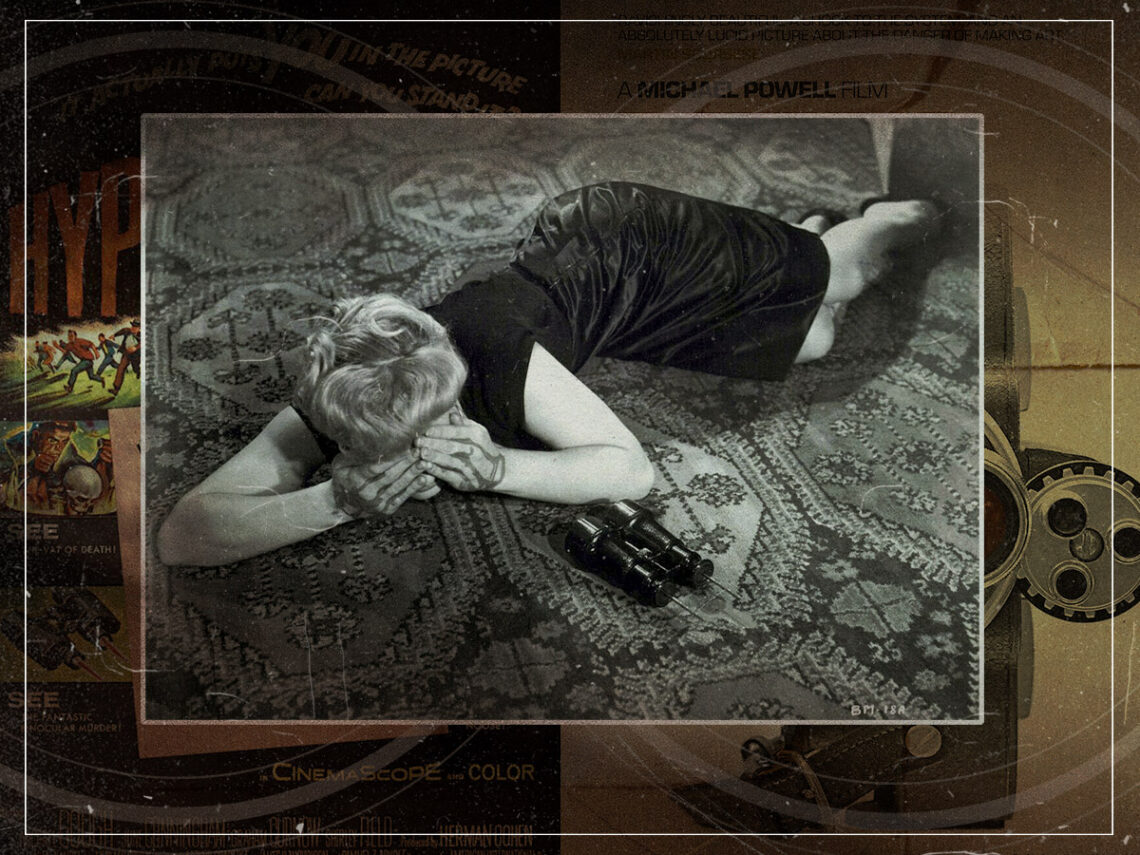
The trilogy was completed by arguably the most famous of the three movies, Michael Powell’s groundbreaking and wildly influential Peeping Tom. Diving headfirst into taboo themes and motifs, as its predecessors had, Powell’s work focuses on an introverted filmmaker and serial killer who develops an obsession with capturing his victim’s expressions of fear on celluloid. Documenting his murders with his camera with a series of point-of-view shots, Powell offered a reflection on the creepy nature of the voyeur. In the same breath, it delivered a meditation on the medium of cinema itself, serving as a cross-examination of the relationship between art and crime.
Each of the three films in the unofficial Sadian trilogy (the term was coined by critic David Pirie) managed to alter the hitherto accepted conventions of the horror genre and undoubtedly gave license to the many grotesque and graphic productions that would follow in the proceeding decades. The slasher genre would not have its progenitor were it not for Peeping Tom, nor would the body horror works of David Cronenberg have roots as strong if not for Circus of Horror.
Sadism and cruelty would eventually become staples of horror as the genre began to look into the most depraved act of humanity, but it’s all largely owed to three British movies made at the end of the 1950s.
Check out the trailer for Peeping Tom below.
