


Cromagnon’s ‘Orgasm’: How random people plucked off the streets of New York helped create an album that invented three genres

It’s not remotely surprising that some weirdo hippies got together in 1969 to try and make an experimental concept album about what the sound of a rebuilding, post-apocalyptic human society might sound like.
What is surprising is just how many actual future sounds they managed to successfully foretell, along with elements that went way beyond psychedelia into territory that would later be known as industrial, noise rock, and no wave, with no apocalypse required.
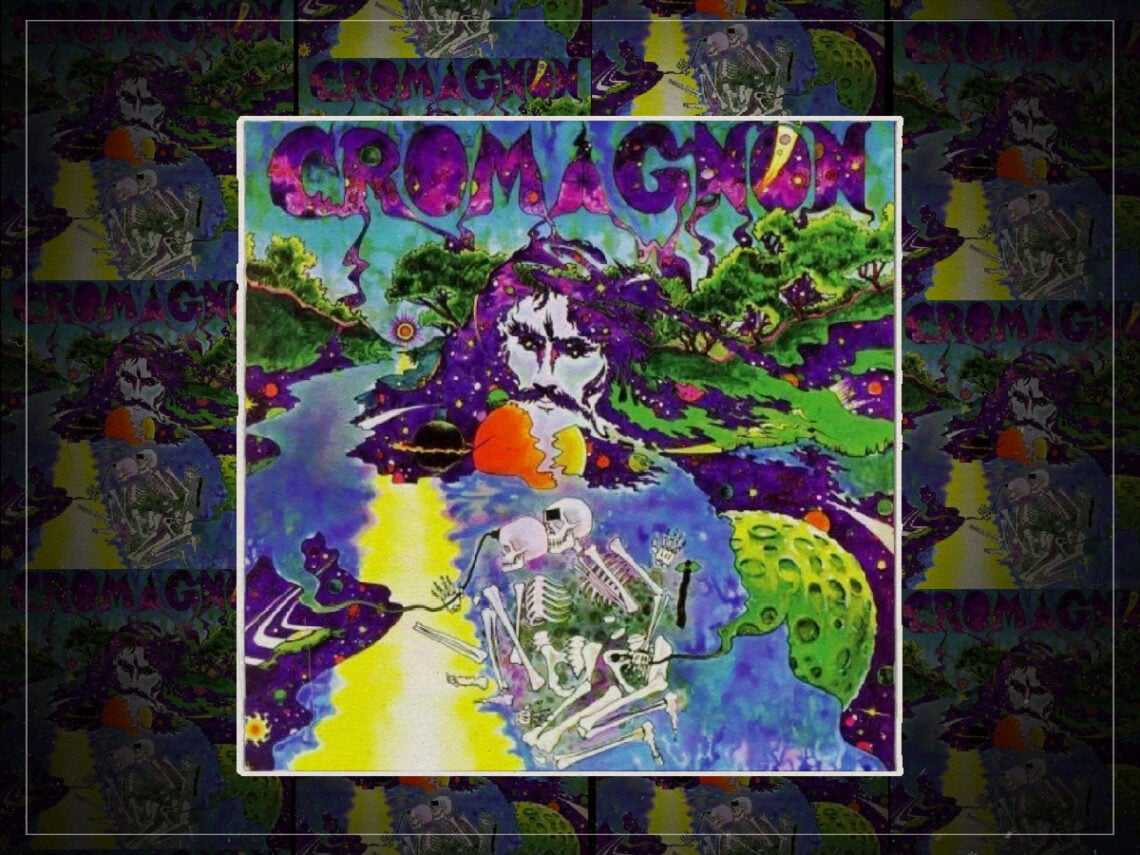
Based in New York City, the loose collective known as Cromagnon was led by the songwriting duo of Austin Grasmere and Brian Elliot, backed by a hired stable of guest musicians they called ‘the Connecticut Tribe’. The lone album the group recorded, 1969’s Orgasm, was put out on the avant-garde ESP-Disk label and has been re-released in subsequent decades under the name Cave Rock.
It’s not a record that many people were aware of, even in the open-minded freakout heyday of the late ‘60s, but it has gradually taken on a cult status in more recent years, as listeners came to appreciate the album’s wild abandon and potential influence on many of the experimental noise-collage artists who came along later. That’s because, despite having eight ‘songs’, Orgasm isn’t so much a collection of music as it a study in sound; primal, unnerving, screeching, screaming, occasionally scary sounds, created by a mix of human voices, smashing implements, old vinyl and TV samples, and the random contributions of various New Yorkers pulled into the studio from off the street.
Brian Elliot’s concept for the record, according to one of its contributing musicians, percussionist Sal Salgado, was to imagine the evolution of human shock value. In other words, “If Elvis in ‘59 was shaking his hips, and people were freaking out, and ten years later, Hendrix was putting lighter fluid on his guitar, and people were freaking out, 30 years after that, in ‘99, what were they going to be doing?”
As Salgado recalled in the 2012 book Always In Trouble: An Oral History of ESP-Disk, Elliot and Grasmere’s vision of 1999 included an assumption that “some horrific, cataclysmic event had occurred. People would be starting out in a tribe in the woods somewhere. And when they got together to make music, maybe one of them would have a guitar. There probably wouldn’t be any electricity; they’d have to just do whatever singing or chanting or humming, that sort of thing. So, it was a real primaeval thing.”
This kind of unconventional ‘cave rock’ idea wouldn’t be an easy pitch to a typical record label, but ESP-Disk’s history of work with out there artists like Sun Ra and the Fugs made them a good match for Cromagnon, and the Orgasm recording sessions, disturbing as some of the results might sound, were apparently an enjoyable time for most of the people involved. “They asked us for ideas,” Salgado said, “Brian [Elliot] wanted me to work on some storylines for certain tales. He called them tales more than songs… We all did overdubs, different things—hand claps, chanting, different sound effects.” There was a playfulness to the project, and a willingness to see how a “tale” might unfold depending on what effects were added or what a new contributor off the street might throw in.
“Sometimes,” Salgado recalled in a 2002 interview, “we would just grab some people in the hallway and say, ‘Come on in…here’s a broomstick handle, pound it on this piece of plywood’. And they would just look at us, you know. We’d say, ‘Go ahead, just do it!’” What nobody involved in the project could have imagined is how these freestyle experiments in futuristic noise would actually provide a legitimate sneak preview of some of the defining experimental rock of the ‘70s, ‘80s, and ‘90s, at times recalling bands as diverse as Swans, Sonic Youth, Negativland, Ministry, and Einstürzende Neubauten.
Salgado credits the vision of the late Brian Elliot as the essential engine behind Cromagnon’s small contribution to noise rock and industrial music. “He certainly touched our lives in a really special way, all of us,” he said, “It’s just a special talent that he had. And we were really fortunate to have him come into our lives.”
