


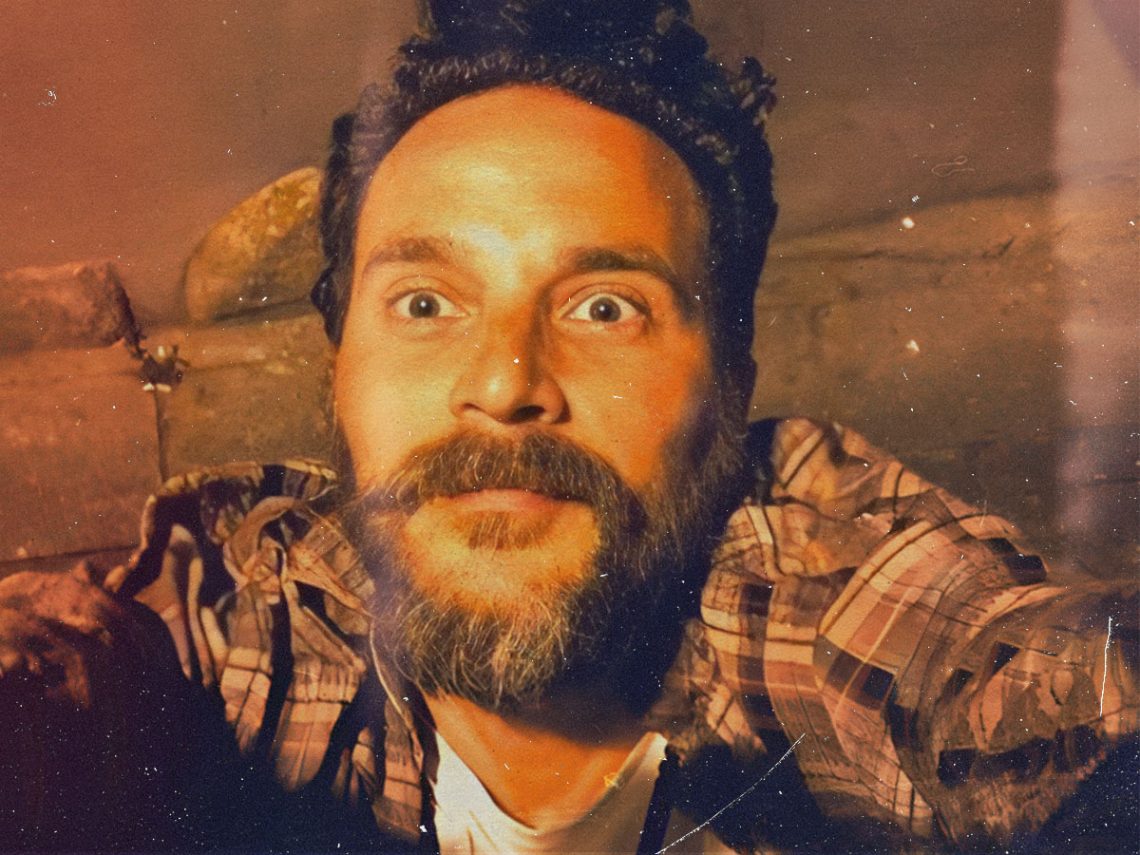
Composer Spotlight: Cristobal Tapia de Veer discusses his score for ‘The White Lotus’

The morning of my interview with Cristobal Tapia de Veer, I take a train across town. It’s eight in the morning, and the people of London are doing their best not to make eye contact. With everyone listening to something to pass the time, a cacophony of tinny beats swirls around the compartment. Amid the sizzle of trap hi-hats, one sound rises above all else – a sort of digital ululation, a vocal sample at once robotic and uniquely human. It’s the opening of ‘Aloha’, the award-winning theme from Tapia de Veer’s dizzyingly inventive score for The White Lotus.
Nobody makes a score like Cristobal. Born in Chile during the 1973 military coup d’état that toppled Salvador Allende, he spent his childhood partly in Paris and partly in Pinochet’s Chile, where he developed an affection for the popular music coming out of Britain and America at the time. His first major score was for the BBC’s adaptation of The Crimson Petal and The White back in 2011.
He would go on to provide music for Channel 4’s Utopia and Humans, the latter of which won him huge acclaim in the UK. After crafting further scores for Jamaica Inn, Dirk Gently’s Holistic Detective Agency and Black Mirror, Cristobal got a call from White Lotus director Mike White asking him to provide a full score for the series.
The score de Veer put together in the following weeks (yes, weeks) is unlike anything else. Undulating, infectious and utterly unforgettable, it refuses to serve as furniture, rising above the actors to become a character in its own right. We were lucky enough to sit down with the composer to talk about his work on the show, his studio and his thoughts on contemporary film scores.
Cristobal Tapia de Veer on his score for The White Lotus…
Far Out: Nobody’s making music like you in the film/TV world at the moment. Tell us a bit about how your music has evolved over the years.
Cristobal: “There are certain things that are constant. Well, maybe not constant, but they’ve been there since the beginning. There’s a palette of sounds that I feel I can have fun with, and sometimes I bring those palettes back. Certain sounds, certain things that I really like. In that way, I think female voices are, somehow, my instrument. In looking for emotion, human voices and the mangling of those voices became an essential sound after Utopia. I’m always looking for new ways of using voices, so those sounds have evolved as I’ve found new approaches.
“But, to me, it really feels like I’ve kept the same vibe I had when I was doing beats in my bedroom with a sampler. I like my music to feel a little bit like hip-hop in the sense that I like to feel loops and beats in the music, even if they’re not actually there. The music I did for Black Mirror, for example, doesn’t have a beat, but if you were to put a rap on top of it, it would be easy to say, ‘OK, this is really influenced by pop music more than classical music. For me, that’s always been really important: to put pop music into a score.
“Every project includes a surprise – like I always discover a sound. For The White Lotus, I have these crazy voices, which sound kind of otherworldly and are really recognisable. So, now I suppose it’s more about finding that particular sound for every new project, but I don’t know if I’d call that evolution, really.”
Talk me through the process of making that brilliant main theme, ‘Aloha’, for Season One of The White Lotus.
“The very first sound I recorded was the singer’s voice. So, Stephanie Osorio: she’s a Colombian singer living in Canada, and I just asked her to do all kinds of sounds for me that I recorded. Not for a song or anything; I was just looking for textures and whatnot. And I asked her to do, you know, [ululates with hand], which she did only once or twice before starting to laugh. It was kind of a joke, really. And so I had that for a while. And it took a couple of years before I used that particular sound.
“At some point, I went to LA because Kanye wanted to work with me. I was looking for the weirdest stuff that I had. This was before he came out of the closet as a Trump supporter. It was the same year but before that, so in my mind, Kanye was a very different person than the person he is today. I respect a lot what has done musically, and he has access to the best producers in the world, so I thought: ‘I have to give him something like nothing else. I can’t give him something safe’.
“So I started jamming with these weird voices and did some harmonising while in the hotel. And these harmonies were super striking. I didn’t have a song or anything, but it really felt like when you take a sample from vinyl, and the sample becomes everything. But in this case, I didn’t have to chase the artist because I didn’t have the rights or something. I recorded those voices, and they became everything – it was like the perfect sample. Playing those voices on the keyboard preserved the organic nature of the voice. But, at the same time, it sounds super weird.
“Every time you activate a sound on the keyword, it’s going to start at the beginning of the sample, so you get this machine gun rat-tat-tat because it’s always the same sound repeated. For this cue, I took the whole note, the long note that she did, and I played it on the keyboard. But as I changed notes, the sample kept playing. So every note is different; the sound she’s doing is different because her voice doesn’t sound the same in every part of the note. It sounds like a really organic robot, in a way. More organic than usual.
“So that’s how I started following the rabbit, I suppose. And when Mike called for the first season of The White Lotus, I thought maybe it could be interesting to use for the main theme. When I started jamming with the percussions and everything, and I put those vocals on top, it felt like it was the right thing. It seemed to gel really well with the show and everything. Everything came from those vocals.”
How did you go about adapting that main theme for the second season?
“There were certain sounds that we did talk a little bit about. Opera, harps, celestial sounds, the Italian Renaissance – stuff like that. So I suppose from there came more sounds that somehow fit into that vibe. I was just jamming with those sounds really, and then adding acoustic instruments like violin and instruments that seemed to fit well with Sicily, you know, with Italy. I used those things to replace all the tribal stuff that was more fitting for Hawaii. It was just a case of having this new sound for this new resort.”
Your music for White Lotus has previously been described as a sort of monstrous reflection of the show’s characters. Do you agree with that reading?
“Yeah, I don’t know. This time around, people have asked me a lot if I’m making music to mock rich people. I think that’s a bit too pushed. In a sense, there might be some of that. It does sometimes feel like the music can be mocking the characters or the situations or whatnot, but it’s just not that premeditated. I think that’s beyond my… I’m more of a guy from bands, you know, guys who make beats and stuff like that. So, for me, it’s a really spontaneous thing about writing about how your day’s been or how something feels, and you do it with music because you can’t do it with words.
“I do sometimes feel that there’s a big clash in the music. Sometimes the music can be fighting with what’s happening, and some people would say that’s not what a composer should be doing, that a composer’s job is to help out from behind the scenes and not draw attention to themself. But I don’t know – that’s really old school. To me, it really feels like the music should be a character.”
Your music is undoubtedly the star of The White Lotus. Are you surprised by the score’s popularity?
“It’s very surprising. It almost feels like I’m a cat onto a new life. And it’s been super organic. Because I had no idea what I was doing when I did Utopia. I approached my first couple of shows in the most naive way possible. And that people have been calling me since then to do something like that, to be spontaneous, to do something different – I mean, it’s just beyond luxury.
“In this business, it’s hard even to get a phone call back. You see people going down all the usual paths: you get the biggest agent you can get in Hollywood or London. I never had an agent, which, at this level, is 100% unheard of. At this level, with Emmys and BAFTAs, I would have an agent in London and one in LA, which I could have because I’ve met them throughout my career. But it’s not for me, I think.
“So it’s better than winning the lottery for me because when you win the lottery, you get depressed and kill yourself. But with this, I’m actually doing something that I would be doing for free anyway because I need to do it. I like to do it. I like to make beats. So it’s a crazy privilege.”
Can you describe your studio setup? In my mind, it’s jam-packed with instruments.
“So I’m in a new place now. I’m in the mountains here, and I have my studio separated from my house. During The White Lotus, because I didn’t have time, I discovered that I could make music really fast. I would record one track of percussion and then I would listen to that track and jam with it, and then jam again with those two tracks, and keep jamming Like I’m a band of percussionists.
“And after a while, I had 45 minutes of this jam at one tempo. Once I had that, I started adding other stuff and looking for accidents and weird stuff. So, since I make most of my music solo and I have a lot of analogue instruments – I have a fully analogue studio – what I’m trying to do at the moment is find a way of leaving microphones ready to record a guitar amp for example, or a shaker or a sampler. The idea is that I could go to a mic, and it would be recording already.
“So I need a lot of gear for that because every mic needs to have an amplifier and a compressor and this and that. But I’m trying to do all that before going into the computer, so I can print a sound that I like almost fully mixed. So I take a lot of chances because if you destroy a track with distortion, then you’re stuck with it. But that’s what I miss from having a pre-computer set-up when I was working on hip-hop in the ’90s, where you have a sampler, and that’s it”.
What’s your opinion on contemporary composers’ reliance on DAWS and plugins?
“It’s very hard for humans to control themselves. When you’re using a computer with a billion sounds, at some point, you just want to shoot yourself because it’s like, ‘what am I supposed to do?’ When you have a million plugins at your disposal, you think you’re going to do more. In reality, you do less. When you’re forced to make something work, it sounds way more original and interesting than all that other stuff you paid for.
“I don’t really understand sample libraries for cinematic stuff where everything sounds the same. It’s all these big sounds. It’s really weird. I always see adverts for plugins on Youtube, and the guy manages to do a score for Batman or something in like ten seconds. And you hear it, and your like, ‘oh shit, this sounds like Hans Zimmer or something’. It’s so impressive, but at the same time, this is the best reason not to do that. Because then you’re disposable. There’s no reason to hire you because there are a billion people doing the exact same thing.
“For me, it’s a lot more damaging to have a score come out that’s got no personality because that’s how you disappear. If you never challenge people in any way or propose some novelty, it’s just not exciting. I mean, I understand: these projects are expensive, and it’s understandable that people get scared, but it’s not justified. I don’t think I’ve seen a movie flop because of the score”.
Thank you to Cristobal Tapia da Veer for talking to us about his work. You can listen to all his published scores on Spotify.
