


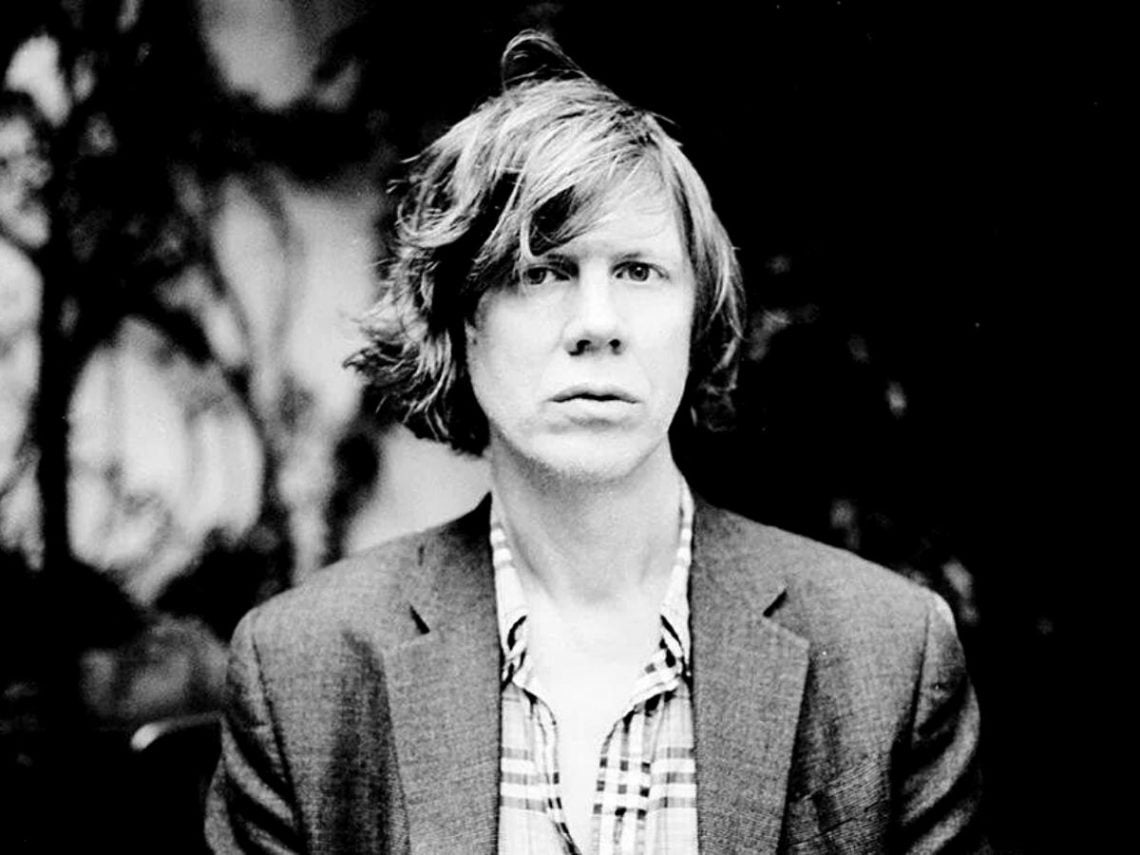
Ted Berrigan, the poet who inspired Sonic Youth’s Thurston Moore

Thurston Moore rose to prominence in the 1980s as the singer, songwriter and guitarist of Sonic Youth. His journey in the music industry began in New York City. Having enrolled at Western Connecticut State University in the autumn of 1976, he dropped out with only one term under his belt in favour of the Big Apple, drawn in by its burgeoning punk scene.
Sonic Youth formed in 1980 after Moore met his bandmate and future wife, Kim Gordon, at the final gig of his earlier band, The Coachmen. The sound the band would go on to develop over the ’80s drew from a post-punk sensibility, injecting a more atmospheric, noisy and effects-heavy guitar sound into proceedings. Sonic Youth’s prolific early material influenced both the shoegaze and grunge eras of the late 1980s and early ’90s, with Nirvana and My Bloody Valentines as integral disciples.
Speaking with UK fashion brand Fred Perry, Moore discussed the greatest gig he had ever witnessed, highlighting the moment Sonic Youth handed the baton to Nirvana. “When we asked Nirvana to tour with us in Europe, they complied, and we began in Cork, Ireland,” he remembered. “They had just employed Dave Grohl as a drummer, and from the first moment of their set, I knew I was at the best gig in the universe. The first song they played was ‘Drain You’, and as soon as the drums kicked in after Kurt’s vocal intro, it was…nirvana.”
Later in the conversation, Moore was asked what music he grew up with and how it shaped his ambition. “I was always attracted to music that was from the outer zones,” he responded. “It started in the ’60s with the records my older brother brought into the house like Jefferson Airplane, The Beatles, Black Sabbath, Moody Blues into my own choices, which were weirdo sides by The Stooges, MC5, Velvet Underground, Captain Beefheart – all precursors to punk rock in 1976 when I turned 18, and my vocation became apparent by hearing and witnessing the Ramones, Richard Hell & The Voidoids, Suicide, Talking Heads et al.”
Moore then picked out some of the classic acts with whom he would love to share the bill at a gig. “Patti Smith, Public Image, Neil Young & Crazy Horse, The Stooges,” he listed. “All dreams realised. I would’ve loved to have been playing on a bill with the Feminist Improvising Group, free improvisers who existed in the early ’70s in London and played a handful of gigs and only released one astounding cassette in its time. They are underdocumented in the history of British underground music, and I’d love to publish a recording/book of their work at some point!”
On top of his musical efforts, Moore considers himself to be a poet as well as a lyricist. Having established an interest in the Beat generation writers of the 20th century in his teen years, Moore developed an unquenchable thirst for word arrangement.
Toward the end of the Q&A, the folks at Fred Perry asked the Sonic Youth co-frontman who he would choose to spend an hour with if he could, dead or alive. “Ted Berrigan, the poet who was the guiding light of what is called third-generation New York School poetry,” Moore assertively answered. “He lived in holy poverty on the lower east side of Manhattan throughout the ’60s, ’70s and ’80s and constructed poems informed on classic poetic tropes with an honest ear to the humanism of contemporary urban life, springboarding from Frank O’Hara and Allen Ginsberg to an ‘All Poets Welcome’ communitarian aesthetic that is still resonating in the world of working poets today. He passed away in the 80s [1983], and I never met him, though I would spy him strolling along 2nd Avenue with young poets in tow, catching his every word.”
Watch Thurston Moore’s poetry reading at Naropa University in July 2011 below.
