


Understanding the corporate depression in ‘Sometimes I Think About Dying’

For anyone who has worked in an office, life can feel as bleak and unfulfilling as hell on earth. There’s the painful small talk in the break room, the awkward interactions with colleagues you pretend to have something in common with, and the long hours spent clock-watching—counting down the minutes until you can go home, only to do it all again the next day. Your life becomes split between the corporate version of yourself and the personhood you try to assert in the time in between.
Life sprouts through the cracks of a 9–6 routine—something that once carried a vague sense of romanticism, thanks to Dolly Parton’s chipper satire, but now has a cold and far less catchy ring to it. Working 9 to 5 was a way to make a living, enough for the average person to buy property. Now, working 9–6 is a surefire way to leave you depressed and renting for your entire adult life.
Surviving in late-stage capitalism has led us to become increasingly dehumanised and detached from our own values, treated as workers first and people second. When people are reduced to being a means of production, the time we have away from work becomes precious and sacred, trying to infuse joy into our everyday routines and rituals after leaving the office. A new trend on the internet has arisen with people sharing the 5-9 routines after their 9-5 job, which comes alongside the rise of main character syndrome and the desperation to be seen as ‘different’, capturing a generational shift in which people are floundering to affirm their individuality and agency outside of the corporate culture that strips us of these things.
While many films have exposed the corrupt bosses, abysmal biscuit choices and insidious underbelly of office life, there have been few that shine a light on the consequences of modern working life, with one, in particular, highlighting the subdued depression and desire for meaning that seeps through the monotonous humdrum of corporate culture.
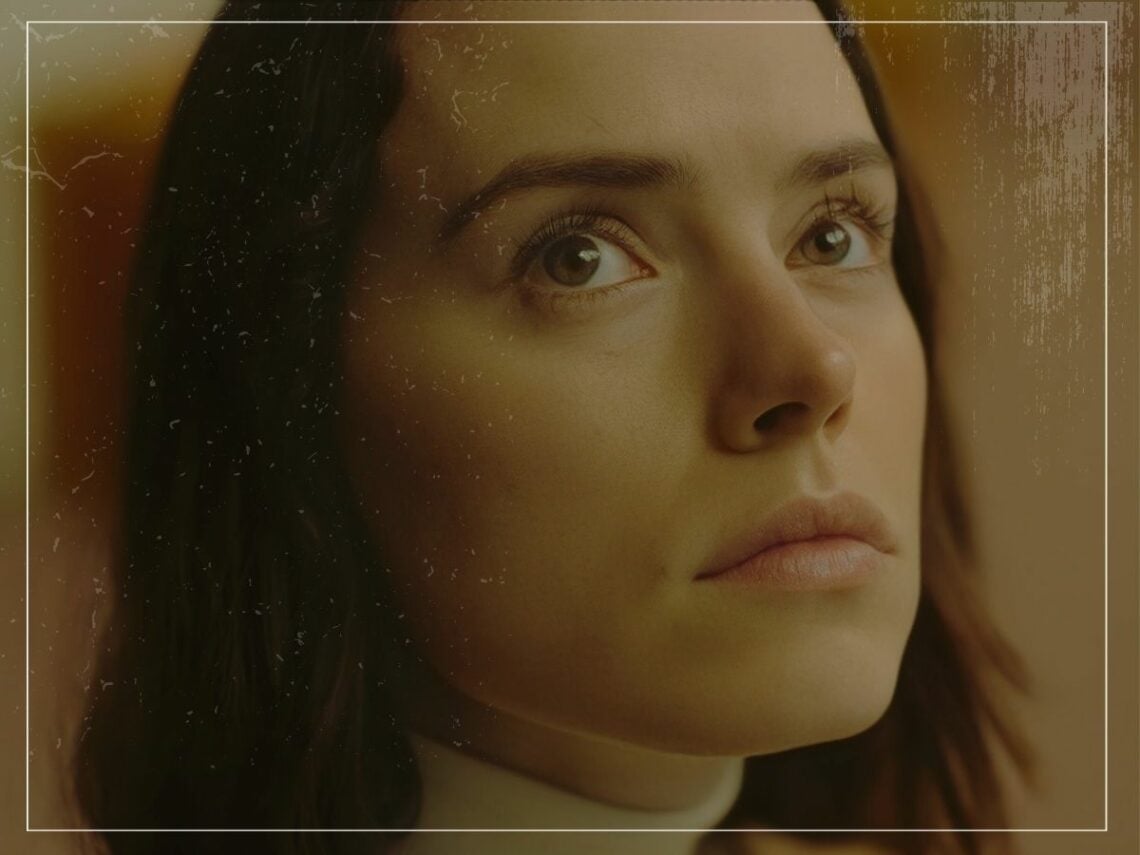
After starring in the all-guns-blazing visual feast of the recent Star Wars films, Daisy Ridley made a surprising career move with Sometimes I Think About Dying, directed by Rachel Lambert. The film follows a woman called Fran, who lives alone in a small seaside town and works in a nearby office. It isn’t clear what the company does or what her job really entails, but the film begins by detailing the monotony of her everyday routine. While movies like Paterson have attempted a similar feat, Sometimes I Think About Dying differs in that there are no people that infuse meaning and purpose in Fran’s life. Each day, she walks to the office, avoids her colleagues and any conversations with them, walks home, eats some cottage cheese, has a glass of wine, watches television, and then goes to bed. She repeats this routine day after day, with nothing differentiating her yesterday from tomorrow.
But what is perhaps more pervasive than the startling repetitiveness of her routine is the lack of human connection in her life, leading her days to instead become marked by fantasies about death. She skulks around the office, avoiding eye contact with her colleagues and tuning out the low-level chatter about weekend plans and doughnut selection boxes. Her mind then drifts away entirely, bringing her into another plane of reality in which she is alone in the office and lying dead on the floor, in a forest, on a beach. In a world that feels unchanged by your existence, perhaps it is better to imagine that we aren’t really there than be faced with the reality that no one cares either way. As long as you get the job done, then does anyone really care about the way the work is completed?
However, Fran’s routine begins to rot and fester, and the audience grows numb to the predictability of each day as she imitates the bones of life, feigning an existence that revolves around her mind-numbing work. But just as we start to wonder whether this will last the duration of the film, something different happens. A new guy joins the office, and Fran decides to do something that she has never attempted before—to make a joke.
Through the office messaging program, she makes a (slightly forced) joke about cheese, and to her surprise, the new guy laughs. This tiny interaction becomes a tepid source of hope – her day has been separated from the one that came before it, and she now has something to look forward to. But after living in her shell for so long, with an intense social anxiety that looms over every interaction and makes it seem almost impossible, building a relationship with someone can feel somewhat akin to a method of medieval torture. You have to pontificate over each and every word choice, constantly terrified that you’re saying the wrong thing, overthinking every moment until it becomes easier to hide from it entirely. She longs for connection while also being infinitely more comfortable with loneliness. Loneliness doesn’t challenge or disagree with you – it simply coasts alongside you until you’re ready to break free of it, something that Fran hasn’t been able to do until the arrival of Robert.
Fran and Robert go on a date. He is extroverted, and she is not. He is kind and tries to make conversation with her while she desperately tries to reciprocate, struggling to manage more than one-word responses. But we can tell that she is silently thrilled by his company, to have been with somebody who wants to spend time with her. The visions of death persist regardless—some things stay the same.
However, while we are rooting for Fran to develop the fragments of romanticism that bloom between her and Robert, she has an overbearing habit of self-loathing that haunts each interaction, believing herself to be truly uninteresting and unworthy of this kind of attention. It is heartbreaking to watch, seeing her blatant attempt to self-sabotage by snapping and saying something unkind and seemingly out of character, convinced that she is a burden to Robert and not deserving of his kindness.
And life slowly fades back to what it was. Her visions of death continue to sprout in quiet moments, with her mind returning to stark images of her lifeless body draped over mossy rocks and dimly lit floors. Fran is so entrenched in her depression that she imagines the only thing to lift her out of it will be death, not a relationship, change in routine or person who sees the potential in her that she has buried so deeply she is incapable of seeing it.
In the world we live in today, stories like Fran’s are not an anomaly. Office life can sap us of the will to live, and for neuro-diverse people or anyone who struggles with mental illness, this way of life can feel unnatural and grating towards every fibre of your being. Fran does not dislike people; she dislikes how she feels around people, with people reacting to her silent anxiety in a way that heightens her sense of otherness. She isn’t anti-social; it’s just that the people around her aren’t being social in a way that she can achieve. Small talk, ice-breakers and aimless parties feel like her idea of hell, but it’s a hell in which everyone else thrives.
The final scene of Sometimes I Feel Like Dying highlights the oppressive nature of late-stage capitalism and the demands of modern office culture, something that is particularly abrasive towards already vulnerable people, worsening Fran’s mental wellbeing and leading her to believe that death will be the only respite from the overstimulation of working life. Within this world, she is all but invisible, only hammering in just how detached we have become from humanity when being chained to our desks and told that our work defines us. Your work does not define you, and for Fran, her work only pushes her further into her depression and state of loneliness, leading her to often think about dying.
