


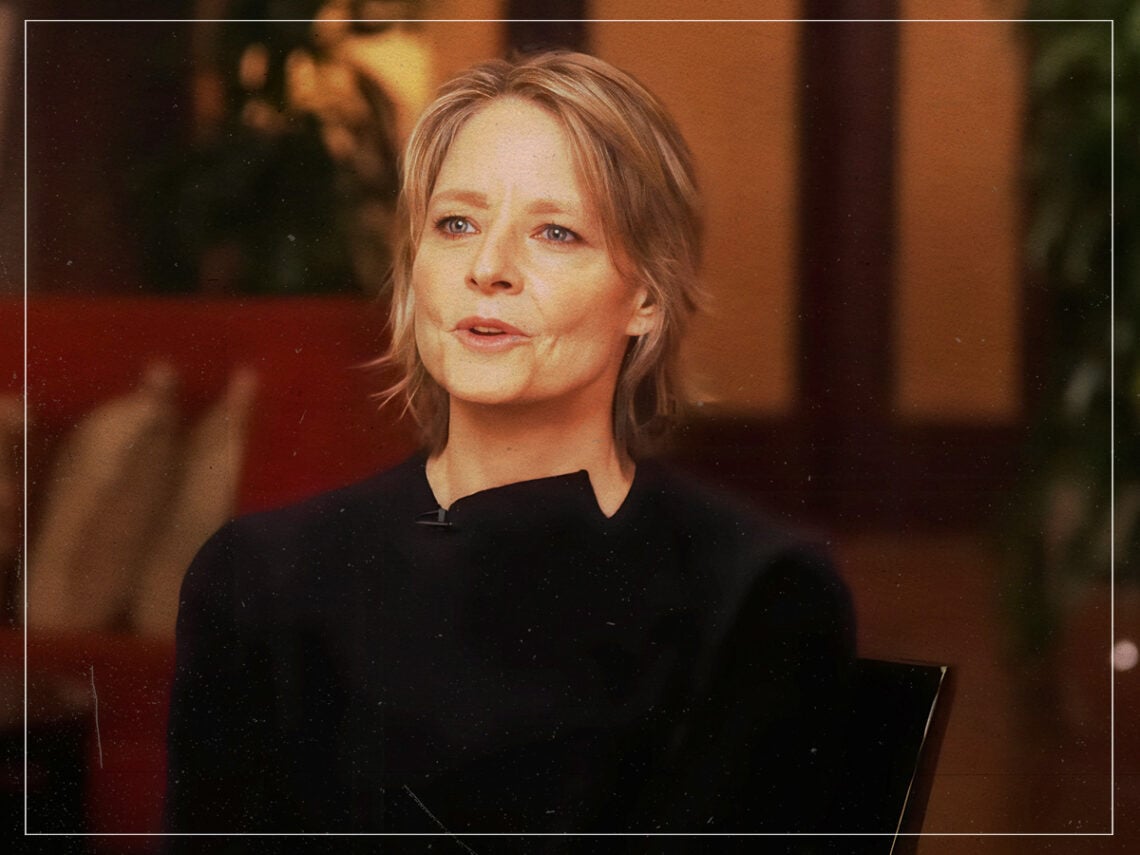
The highly controversial movie Jodie Foster always wanted to make: “That will never happen”

In 2000, word hit the Hollywood grapevine that Jodie Foster was planning to mount a biopic of one of history’s most controversial figures—and many people were disgusted that she would even consider such a picture. The Silence of the Lambs actor was determined to make the film, though, and she toiled away at it for more than a decade before finally admitting it was highly unlikely to ever happen. Who exactly was the movie about, though, and why was Foster so interested in their life story?
When Foster first became interested in making the biopic, she admitted to being fascinated by the contentious figure from a feminist perspective. In fact, the Panic Room star believed she was an integral figure in pioneering the role of women in filmmaking. She was also intrigued by the prospect of digging into why the female filmmaker made some highly questionable decisions in her career and chose to align herself with one of the most evil regimes in world history.
The object of Foster’s fascination was, of course, Leni Riefenstahl, the filmmaker responsible for making at least three Nazi propaganda films, including 1935’s Triumph of the Will and 1938’s Olympia. In fact, at that time, Riefenstahl – at the age of 98 – was considered the last surviving member of Adolf Hitler’s inner circle. She was even rumoured to have been Hitler’s lover, although she always denied that strenuously.
Naturally, Foster’s interest in exploring Riefenstahl’s complicated life was an immediate lightning rod for criticism. It didn’t help that she admitted to speaking to the filmmaker on the phone on several occasions and even meeting her in person, where she uncomfortably described her as “an extraordinary woman – sharp as a tack and as beautiful as she ever was, with a tremendous body.”
As for why Foster felt her proposed biopic was a worthwhile endeavour, she tried to explain her position to the Telegraph. “She was a tremendously gifted woman, but she made a lot of ugly choices at a terrible and horrible time in history,” Foster reasoned. “She needs to be portrayed. There is no other woman in the 20th century who has been so reviled and so admired simultaneously.”
Many elements of Hollywood’s Jewish community were understandably horrified that Foster would consider such a film and documentary filmmakers and historians publicly condemned her. However, by 2005, Foster told Premiere magazine that she still intended to make the movie and claimed, “She wrote a biography that’s almost all lies, but it’s interesting. I wanted her archives, but I didn’t want her involvement, and that’s something she really wanted, because she’d been libelled so many times.”
In what felt perilously close to a defence of Riefenstahl, Foster added, “She was not a member of the Nazi Party, and she was not Hitler’s girlfriend. That’s just stupid. But she’s a complex morality tale.”
In response to this, though, Holocaust studies professor Dr Rafael Medoff told History News Network, “Foster is wrong. There’s nothing morally complex about what Riefenstahl did as Hitler’s favourite filmmaker. The only thing complex is Foster’s confusion on this issue.”
By 2011, though, when Foster spoke with IndieWire, she admitted that the biopic was dead in the water. She acknowledged that she had aged out of playing Riefenstahl, for one thing, but also confessed that it had always been a struggle to craft an appropriate screenplay for such a sensitive, ethically tangled tale. “I feel like that will never happen,” Foster said. “I could never get the script right, and it was a lot of work on my part, many years. Maybe somebody will get the script right someday. It’s a tough one. You gotta get it right, or it’s not worth doing.”
Ultimately, Foster’s Riefenstahl movie died in development hell. Interestingly, director Steven Soderbergh reportedly picked up the baton in 2011 and spent six months developing his own biopic, but he backed away when he became concerned that the film would be a box office disaster. All things considered, perhaps it’s for the best that both versions were abandoned.
