


The comedy actors Mike Myers always tried to match: “If you’re in for 10 minutes, you’re in for two hours”

For a while, Mike Myers was one of the most popular comedy stars in Hollywood, until he made a couple of disastrously wrong moves that derailed his career almost entirely.
From the early 1990s to the mid-2000s, he was on top of the world. Myers headlined the Wayne’s World duology, the Austin Powers trilogy, and the cult favourite So I Married an Axe Murderer before stepping in to replace Chris Farley as the voice of the title character in Shrek.
As a performer, writer, and producer, Myers’ ability to craft countless memorable characters and anchor comedies with wide-ranging and long-lasting appeal was almost second to none until The Cat and the Hat and The Love Guru conspired to render him an afterthought.
While it’s reasonable to assume Myers could mount a full-blown comeback if he wanted, the one-two punch of two dismally derided films knocked him off his perch. Since then, his big screen credits have amounted to Shrek sequels and unrecognisable cameos, while his hotly-hyped Netflix series The Pentaverate was a total bust.
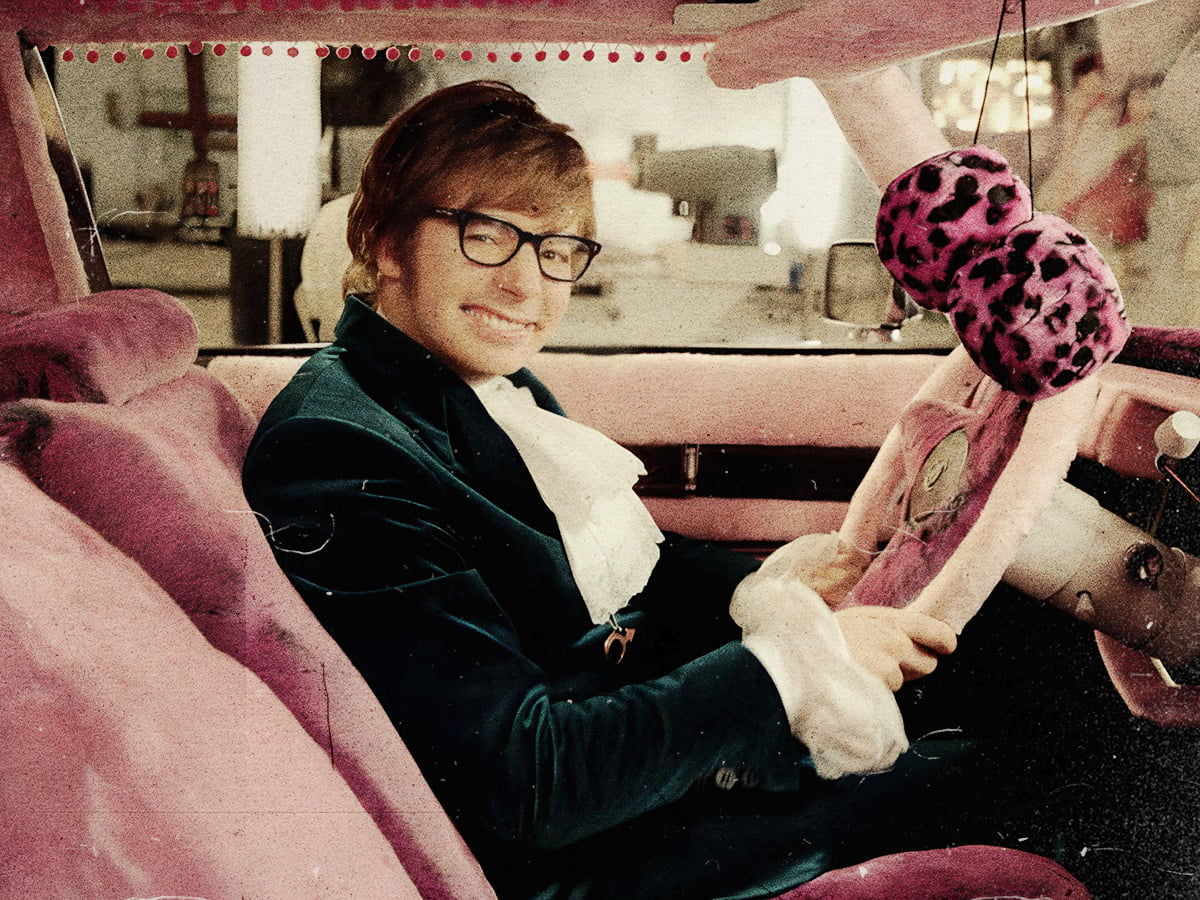
Whether it’s Wayne Campbell, Austin Powers, Dr Evil, Fat Bastard, Stuart Mackenzie, Dieter, Linda Richman, or Tommy Maitland, Myers had a penchant for crafting quirky and offbeat characters from the ground up, often playing multiple roles in the same production. With that in mind, it’s not a shock to find out that Peter Sellers is one of his comedy heroes, although there’s a “huge list of people” who inspired him.
“Peter Sellers is on it, Alec Guinness, [Monty] Python, there’s a show called SCTV in America; they’re Canadians,” he told the BBC. “Kids in the Hall are another Canadian troupe. And I love Mel Brooks. My dad loved his movies, too. They’re awesome, the kind of thing that if you’re in for ten minutes, you’re in for two hours. I could give you such an exhaustive and boring list, but those are some of the tops.”
Looking across that list, it’s striking how little Myers was influenced by conventional stand-up comedians. Instead, he gravitated towards performers who specialised in transformation, building entire comic worlds through exaggerated characters rather than relying solely on punchlines.
Whether it was Sellers slipping effortlessly between identities or Monty Python dismantling logic altogether, Myers clearly admired comedy that rewarded complete creative commitment.
That fascination became the defining thread of his own career. Unlike many of his contemporaries, Myers rarely positioned himself as the star of the joke; instead, he disappeared beneath accents, prosthetics and wildly different personalities, trusting each character to generate its own comic rhythm.
It was an approach that made his films instantly recognisable and helped separate him from a generation of comedians who largely played variations of themselves.
SCTV was a revolving door of talent which counted Eugene Levy, John Candy, Rick Moranis, Catherine O’Hara, Harold Ramis, and Martin Short among its ensemble across six seasons and 135 episodes between 1976 and 1984, and The Kids in the Hall are still going strong today after forming in 1984.
The influence of Sellers, Brooks, and Monty Python is particularly clear in Myers’ career, with the Canadian funnyman emulating not only their ability to disappear into a variety of different parts but the anarchic spirit and riotous side-splitting laughs that became their respective signatures.
Myers himself is now in the position where he’s been around long enough to become a hero to the next generations of aspiring comedians, continuing on a long and storied tradition of stand-ups, sketch artists, and movie stars alike looking to the past to inform the present and future.
