


‘Close’ Review: Lukas Dhont’s heartwrenchingly bleak tale of corrupted childhood friendship

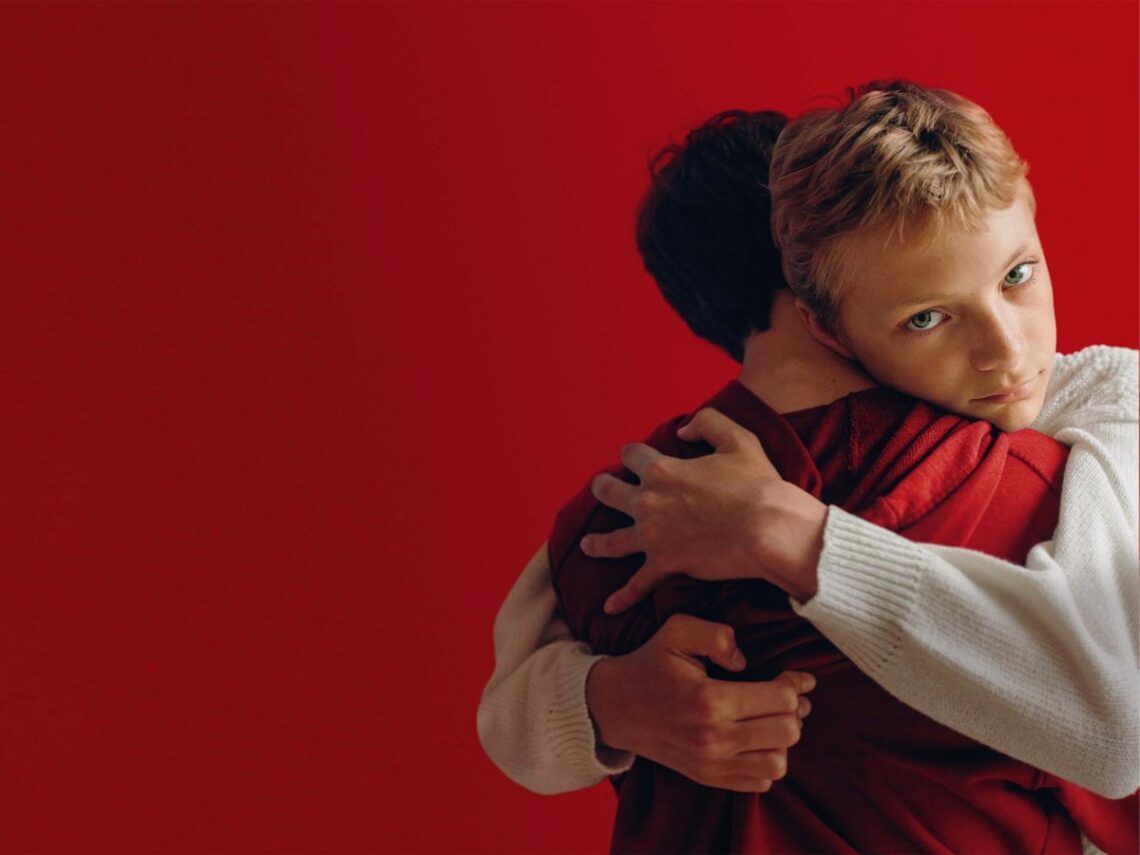
Following on from Girl, his controversial debut feature film that was praised then subsequently criticised for its portrayal of a trans ballerina, Lukas Dhont has returned with his new drama, Close. Continuing his exploration of the lives of young people, Close focuses on the intense friendship between the inseparable Léo and Rémi, two 13-year-old boys, played magnificently by newcomers Eden Dambrine and Gustav De Waele.
During opening scenes, the pair are seen playing and running through bright flowery fields and lounging with Rémi’s mother, who Léo is evidently very close to. The boys share a bed and engage in rich conversation before they sleep, with Dhont highlighting the duo’s emotional and physical ease around each other. Despite the childlike purity of their friendship, the boys are soon exposed to the unwanted opinions of outsiders at school, who judge the boy’s closeness. In one scene, a group of girls ask them if they’re dating, believing that to be the only possible explanation for how comfortable they are around one another.
This reshapes Léo’s perception of his identity and friendship with Rémi, leading him to retreat into the machoism of ice hockey and football discussions with other boys. As Léo withdraws from the musically-inclined Rémi, it’s only a matter of time before his whole life is turned upside down. Dhont essentially breaks the film into two halves, with the second taking a considerably bleaker turn that is difficult to watch. Yet, despite the heartwrenching nature of Dhont’s tale, Close is vital viewing.
Through prolonged close-ups of Léo’s face as he reckons with emotions he’s not old enough to understand or adequately process, Dhont forces us to consider the deep-rooted force of toxic masculinity which sows its seeds in boyhood. The carefree innocence of the boys’ friendship cannot last in a world so heavily concerned with men adhering to a specific set of rules. Whether the boys are gay or not is irrelevant to the story – what matters is the fact that young boys are unable to express emotions other than anger or indulge in intimate friendships without ridicule from their peers. Dhont frames Léo’s increasing distance from Rémi with heartbreaking sensitivity. Earlier scenes of the pair sleeping next to each other are contrasted with later shots of Léo retreating to a bed on the floor, much to Rémi’s confusion.
Dhont taps into the struggles of childhood, where emotions are unexplainable, and friendships are the most important thing in the world, with exceptionable poise. Close delivers a substantial commentary on toxic male culture using a sparse and simple plot, instead intricately focusing on the emotions evoked by the bursting of childhood’s naive bubble.
The film will go up against All Quiet on the Western Front, EO, The Quiet Girl and Argentina, 1985 for ‘Best International Feature Film’ at the Academy Awards. Watch the trailer below.
