


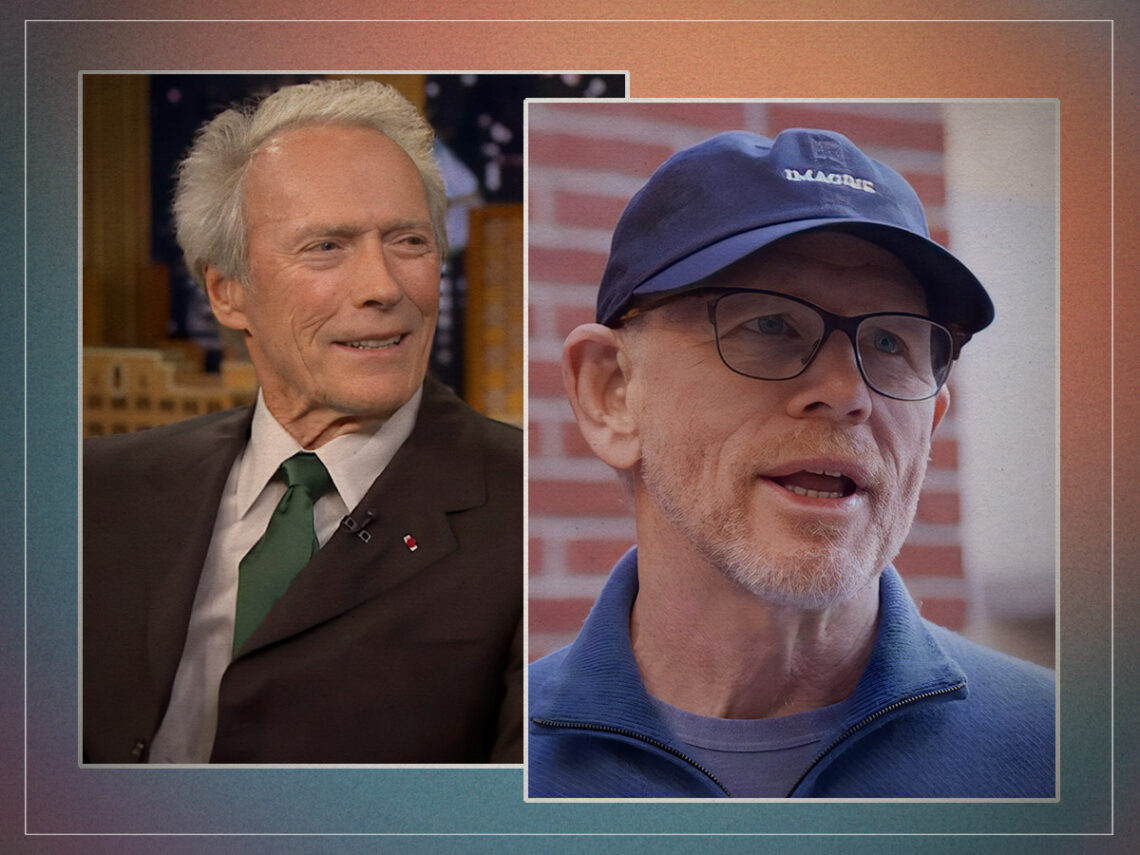
The moment Clint Eastwood saved Ron Howard from career-ending embarassment

A star of American cinema both in front of and behind the camera, Ron Howard is often forgotten when recalling the greatest directors of modern cinema, yet his contributions to the art form remain unmatched. It’s easy to point towards the great auteurs of cinema as the pivotal figures. Filmmaking stars like Martin Scorsese, Quentin Tarantino and Francis Ford Coppola are often named long before Howard, but his work in the medium is undeniable.
His career may not be littered with arthouse smash hits, but he certainly nailed a blockbuster or two. Working with the likes of Tom Hanks, Chris Hemsworth, Russell Crowe and John Wayne, Howard has brought such classics as Apollo 13, A Beautiful Mind and Rush to the big screen with devastating effect.
Entering the industry in the late 1950s and 1960s, Howard started his career as an actor, making a name for himself in shows like Just Dennis and The Andy Griffith Show before his role in 1970s Happy Days would catapult him to national acclaim. His directorial debut would come at a similar time, helming 1977’s Grand Theft Auto, the ropey first movie in a filmography that would later become known for its abundance of quality.
Known for his acting talents, Howard wouldn’t become a fully-fledged director in the eyes of the general public until the 1980s, when he worked with Tom Hanks on 1984’s Splash and George Lucas for the 1988 cult favourite Willow. The former may have been a quick comedy romp, the latter was billed as the start of a franchise, the beginning of something far bigger than a simple movie.
With hopes of becoming the new Star Wars, Willow was instead a peculiar fantasy tale about a young farmer who is chosen to undertake the challenge of protecting a magical baby from an evil queen. Starring Warwick Davis, Val Kilmer, and Joanne Whalley, the film failed to make a considerable dent in pop culture at the time, largely being ridiculed by critics and audiences alike. However, the ridicule could have been far worse had it not been for one cinematic hero.
Screened at the Cannes Film Festival, the movie was spared the ultimate humiliation by none other than Clint Eastwood, who saw the craftsmanship behind the picture, as described by Ron’s daughter, Bryce Dallas Howard.
Speaking to Daily Mail, the actor recalled: “My dad made a film called Willow when he was a young filmmaker, which screened at the Cannes Film Festival and people were booing afterwards. It was obviously so painful for him, and Clint, who he didn’t know at that time, stood up and gave him a standing ovation, and then everyone else stood up because Clint did”.
Dallas Howard, who worked with Eastwood on the 2010 movie Hereafter, became very fond of Eastwood as a result, looking up to him as an exemplary Hollywood talent. “Clint puts himself out there for people,” she added, “As a director he is very cool, very relaxed, there’s no yelling ‘action’ or ‘cut’. He just says: ‘You know when you’re ready.’ I told my dad he should do that!”.
It’s not too far a stretch to note that without Eastwood’s move to protect Howard, his career, which was still fledgling at the time, could have been irreparably damaged. To be a part of a movie entirely panned across the board is one thing, but to receive mixed reviews at your debut film festival is to set your career on a downward spiral. Thankfully, Howard survived the ordeal and would go on to make his finest movies thereafter.

Never Miss A Tale
The Far Out Clint Eastwood Newsletter
All the latest stories about Clint Eastwood from the independent voice of culture.
Straight to your inbox.