


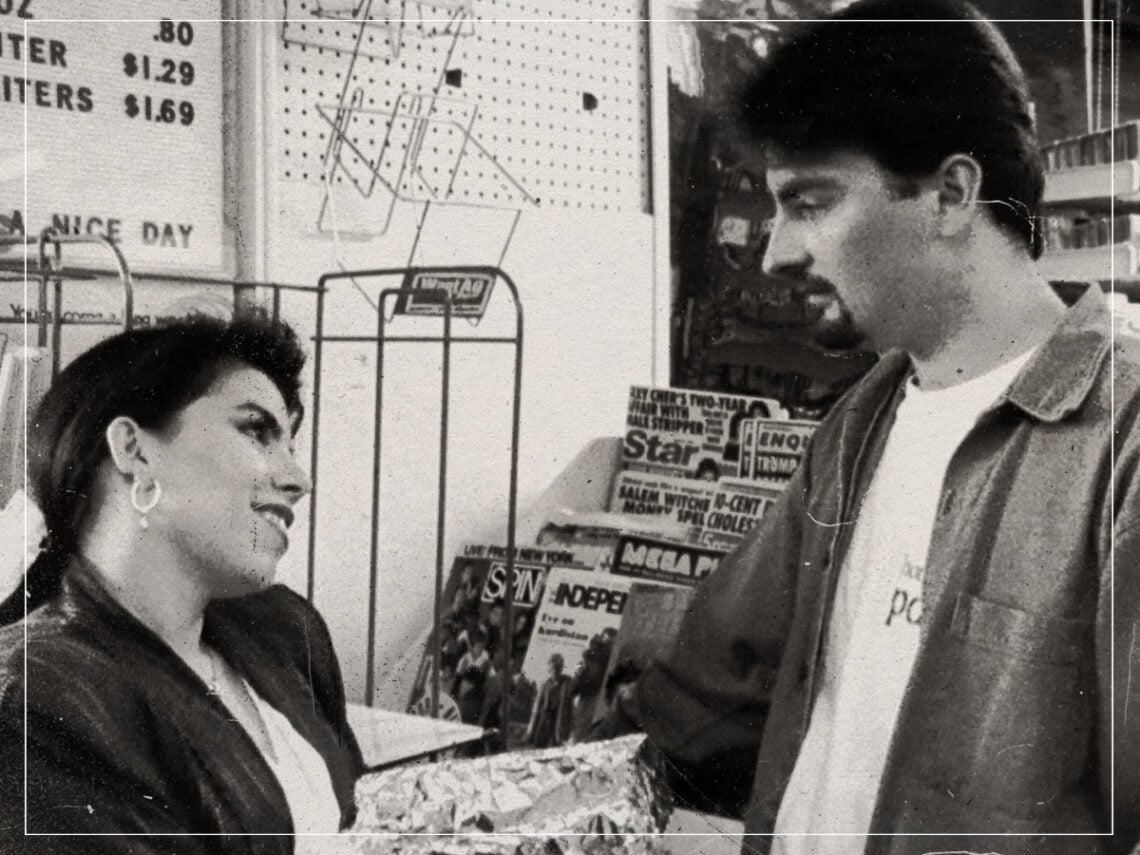
‘Clerks’: How Kevin Smith altered the course of independent cinema in the 1990s

Until advances in technology and its availability to anyone with the means to afford it became commonplace, the prospect of making a movie was beyond the reach of most aspiring filmmakers. Kevin Smith refused to be deterred, though, and helped instigate a lo-fi revolution.
The writer and director had drawn on many real-life inspirations while penning the screenplay, and it took the combined effort of his friends, families, and credit cards to make Clerks a reality. Walt Flanagan was the person who turned Smith into a comic book fan in the early years of their friendship, and he ended up playing four different parts on-screen.
Brian O’Halloran found an audition notice at the local community theatre and wound up as main character Dante Hicks, and Smith handed the part of Randal Graves to his buddy Jeff Anderson after initially earmarking it for himself, realising he didn’t have the time or energy to write, direct, work a day job at the convenience store that served as the film’s central location, and play a prominent part on-screen all at once.
To secure the necessary funding – which came to a grand total of $27,575 – Smith sold his most valuable comic books, borrowed money from his parents, maxed out every credit card he could get his hands on, and even plunged insurance money into the production to ensure that even in its unmistakable shoestring form, he wouldn’t have to compromise beyond a level he deemed absolutely necessary.
That’s to say nothing of the limited shooting windows that only allowed him to film in the Quick Stop when it was closed, with Smith claiming he was only sleeping for one hour per day during the 21-day shoot because he’d be working in the store all day and then shooting all night. What it lacked in sheen, polish, and professionalism, it more than made up for in storytelling, memorable characters, and rapid-fire naturalistic dialogue, which saw Miramax acquire it for distribution.
Clerks would go on to earn more than $4million at the box office, which isn’t a massive figure relative to how movies are expected to perform, but it was monstrous compared to the budget. More than that, though, it was a signal that anybody could make a film that could capture the imagination of a major Hollywood backer and find an audience, regardless of the limitations they found themselves working under.
Clerks may not have been the first slacker comedy, but the way in which it resonated with audiences underlined that there was no reason why anybody else harbouring desires to try their hand at filmmaking couldn’t succeed, because Smith’s very first feature was proof that no matter how difficult it is to gather the resources and live a double life in order to make it happen, the rewards can significantly outweigh – and in this case completely mitigate – the risks.
