


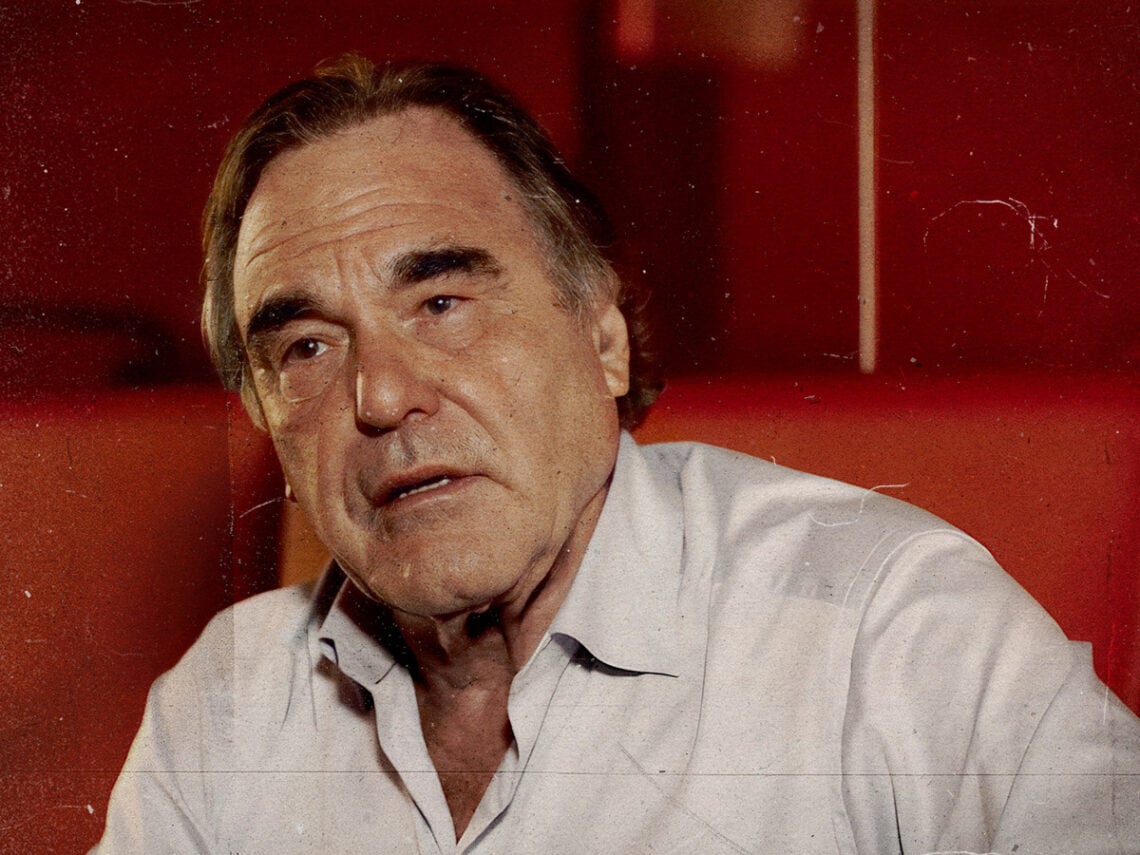
The classic movies Oliver Stone calls “historically wrong”

Hollywood has always been known to play fast and loose with historical accuracy for the sake of entertainment, but Oliver Stone simply could not abide a pair of stone-cold cinematic classics putting their own spin on real-life events.
Of course, the four-time Academy Award winner is eminently familiar with features ripped straight from the headlines, many of which have hewed as close to undisputed fact as possible, albeit with a couple of notable exceptions along the way, including his politically-tinged biographical dramas JFK and W.
Platoon, Born on the Fourth of July, The Doors, Nixon, Alexander, World Trade Center, and Snowden are just some of Stone’s credits to have been rooted firmly in various degrees of truth and accuracy relative to the facts available, but he nonetheless bore particular – and somewhat bizarre – umbrage with a pair of Oscar-winning greats that didn’t even claim to be based on a true story.
Although there were a myriad of inspirations behind many of its characters – some of whom weren’t left too thrilled with their on-screen facsimiles – Francis Ford Coppola’s The Godfather and its equally iconic sequel rankled Stone for the way in which he believed they glorified America’s organised crime families of Italian descent.
Gangster cinema has been a staple part of the viewing diet for almost as long as the moving image has existed, but in an interview with Unesco, Stone was left especially infuriated by the masterpieces of modern filmmaking making the trappings and lifestyle of the mob seem so appealing when it was anything but.
“The glorification of the Mafia in our country is sick,” he said. “As great as Coppola’s two Godfather films are, they are, I believe, historically wrong in attributing this degree of power to the Mafiosi when they are really a bunch of thugs who have done much to corrupt the country via organised labour, business – the liquor business, Las Vegas, the jukebox business – kickbacks for politicians, and so on.”
The depiction of the Corleone clan as being wily business masterminds with their fingers in a voluminous amount of legitimate and illegal pies clearly didn’t sit well with Stone, who viewed the mafia as nothing more than brutish criminals who exploited systemic corruption for their own financial and societal gain.
Beyond that, he was adamant that America’s crime culture stretched right back to its very beginnings, with The Godfather merely shining an acclaimed and awards-laden light on a very familiar problem. “Gangsterism in our country goes back before the Italian Mafia, back to Boss Tweed, the Irish Mafia, the ugly Mafia that existed in the time of George Washington,” he continued. “There were all kinds of gangsterism in American life. To glorify it as we have done is, as you say, a perversion.”
As mentioned, The Godfather didn’t exactly try to convince anyone it was a biopic, but the suggestion alone was enough to make Stone take a stand.
