


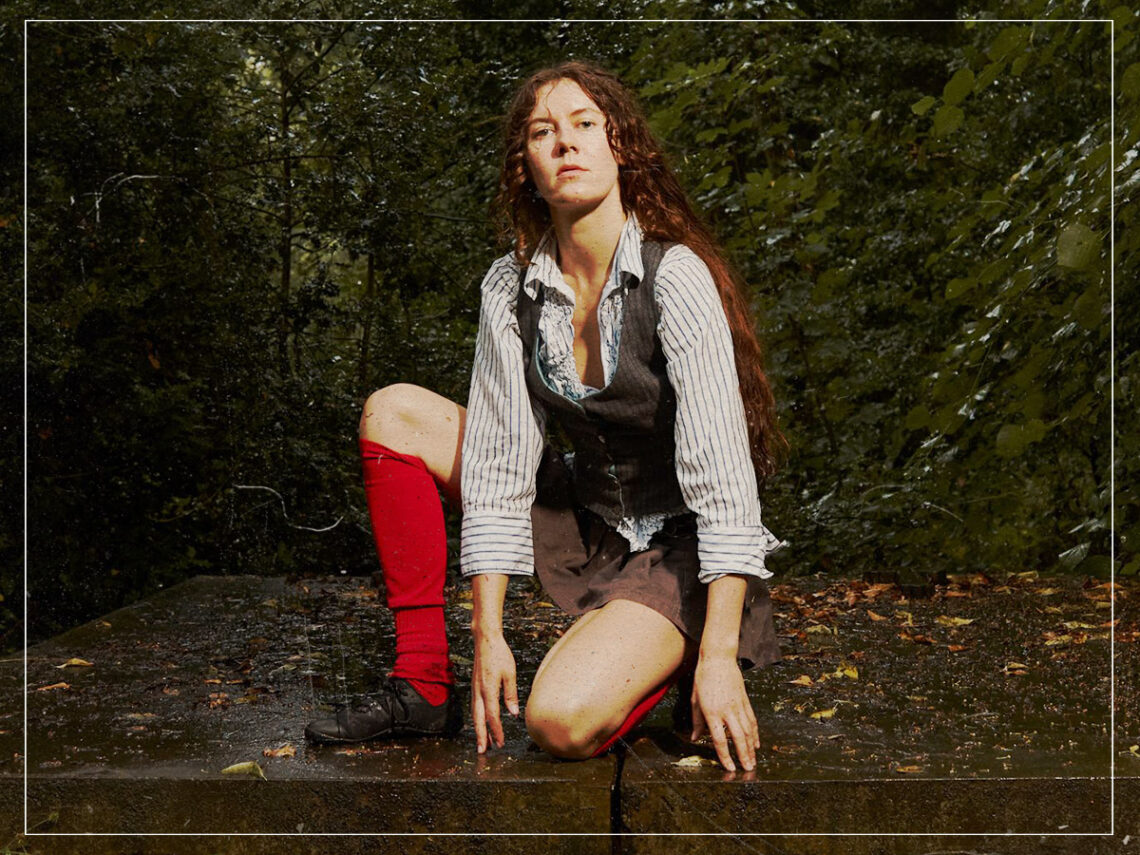
Clarissa Connelly – ‘World of Work’ album review: timeless and vital experimental folk

THE SKINNY: Clarissa Connelly possesses the kind of voice that is rare to hear in our current musical landscape. It’s entirely idiosyncratic, warm and pastoral, carrying with it years of history and energy. Its richness evokes a bygone era when women sang to each other as they worked, and in its darker moments, Connelly’s voice could easily soundtrack a folk horror movie.
Like Adrienne Lenker and Jessica Pratt, modern folk artists with incredibly distinctive voices are a vital part of the genre, captivating us with their ability to take us into their own world, which is defined by their total uniqueness. Their voices almost seem to exist as entities of their own, and as Connelly’s voice bends, warps and floats between highs and lows, you can’t help but feel as though they’ve whisked you away with them in the process.
With World of Work, Connelly, a Scottish-born singer who has spent a large chunk of her life in Denmark, crafts an experimental tapestry that encourages us to fully submerge ourselves in its mythic atmosphere, full of brooding guitars and layered vocals. The album is poetic, deeply reflective, and meditative, exploring the different facets of life that often come to blow with each other. Even the tracklist reads like a poem; nothing here is out of place. Connelly has made a striking collection of songs that feels completely cohesive and full of life.
For listeners who are slightly more unfamiliar with experimental folk, you might need to give World of Work a few listeners for it to click. It’s hardly the most accessible piece of work, but once you really sit with it, you cannot escape how human it is, with Connelly’s unrestrained vocals (particularly on ‘Wee Rosebud’) tapping into something primal that feels innate to the experience of living.
For fans of: The Wicker Man, misty weather, a good stained-glass church.
A concluding comment from my boyfriend: “Did Hildegard von Bingen ghostwrite this?”
World of Work track-by-track:
‘Into This, Called Loneliness’: We’re greeted by the slam of some deep piano notes as a goblin-like voice utters lyrics in the background. This, paired with Connelly’s repeats of “I don’t know how I got here,” make for a haunting opening. [3.5/5]
‘The Bell Tower’: Footsteps and light breathing make way for slightly distorted and disorientating church bells in this hauntingly perfect interlude. [4/5]
‘An Embroidery’: The end of this song is so beautiful – as instruments warp and twist and church bells gently chime in the background, there’s a sense of euphoria present. [4/5]
‘Life of the Forbidden’: This piece ebbs and flows, reflecting the imagery of water and rivers within Connelly’s lyrics. [3.5/5]
‘Wee Rosebud’: You’ll either love or hate the singer’s vocal performance in this one, but it is refreshing to hear something so unlike anything found in popular music these days. [3.5/5]
‘The Excess of Sorrow, Laughs’: As bells chime and Connelly breathes closely, the song becomes intimate yet simultaneously expansive. [4/5]
‘Turn to Stone’: One of the shortest pieces on the album at just under two minutes, the piano is tender as Connelly’s voice circles around the textured soundscape. [4/5]
‘Tenderfoot’: A smooth smokiness anchors the song down, and while Connelly’s voice is fantastic as always, the intricacy of the acoustic guitar is particularly of note. [4/5]
‘Crucifier’: Gentle and evocative, the layered use of instruments here, from guitars to synths, creates a celestial atmosphere. [4/5]
‘S.O.S. Song of the Sword’: We end with the longest track, although this feels like more than a song – it’s a document of sounds and emotions that meld and bounce from each other with a sense of determination, urgency and rapture. [4/5]

Never Miss A Beat
The Far Out New Music Newsletter
All the latest New Music from the independent voice of culture.
Straight to your inbox.