


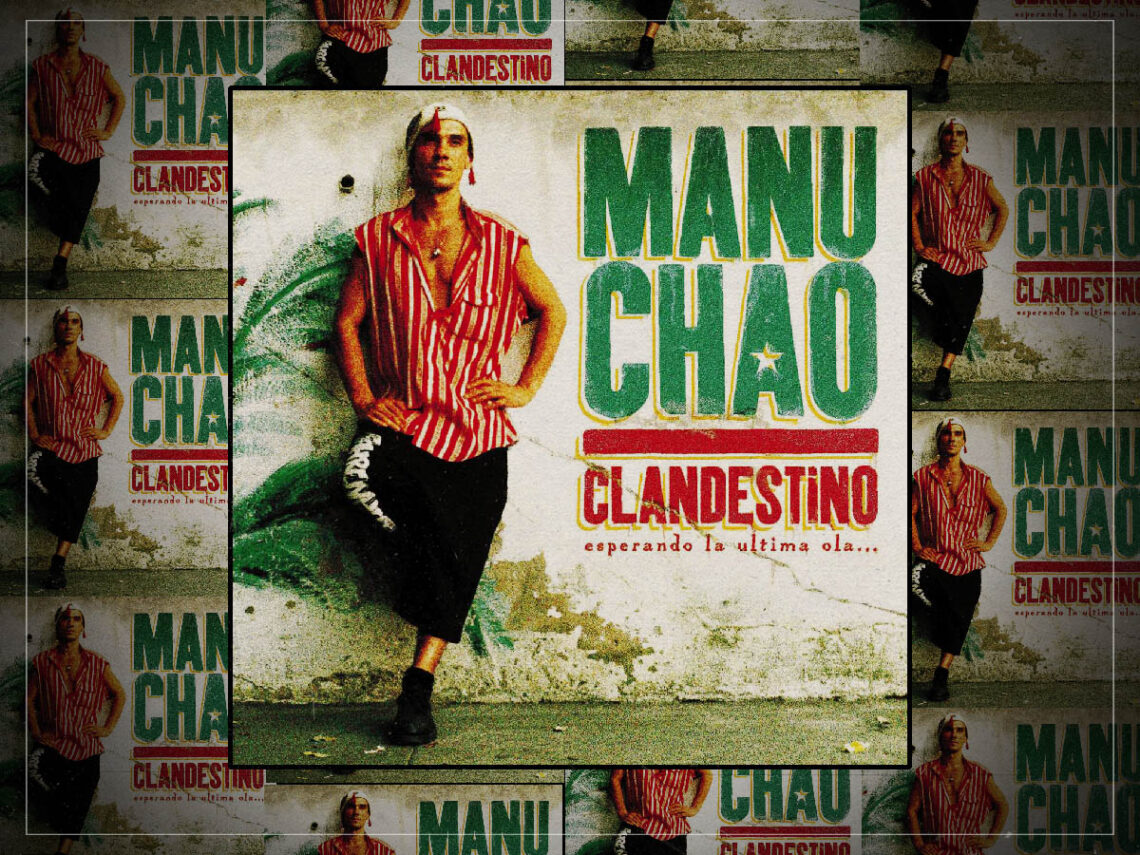
‘Clandestino’: the mammoth hit the Western world has ignored

Record sales aren’t everything within the arena of musical expression; over the years, some of the greatest, most inventive and profound albums have been considered commercial flops upon their initial release, and some truly terrible records have topped the charts for multiple weeks. Manu Chao’s 1998 debut, Clandestino, however, is something of a special case.
The music industry is certainly not without its problems, but one of the biggest in terms of supporting the arts is just how unshakably anglicised and Western-centric the industry is. Given that all three of the major record labels – Universal, Warner, and Sony – are all based in the United States, the mainstream music industry has repeatedly ignored and underestimated a litany of utterly incredible artists for seemingly no other reason than that they are less likely to appeal to the English-speaking market.
That would certainly explain why Clandestino, one of the best-selling albums of the late 1990s and one of the greatest French albums to ever reach the airwaves, has been almost entirely ignored by the Western world since its release over 25 years ago.
Emerging from the ashes of Chao’s previous exploits with Latin punk heroes Mano Negra, his debut solo album was a labour of love and activism, harking back to his own cultural heritage as a French-born Spanish artist brought into the world by parents fleeing Franco’s dictatorship in Spain. It also arrived at a time in which immigration was a prevailing topic in the headlines (as it remains today), leaving the songwriter with a defiant message of cross-border unity and solidarity.
As he once told the BBC World Service, “What Clandestino is talking about is problems of borders, and more and more hermetic borders all around the world.” He explained, “Immigration of people has been important for the story of this planet, to make what is today. Imagine thousands and thousands of years ago, when the human race was born in Africa, if we’d not allowed them to get out of Africa then we wouldn’t exist.”
With that core message, Chao built the album through a blending of African rhythms, a certain punk attitude, as well as the Caribbean influences, which go back to his Spanish-Cuban lineage. Given the ambitious nature of the record, along with its nature as a politically-charged debut album without a major label to support it, it is fair to say that the record was never expected to shift huge numbers.
In that sense, the album defied all expectations. Since its release, the record has sold over five million copies across the world, and it topped the album charts in France upon its release, where it has since been certified diamond. Even still, the record remains a relative obscurity in the English-speaking market.
The ignorance of the English-speaking world to that 1998 album is a crying shame for a multitude of reasons. Not only is it a fantastic example of Chao’s totally unique sound, but it has a core message which has only seemed to become more and more relevant with the passing of the years.
Today, when virtually every politician, newspaper, and keyboard warrior is peddling horrific rhetoric on the topic of immigration, an album like Clandestino is arguably more important than ever. The music industry itself might be heavily weighted towards Anglo-centric artists, but that doesn’t necessarily mean that listeners should be, too.
