


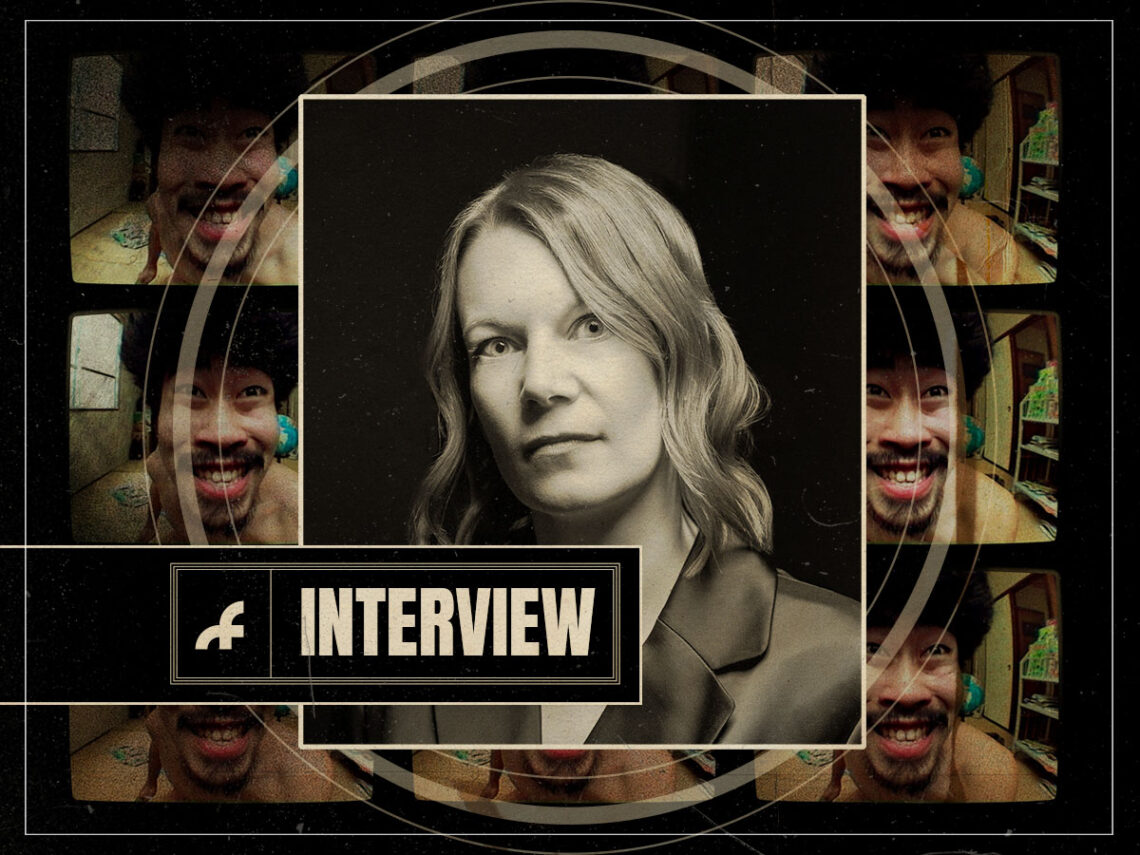
Bafta Breakthrough filmmaker Clair Titley unpacks the darkest side of reality TV in ‘The Contestant’

A decade ago, director Clair Titley heard a story on a podcast about a Japanese reality show that piqued her interest as a filmmaker. In 1998, aspiring comedian Tomoaki Hamatsu – who goes by the nickname Nasubi – auditioned for the popular TV show Susunu! Denpa Shōnen. He was taken to a bare one-room apartment in Tokyo that had a magazine rack and a camera. Stripped naked, he was instructed to get everything he needed, including food and clothing, from magazine sweepstakes contests. Once he won ¥1million worth of items (about $8,000), he would win the contest. Unbeknownst to Nasubi, the camera was broadcasting his 15-month ordeal to an audience of 17 million people.
In her debut feature, The Contestant, which earned her a place among Bafta Breakthrough creators, Titley chronicles Nasubi’s unwitting stardom and the psychological toll that those months of isolation have had on him. Audiences watched as he celebrated sweepstakes wins, ate dog food when he couldn’t win human food and suffered through despair and loneliness. He never managed to win a stitch of clothing, and the production animated an eggplant to cover his genitals – a reference to his nickname, which means eggplant in Japanese.
Nasubi became such a valuable commodity for the producers of Denpa Shōnen that they eventually created a 24/7 live stream of his apartment. As if that weren’t enough, they also published his private journals, which were his only way to process his experience privately throughout those 15 months. They became bestsellers.
“When I first met him,” Titley tells Far Out. “He’d been interviewed by the media before but had sort of perfunctory questions… ‘Why didn’t you leave?’ ‘Did it affect you?’ And then that was the end of the story. And when I was talking to him and unpacking his story, what was quite shocking, actually, was the fact that I think I was asking a lot of questions to him that he hadn’t heard… Nobody had really unpacked it. And I don’t think he’d actually unpacked it himself.”
By the time Titley began working on the documentary, more than 15 years had elapsed since the show aired. Because of this distance, she and Nasubi were able to revisit his experience on a deeper level, including the thoughts of suicide that he had as the months of isolation wore on.

Titley decided to zero in on Nasubi’s subjective experience by removing all of the playful graphics and sound effects that crowded the footage of the show. Denpa Shōnen usually created shows about young people getting up to slapstick pranks and falling into outrageous predicaments, dressed up by exaggeratedly upbeat hosts, colourful graphics, and canned laughter.
“It’s amazing how with the canned laughter and the music and the subtitles and all the graphics… it looks funny,” Titley says. “And you strip all of that back, and you just see this naked young man…naked and alone in a room. And that’s the way that I felt we could get a real honest sense of what it was like for him.”
One of the most striking aspects of The Contestant is that Titley managed to interview the producer of Denpa Shōnen, Toshio Tsuchiya, who had been the mastermind behind Nasubi’s show. When she warned Tsuchiya that he might face backlash after the release of the documentary, he was surprised. “He couldn’t understand why we would be so shocked about Denpa Shōnen because the Japanese would never do anything as horrific as Love Island,” she said, adding, “He had a point in the sense that, actually, when I spoke to him, there’d been two suicides related to Love Island that year.”
Although The Contestant doesn’t explore how Denpa Shōnen relates to the current landscape of reality TV, it does raise questions about whether we are as aware of the ramifications of these shows as we think we are. Audiences are far more knowledgeable about the artifice and manipulation that goes into reality TV, but if anything, the shows are only more popular, and the toll they take on the people who appear in them can be just as harrowing.
It took Titley seven years to make the film, in part because of the pandemic. Her producer was able to quarantine in Japan and interview Nasubi and his family during that time. Titley was stuck in the UK, adjusting her schedule to Japanese time for two months, sleeping during the day and working on the production through the night.
Now named one of Bafta’s Breakthrough artists, she says that the outpouring of praise for the film “means the world.” Citing the difficulty of making an independent production, she said, “It means even more when that kind of creative ambition is recognised”.
Bafta Breakthrough is supported by Netflix.
