


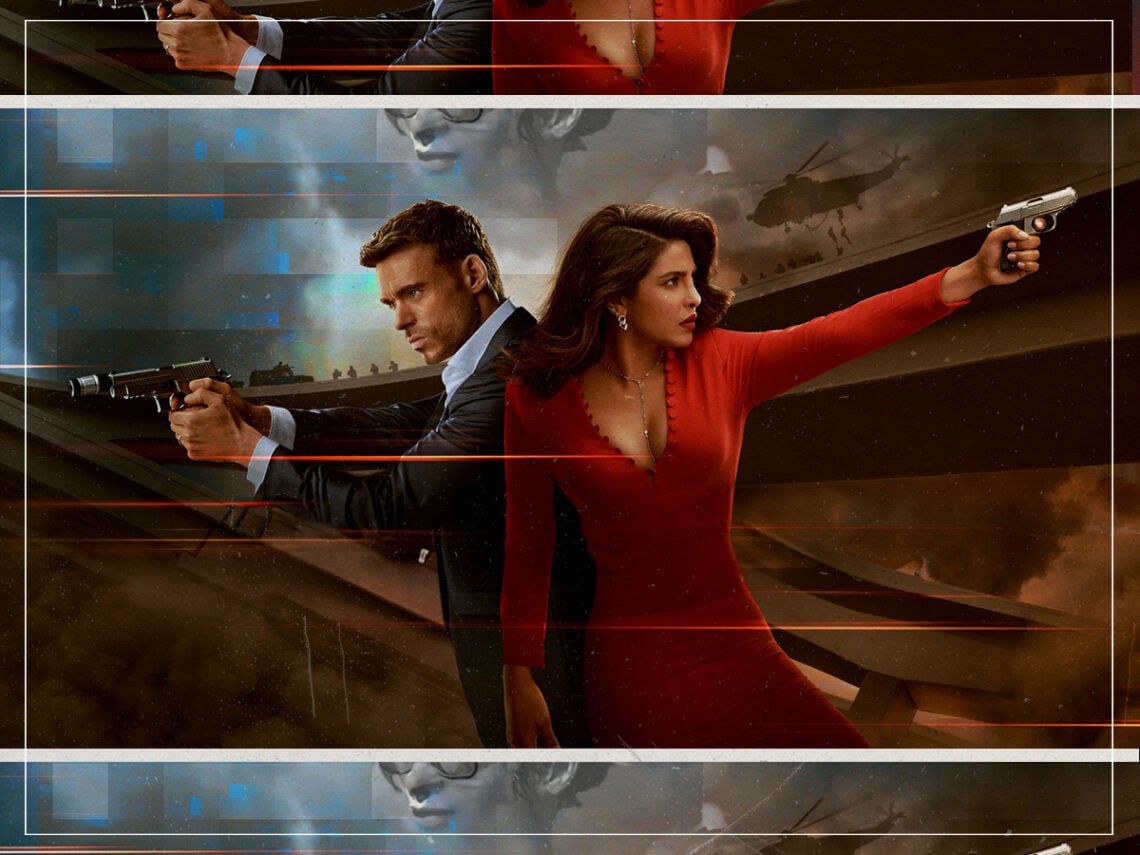
‘Citadel’: a perfect example of everything wrong with modern TV

It wouldn’t be completely accurate to suggest the current ‘Golden Age’ of television is running out of steam when there’s so much phenomenal episodic content available, but there are cracks beginning to emerge in the façade the higher up the budgetary ladder any series is placed, with one in particular standing out as a galling example of everything wrong with modern TV.
Now that streaming services have muscled into the turf once occupied by networks and movie studios, it was inevitable that blockbuster-sized shows would become an increasing occurrence. Of the most expensive episodic undertakings in history, though, it soon becomes apparent that the investment is hardly proving to be worthwhile in the grand scheme of things.
The eighth and final season of Game of Thrones speaks for itself, but has Prime Video’s The Lord of the Rings: The Rings of Power justified its position as the single most expensive TV show ever made? No, because it didn’t leave any sort of noticeable cultural or conversational imprint the second the credits rolled on its finale. However, because Amazon made such a huge fiscal commitment, there’s plenty more to come.
The final season of The Crown took a pasting, The Mandalorian quickly devolved from the flagship series of Disney+ to pandering fan service, The Witcher carries on despite Henry Cavill’s exit and the backlash aimed towards successor Liam Hemsworth, while even the mighty Marvel Studios has significantly scaled back its episodic output after realising that funnelling hundreds of millions of dollars into dreck like Secret Invasion wasn’t the smartest way to stave off over-saturation.
And yet, none of them can hold a candle to Citadel, which hasn’t only survived but been granted an expansion despite the very people who footed the bill admitting it didn’t perform in line with expectations. For a whopping six episodes of television, the globetrotting spy saga set Prime Video back a princely $300million.
Was it an exciting, entertaining, and riveting espionage epic? No, it was thunderously dull and eminently forgettable. Did it explode in popularity to become one of TV’s most-watched hits? Also, no, with Amazon Studios’ executive Odetta Watkins not only confirming that the viewing figures were substandard but blaming “jaded” audiences. Instead of seeking to figure out why such a costly series didn’t catch fire, Watkins instead claimed that “you’ll start to see the audience start to respond differently as it goes on”.
Essentially, what she’s saying is that nobody’s watching Citadel, but there’s more coming so people will maybe – or hopefully – get around to it eventually. Hardly an overwhelming show of confidence, especially when the people making the show didn’t believe in it, either.
Executive producers Joe and Anthony Russo edited their own version of the series unbeknownst to the showrunners and submitted it to Amazon without informing the creative team, who ended up siding with the Avengers: Endgame directors and drafted in David Weil to rewrite and reshoot more than half of the eight-episode series to get it more in line with their vision than the one the company had originally signed off on.
Basically, the executive producers of Citadel didn’t care much for the show, so they rebuilt it in their own image. Critics and subscribers didn’t care much for it either, while Amazon insisted that they’d warm to it eventually. If it were a movie franchise, then it stands to reason that the plug would have already been pulled. In fact, by conventional TV standards, a $300m production that didn’t perform in line with expectations should have already been cancelled.
Instead, Joe Russo will fly solo with a $25m paycheque in tow to direct the entirety of Citadel‘s confirmed second season, while Italian spinoff Citadel: Diana and Indian offshoot Citadel: Honey Bunny are already in the works as part of the terribly-named Citadel Spyverse. Prestige drama may be alive, well, and thriving, but it’s becoming increasingly clear that when it comes to the biggest, most expensive, and marketable episodic properties, they’re going to be shoved down the throats of audiences whether they want them or not.
