


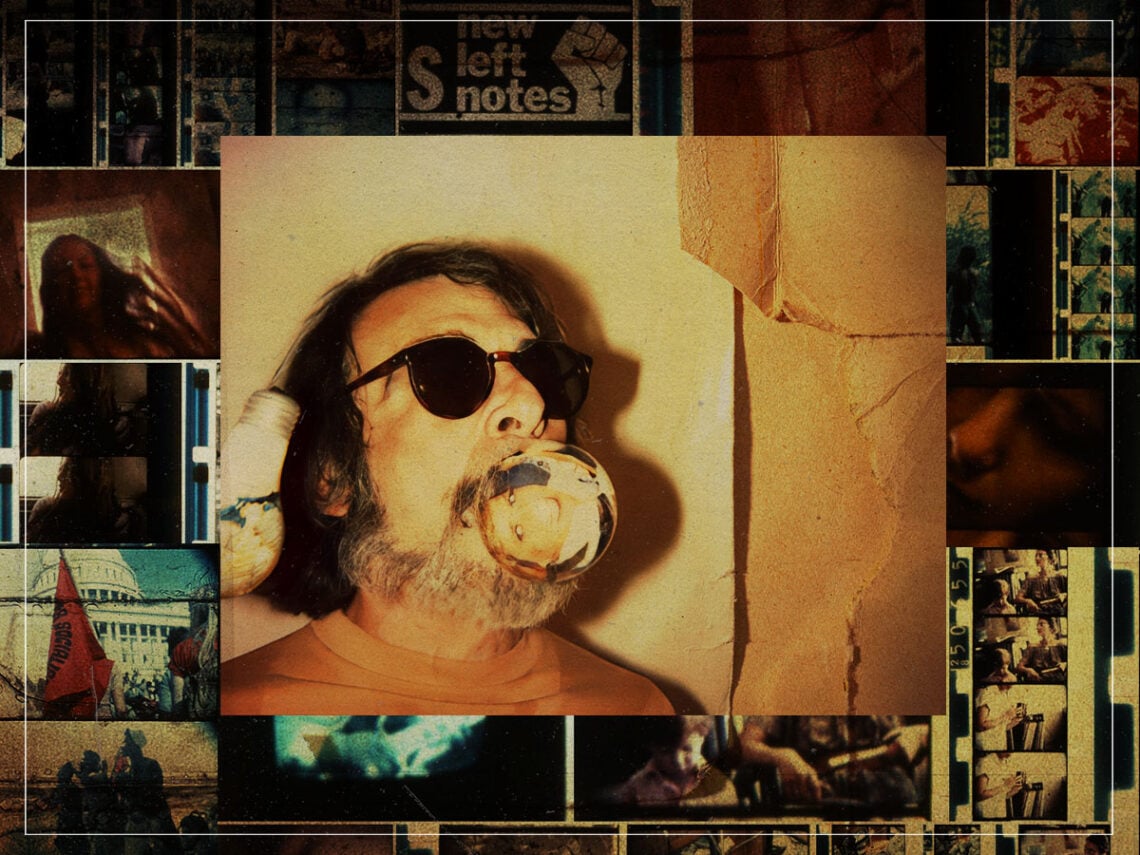
Celluloid sincerity: the unique cinematic notes of Saul Levine

Good luck trying to find avant-garde filmmaker Saul Levine on Wikipedia. The Boston-based artist doesn’t have his own page on the website; his closest match is a Canadian psychiatrist and author going by the same name. No, you’ll need to do some more rigorous research to find out more about the remarkable career of an artist like no other.
Levine was born in 1943 in New Haven, Connecticut, before eventually relocating to Massachusetts, where he built his career. His first film, Salt of the Sea, was completed in 1965, and he has been creating daring and meaningful films ever since. Known for his refusal to shy away from controversial subjects, he resigned from his position at the Massachusetts College of Art and Design in 2018 after complaints arose regarding his inclusion of explicit images of himself in his work. Levine called the accusations “an attack on academic freedom”, igniting a fierce debate about freedom of speech and artistic expression.
A key figure of the Boston creative scene in the 1960s and ’70s, Levine adopted film as a medium long before any of his contemporaries. He embraced 8mm and Super 8 film, a format he still prefers to this day, giving his work a warm, intimate quality. But Levine’s subject matters were far from light. Instead, he focused on the harsher elements of life, the “real” struggles of everyday people and those living on the fringes of society. This is in stark contrast to the so-called ‘Godfather of American Avant-Garde Cinema’ Jonas Mekas, whose work featured glamorous celebrities and the more joyous aspects of creativity.
Levine’s first major project was The Big Stick/An Old Reel, an anthology released between 1967 and 1973. The filmmaker combined images from two Charlie Chaplin movies, In the Park and Easy Street, with footage from protests against the Vietnam War, in which Levine participated. He was an active campaigner during his younger years, including when he occupied a building on the campus of Tufts University after firing an African-American secretary. This action possibly contributed to his dismissal from their teaching staff.
In spite of the bleak nature of Levine’s output, one spark of light persists across it – the joy of friendship. This can be seen in the work that ArtForum calls his “most impressive early film”, New Left Note. In between more images of protest and the speeches of President Richard Nixon, New Left Note contains highly personal footage of Levine and his new girlfriend, Marjorie Keller. Through unconventional means, Levine was able to demonstrate one of the key principles of humanity: when it feels like the world is collapsing around you, the smaller parts of life continue. And they can be beautiful.
Even as he grew older, Levin continued to embrace new ideas about how to present everyday life. His series Driven is made up of long, unbroken takes of him talking to his friends while driving a car. Sometimes, there is long silence between the two participants, as they are under no pressure to come up with anything interesting or insightful. This is conversation at its purest. Driven first appeared in 2002, at a time when people had yet to embrace the rambly, unedited conversations that dominate the current podcast market. Levine had been ahead of the crowd once again.
An experimental force even by avant-garde standards, Saul Levine may not be a household name, but his ideas about openness and honesty in filmmaking can be found all across modern media. A devoted autobiographer, even at the expense of his own reputation, he explored the ways in which people can represent themselves, the world around them, and the many intersections between the two.
