


‘Chronicle of a Summer’: the birth of cinéma vérité

Since its inception, cinema has promised an escape, a place to get lost in a fantasy world and forget about the mundanities and struggles of everyday life. During the middle of the 20th century, however, filmmakers began to explore the ways in which their chosen medium could document the real world. Two schools of thought and method developed during this period – direct cinema and cinéma vérité (French for “film of truth”). Both movements sought to capture the world in as truthful a way as possible, but where direct cinema focused on leaving the filmmaker out of the story and taking a fly-on-the-wall approach, cinéma vérité believed that truth was derived not simply by focusing a camera on a subject but by calling attention to the filmmaking process.
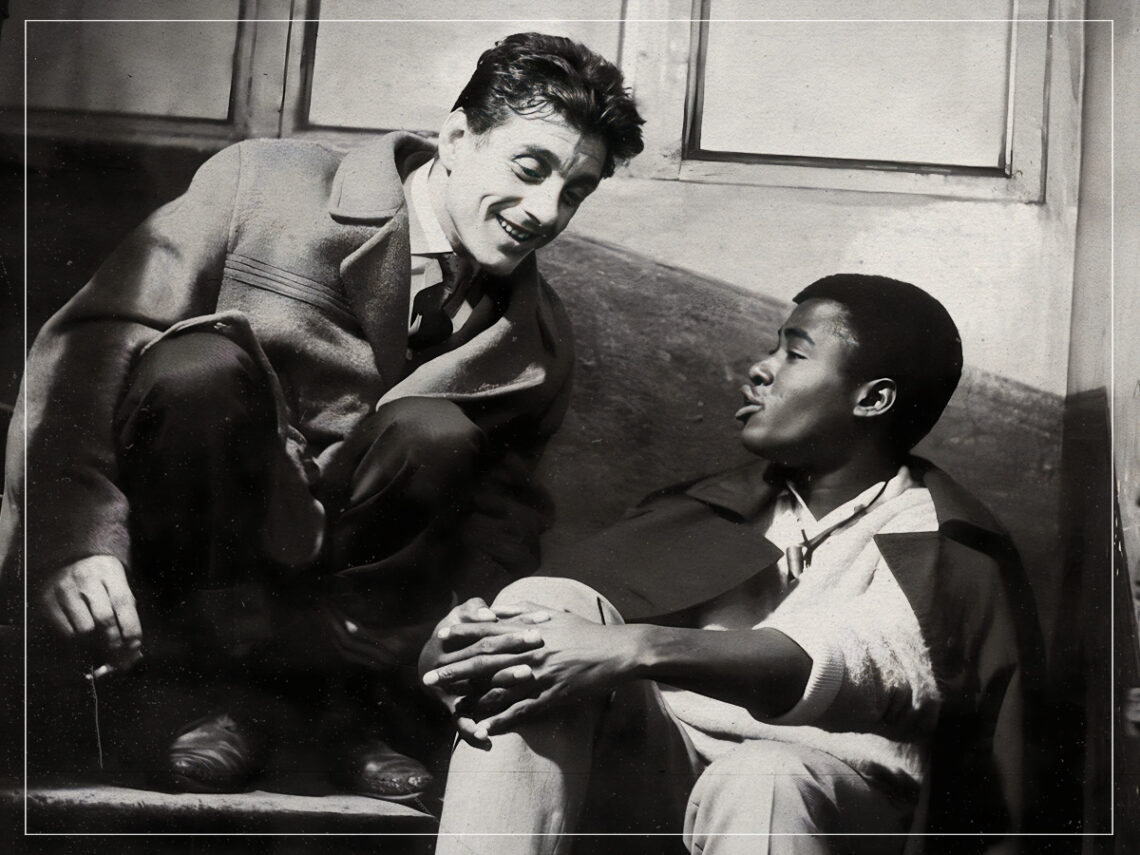
In this latter category, no film was as influential as Chronicle of a Summer, a 1961 documentary created by sociologist Edgar Morin and anthropologist and filmmaker Jean Rouch. Following the lives of a wide range of people during the summer of 1960, it features interviews in which the filmmakers and their collaborators venture into the streets of Paris and talk to friends, family, and acquaintances.
Morin and Rouch were inspired by Soviet filmmaker Dziga Vertov, who had coined the term kino-pravda (Russian for “film truth”) to describe a series of film reels he made in the 1920s that were filmed in city streets instead in controlled sound studios. Morin and Rouch had modern technology on their side in the form of smaller, portable cameras and synced sound, which allowed them to move much more freely. They also differed from Vertov by believing that, since no one is natural when they are knowingly in front of a camera, the audience shouldn’t be expected to pretend that the subjects were acting completely spontaneously. Putting the filmmakers on camera and having them discuss their filmmaking process was more truthful.
Chronicle of a Summer begins, ironically enough, with a somewhat staged conversation between Morin and Rouch in which they discuss whether it will be possible to create a film of truth. They talk with Marceline Loridan, who they have tasked with conducting the interviews, about whether she will be able to act naturally in front of the camera. She is then shown standing in the streets of Paris with a microphone, asking passersby whether they are happy.
The open-ended nature of the question was part of Morin and Rouch’s strategy for attaining authenticity. They believed that any more specific question would be too leading. The result is a series of strangely mesmerising encounters. “Can’t you see by my face?” one passerby asks. “Don’t talk to me about it,” another says. Some refuse to answer. One man reveals that his sister recently died. Later, Loridan and her colleague visit friends and acquaintances in their homes and at work to ask similar questions.
If this were the entirety of the film, it might not remain such a treasured entry in the documentary canon. But then things take a turn. During a scene halfway through the movie when Loridan tearfully discusses her strained relationship with her partner, the camera pans down to her arm to reveal a number tattoo. This changes the film’s trajectory, opening up a conversation about the Holocaust and a lengthy reflection from Loridan herself about her time in Auschwitz. The subject morphs into a conversation about the war of the day, the Algerian War, a topic which, at the time, was heavily censored by the French government.
The film concludes with Morin and Rouch strolling through a museum, deep in troubled conversation. Having begun to show the footage to audiences, they are surprised by the range of responses it has aroused and uncertain as to whether they have achieved their goal. For the filmmakers who came after them, the answer is a resounding “yes”. By highlighting real people rather than actors and letting the events unfold spontaneously, they created a new template for how documentaries could be made and how an overarching truth could be conveyed despite the inherent contrivances of medium. Echoes of movement became prevalent even in narrative cinema, particularly in the work of director John Cassavetes.
