


‘Oppenheimer’ movie review: Christopher Nolan’s “event that changed the world” is truly captivating

There’s always a worry that arises when a film receives as much hype as Christopher Nolan’s new historical biopic Oppenheimer has because it often leads to unfair expectations, those that suggest the film may be the most extraordinary cinematic event of all time. Of course, that’s always unlikely to be accurate, but Nolan and his cast and crew have still delivered a genuinely captivating movie, even up against the excessive hype.
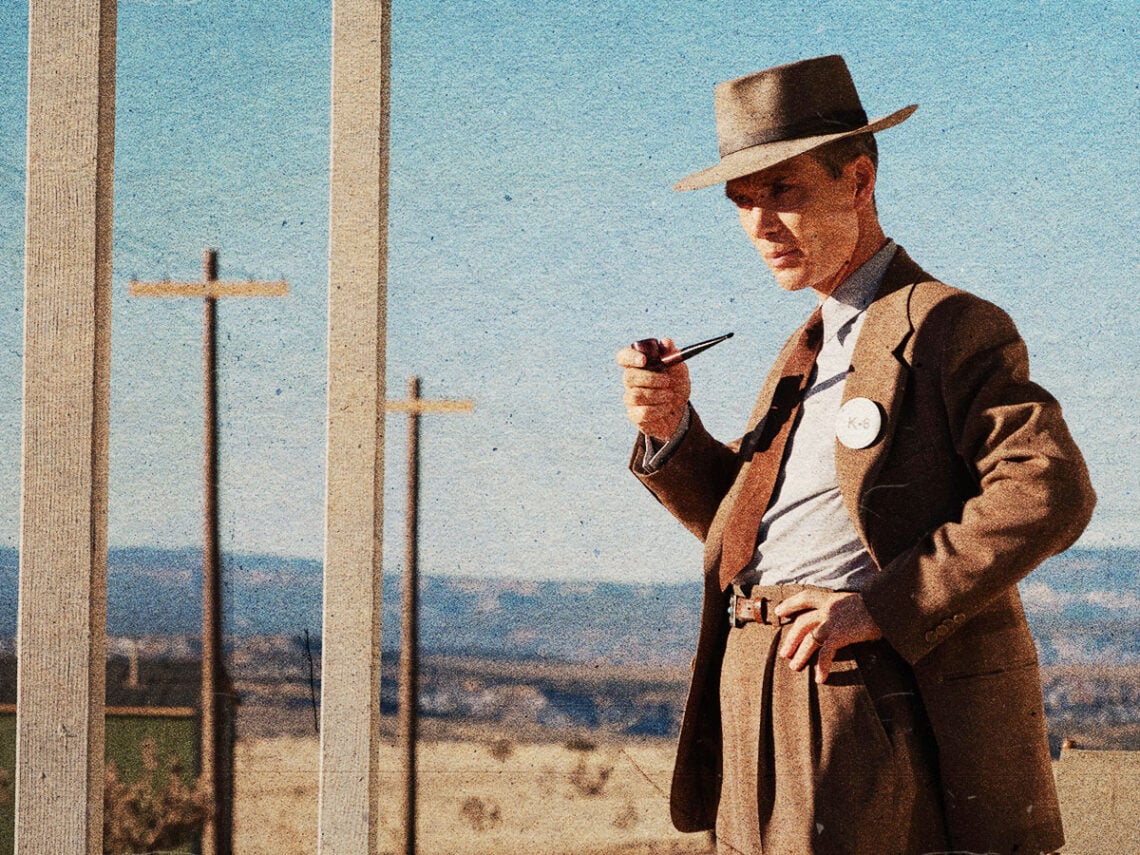
In Oppenheimer, Cillian Murphy portrays the reluctant “father of the atomic bomb”, J. Robert Oppenheimer, finally being given the lead role-nod in a Nolan film, having starred in five of his previous efforts. Unsurprisingly, given his undoubted talent as an actor, Murphy delivers a performance of dedication, nuance and, most importantly, believability.
After all, Oppenheimer was not just a critical historical figure but someone at the centrepiece of one of the most important historical events the world has ever known. It may as well be called “the event that changed the world forever”. After playing the central part in the Manhattan Project development of the atomic bomb at Los Alamos in New Mexico, Oppenheimer irreversibly altered the nature of global mass-scale warfare as we previously knew it, no longer to be played out on the frontlines, but as dangerous and paranoid games of nuclear cat-and-mouse the likes of which we saw during the Cold War proceeding World War II.
So it’s fair to say that Oppenheimer had a fair few megatons of pressure on his slight shoulders, and Nolan’s film throws us straight into such intensity, with just the right amount of biographical information leading up to the main events. We’re spared Oppenheimer’s youth in favour of his days as a student, then a lecturer and finally as the man who would change the world.
The fact that there is rarely a moment of tedium in Oppenheimer is a testament to a three-hour film focusing on only one event (though including its lead-up and fall-out). Then we have the event itself, of course, The Trinity Test, to finally see whether this painstakingly researched atomic bomb could really work and thereby end the Second World War. Unlike Nolan’s other films, though, Oppenheimer, as a biographical drama, is admittedly light on his usual spectacle set-pieces, but the Trinity Test itself does not disappoint; it’s not just a mere explosion, it will viscerally shock and confound audiences but also provide a real focus on the man himself and the justification of his actions.
After all, morality is dripping throughout the film. It all seemed like such a good idea – build the bomb, end the war. But with Hitler dead and Germany already surrendered, leaving only a stubborn Japanese nation still fighting, Oppenheimer and his fellow scientists are pressured by the American government into making this thing work, even with the potential of the comprehensive destruction of the physical world.
Whether we should justify the historical actions of Oppenheimer, his Los Alamos colleagues, United States President Harry S. Truman and his Defence Forces is intentionally left by Nolan to the audiences choosing. And as always with Nolan, he does not assume the audience’s intelligence to be any lower than his own; we’re deemed just as capable of understanding quantum physics as we are of evaluating the morality of dropping nuclear warheads on an increasingly weakening nation.
So Oppenheimer is a vital film, not just a glorification of the actions of a great mind but an examination of that mind grappling with such actions’ intense ramifications. Of course, Oppenheimer would fall flat without the excellence of the cast, particularly Emily Blunt (Kitty Oppenheimer, J. Robert’s wife), Robert Downey Jr. (Lewis Strauss, his jealous scientific rival) and Benny Safdie (fellow scientist Edward Teller), to name but a few.
So too, does Nolan’s actual craft undoubtedly play its part in creating a work of genuine fascination. Re-creating The Trinity Test without the use of CGI is a cinematic marvel in its own right, but equally impressive is the intensity of each of cinematographer Hoyte van Hoytema’s shots, beautifully capturing each pore of Murphy et al.’s face in glorious 70mm IMAX film. Even without the usual set pieces of The Dark Knight and Interstellar, Ludwig Göransson’s score can still shine in moments of drama, if not action. However, at times, it can tend to overshadow the more vital dialogue in crucial scenes.
Let’s face it, Nolan consistently delivers in whatever project he takes on; he knows his vision and style and creates a positive, intimate environment for his actors to provide their best work. But with Oppenheimer, he hasn’t just delivered an entertaining, thought-provoking movie as he had done with his previous efforts, but a thoroughly important one that informs even the most sheltered of us about the global situation we find ourselves in today.
